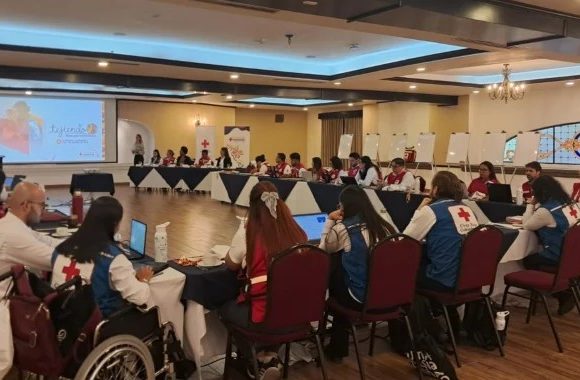
A growing humanitarian crisis is taking center stage this week in Antigua, Guatemala, where migration experts and Red Cross leaders from across the Americas and the Caribbean have gathered for the 2026 REDMAC Regional Meeting to address a rapidly shifting migration landscape marked by rising risks and evolving humanitarian needs.
New demographic data underscores the scale of the challenge: the total migrant population across Latin America and the Caribbean jumped 23% between 2020 and 2024, climbing from 14.3 million to 17.5 million, according to United Nations figures referenced by the International Organization for Migration. What is particularly notable about this trend is that nearly 80% of all migration movement in the region occurs between Latin American and Caribbean countries themselves, with South America recording the highest volume of internal cross-border movement.
While official data confirms that migration flows toward the United States and through the dangerous Darién Gap jungle route have declined since the start of 2024, this reduction has not translated into lower risk for people on the move. On the contrary, migration experts warn that the crisis has not eased – it has simply transformed. Crackdowns on traditional northern routes have pushed migrants onto more unpredictable, unmonitored paths, which have proven just as deadly if not more so. By mid-2024, authorities had already recorded 341 migrant deaths across Caribbean migration routes and another 173 fatalities in the Darién Gap, stark evidence that lethal hazards remain a constant threat for vulnerable migrants.
The 2026 REDMAC meeting brings together 20 national Red Cross societies alongside representatives from the International Federation of Red Cross and Red Crescent Societies (IFRC) and the International Committee of the Red Cross (ICRC) to coordinate stronger, more proactive regional humanitarian responses to these shifting dynamics. Under the official theme “Weaving Networks that Transform,” the summit’s core goals include drafting a long-term sustainability plan for the regional migration network, with priorities centered on expanding humanitarian diplomacy, boosting cross-border resource mobilization, and building pre-emptive response frameworks for future migration crises.
One of the most pressing topics on the meeting’s agenda is the recent southward shift of regional migration flows. Countries including Chile, Ecuador, Peru, and Brazil have seen a sharp spike in migrant arrivals in recent months, creating new pressure points where humanitarian support infrastructure is often underdeveloped and anti-migrant discrimination is on the rise. Delegates are also examining the compounding factors driving mixed migration movements, including the consequences of forced returns and mass deportations that provide little to no support for repatriated people, and the growing impact of climate change in displacing vulnerable communities across the region.
The summit is being held against a backdrop of shifting policy dynamics that have reshaped regional migration patterns, most notably new strict deportation measures implemented by the United States starting in 2025. For the Dominican Red Cross, which is represented at the meeting by Paula Leroux, head of the organization’s Doctrine and Protection Department and a standing member of REDMAC, the challenge is uniquely complex. The Dominican Republic serves simultaneously as a country of origin, destination, and transit for migrants across the Caribbean, with the most significant activity concentrated along its shared border with Haiti. Leroux and the Dominican delegation are working to advance strategies that balance life-saving humanitarian assistance for migrants – most of whom are Haitian – with ongoing domestic political and public debates over border security and national migration management.
As delegates work to align on coordinated strategies, stakeholders emphasize that the fragmentation of traditional migration routes and the emergence of new vulnerable hotspots make regional cooperation more critical than ever to prevent further unnecessary loss of life and address the growing humanitarian needs of migrant populations across the hemisphere.