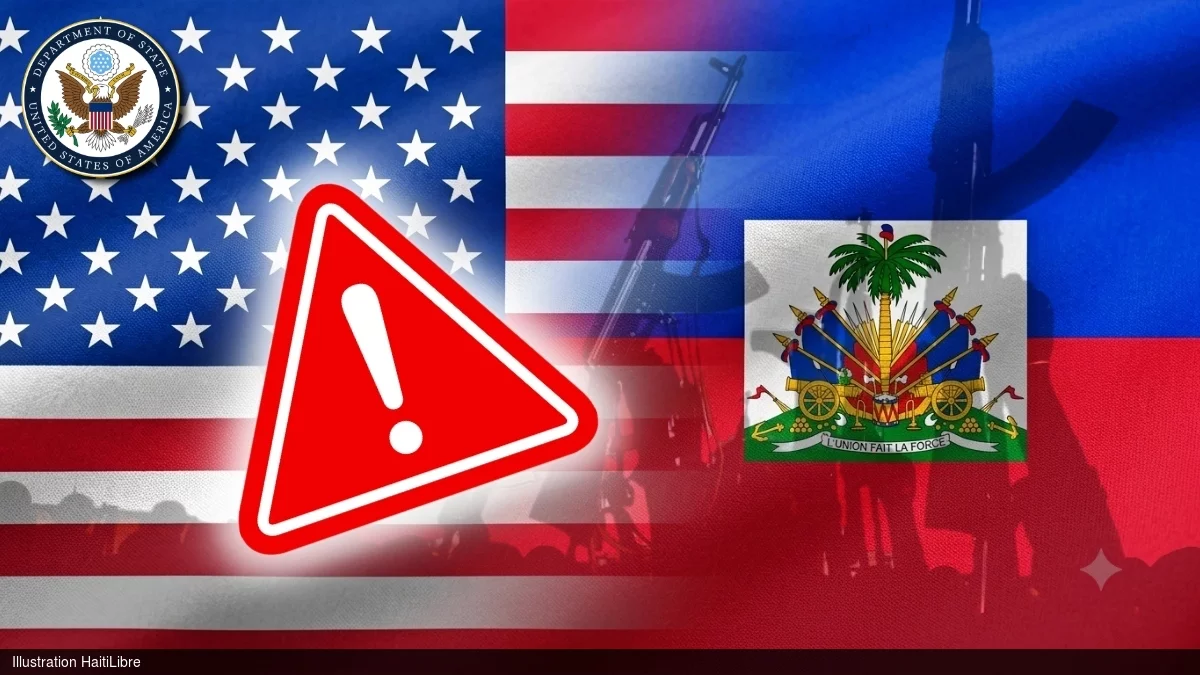
In a stark update released on July 18, 2026, the Trump administration has issued its highest-level travel warning for all U.S. citizens considering travel to Haiti, placing the Caribbean nation at Level 4 — the agency’s strictest classification that urges all potential visitors to abandon any travel plans entirely.
What sets this advisory apart from standard high-risk travel warnings is the extraordinary set of precautionary recommendations the State Department has laid out for U.S. citizens who still choose to ignore the do-not-travel order. Among the most chilling guidelines is a formal suggestion that travelers leave DNA samples with their primary medical provider and store full dental records with family members back in the United States. This step is explicitly framed to enable the identification of remains should a traveler die while in the country.
Beyond the unprecedented preparation for worst-case outcomes, the State Department has outlined a full suite of security and contingency steps for any person who travels to Haiti against its advice. First, all travelers are required to enroll in the department’s Smart Traveler Enrollment Program (STEP), a free service that keeps U.S. missions abroad updated on traveler whereabouts to enable faster emergency assistance. Travelers are also urged to build a clear communication plan with loved ones before departure, ensuring they carry functional devices that work on Haitian networks and regularly share real-time location data with trusted contacts.
Additional contingency planning includes sharing access to critical documents, account logins, and emergency contacts with family members, in the event that a traveler cannot return to the U.S. on schedule. Officials also advise travelers to formalize plans for the care, custody, and inheritance of children, pets, and property, including drafting a will, updating insurance beneficiary designations, and granting power of attorney to a trusted person back home.
For travelers traveling for work, the State Department recommends collaborating with employers or host organizations to build a personalized security plan, and suggests considering consultation with a private professional security firm to assess risks. Travelers are also instructed to pre-map key emergency resources, including the nearest U.S. Embassy or consulate, FBI contact points, and the State Department’s Office of American Citizen Services, as well as local trusted contacts that can assist during a crisis.
In the event of detention or hostage taking, officials advise travelers to designate a single family point of contact ahead of time and establish a formal proof-of-life protocol, so that contact can verify the traveler’s status and avoid miscommunication during a crisis. Travelers are also told to remove any potentially controversial or provocative content from social media accounts, cameras, laptops, and personal devices, as material that seems harmless could be misinterpreted by local armed groups. All high-value or sentimental personal items should be left behind in the U.S., and travelers are reminded to double-check that their U.S. passports and all other critical travel documents have not expired before crossing into Haiti.
The extraordinary severity of the advisory underscores the extreme deterioration of security and public order in Haiti, which has grappled with widespread gang violence, political instability, and a collapse of core state functions for years. This Level 4 warning, paired with its unprecedented guidance on remains identification and contingency planning, signals that the U.S. government views travel to the country as an inherently life-threatening risk that no U.S. citizen should take.