The global cricket fraternity is in mourning this week following the death of one of the sport’s most iconic figures, Sir Garfield Sobers, the National Hero of Barbados, who passed away at 89 at his home on Friday after a period of illness, just 11 days shy of his 90th birthday. Tributes have poured in from across the world from commentators, administrators and players alike, all celebrating Sobers’ unparalleled legacy both on and off the pitch.
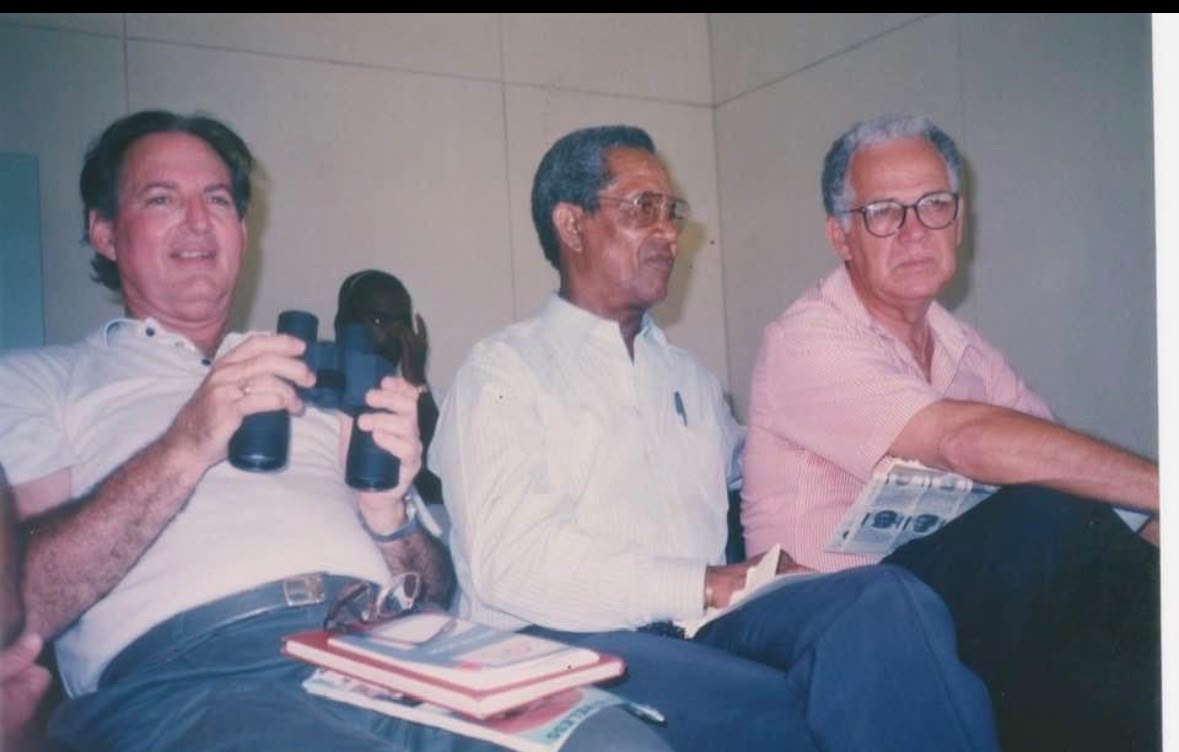
Veteran cricket commentator Joseph Reds Pereira, who watched Sobers play on multiple occasions and later built a close friendship with him after his retirement, shared his earliest memories of the all-rounder. As a young cricket-mad boy, Pereira stayed up late to listen to radio commentary of the 1961 opening Test, where Sobers scored a brilliant 132 runs, an innings that still stands out in his memory as one of the most special performances he has ever witnessed. Pereira first saw Sobers play in person in 1955, and the pair grew much closer during the 1978 Kerry Packer World Series Cricket in Australia, where Sobers served as a relaxed, charismatic ambassador for Caribbean cricket. Pereira recalled how Sobers would casually reach out to arrange a round of golf, a hobby the legend remained passionate about long into retirement. One of Pereira’s most cherished memories is watching Sobers take the pitch alongside fellow West Indies great Rohan Kanhai at Bourda in Guyana, an experience he described as watching two kings of the game walk out to bat.
The news of Sobers’ death broke mid-play during the annual Sir Garfield Sobers Under-19 Cricket Tournament, a youth competition he founded 32 years ago that is hosted across Barbados, including at Queen’s College. Ricky Clarke, the tournament’s co-ordinator, called the news devastatingly hard to process, having worked closely with Sobers since the legend invited him to join the event in 1991. Clarke remembered Sobers’ remarkable grace, a quality that defined his character long before he earned national hero status. He emphasized that Sobers took a deeply hands-on approach to running the tournament, which has nurtured multiple generations of young cricketers, including the iconic Brian Lara, who competed in the event early in his career, along with dozens of top young players from across the Caribbean and the United Kingdom. Clarke echoed the widespread belief across the sport that Sobers is unequivocally the greatest cricketer of all time, noting that his status as a Barbadian National Hero is a perfectly fitting honor for a man who gave so much to his country and the global game.
Commentator Wayne Holder shared that he felt like he had lost a close family member when he heard the news, noting that Sobers is such a core part of Barbadian national identity that the entire country has lost a beloved member of its extended family. Reflecting on Sobers’ well-known humility despite his global fame, Holder recalled a chance early-morning encounter decades ago at Enid’s Bar in Baxters Road, where both men stopped in for patties. When Holder introduced himself as a young fan, Sobers made time for him, and from that point on always recognized and greeted Holder on every subsequent meeting across the years.
Andy Payne, president of Maple Cricket Club and a graduate of the Sir Garfield Sobers Schools Competition, shared personal memories of Sobers’ kindness off the pitch. Beyond cricket, Sobers was a dedicated golfer who represented Barbados in the sport from the 1970s through the 2010s, and founded the Sir Garfield Sobers Festival of Golf, where he served as patron. Early in Payne’s career, when he worked in tourism and struggled to get time off to compete in domestic cricket, Sobers personally intervened with Payne’s employer to argue that the young rising player deserved the opportunity to play. Like others, Payne summed up Sobers’ legacy simply: for his contributions to cricket, tourism and Barbadian national life, he will always be remembered as the greatest of all time.
On the pitch, Sobers’ statistical achievements remain staggering decades after his retirement. He represented the West Indies in Test cricket between 1954 and 1974, playing 93 matches, scoring 8,032 runs at an average of 57.78, and taking 235 wickets at an average of 34.03, proving his dominance as one of the sport’s greatest all-rounders. In 1958, he hit an unbeaten 365 against Pakistan, a record that stood as the highest individual Test score for more than 36 years. He made another piece of history in 1968, when captaining Nottinghamshire against Glamorgan in first-class cricket, he became the first batsman ever to hit six sixes in a single over.