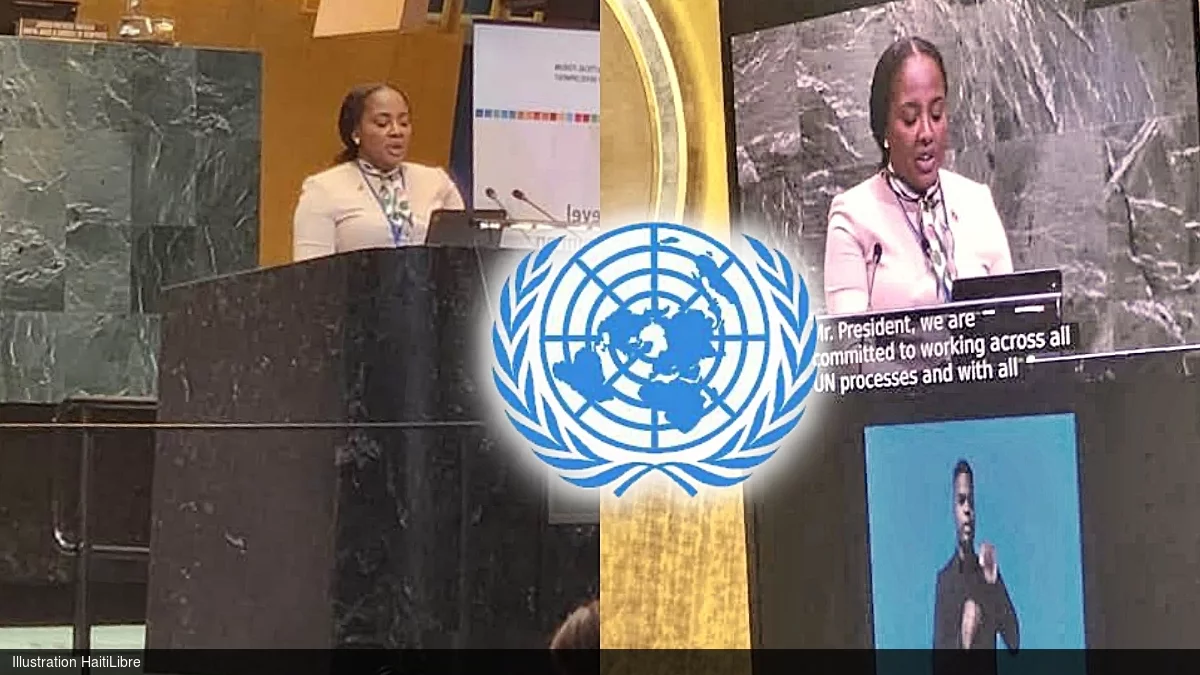
At the United Nations Headquarters in New York on July 13, 2026, Sandra Paulemon, Haiti’s Minister of Planning and External Cooperation, delivered a pivotal address on behalf of the Caribbean Community (CARICOM) during the general debate of the UN High-Level Political Forum on Sustainable Development. Her intervention centered on pressing the international community to step up collective efforts to advance the 2030 Agenda for Sustainable Development, particularly for vulnerable small island developing states (SIDS) facing cascading existential threats.
Paulemon opened her remarks by reaffirming CARICOM member states’ unwavering commitment to meeting the UN Sustainable Development Goals (SDGs), but stressed that the current trajectory of global progress leaves SIDS drastically behind. Current global SDG implementation stands at just 36%, a pace that Paulemon warned puts the 2030 Agenda at serious risk of failure for the world’s most vulnerable nations. “Our presence at this Forum is not simply about participating in discussions. It is a call for renewed commitment and concerted action in the face of the urgent challenges facing our countries,” she told the gathering of global policymakers and stakeholders.
The minister drew sharp attention to the disproportionate impact of climate change on SIDS, whose inherent structural vulnerability has been exacerbated by repeated natural disasters, volatile global economic shocks, and gradual environmental degradation linked to global warming. These overlapping crises, she explained, systematically erode hard-won development gains and push vulnerable communities further away from meeting SDG targets. Without targeted, systemic support from the global community, she argued, small island nations will never be able to close the implementation gap on their own.
To address this structural gap, Paulemon put forward a series of clear policy demands. She called for the swift, full adoption of the Multidimensional Vulnerability Index (MVI) across the entire UN system, framing the tool as a critical mechanism to ensure vulnerable states gain fair access to concessional financing, direct grant support, and targeted post-disaster recovery assistance. She also highlighted the Antigua and Barbuda Agenda for SIDS as a foundational strategic framework that can guide national development planning, prioritize responsible public investment, and structure more effective international cooperation for island nations.
Additionally, Paulemon urged global partners to extend tangible support to the SIDS Centre of Excellence, particularly for its programs focused on expanding sustainable investment, improving data collection and utilization for evidence-based policy, and strengthening debt sustainability for small island economies. These initiatives, she noted, are tailored to directly address the unique barriers SIDS face in accelerating SDG progress.
Looking ahead to upcoming international negotiations on climate change and biodiversity protection, Paulemon reaffirmed CARICOM’s steadfast commitment to the global target of limiting global warming to 1.5°C above pre-industrial levels. She also called on negotiating blocs to center the specific economic and environmental circumstances of SIDS in all final agreements, rather than adopting one-size-fits-all frameworks that fail to account for their unique vulnerability.
In her closing remarks, Paulemon emphasized that meaningful sustainable development for small island developing states can only be achieved through principled, strong global partnerships, equitable financing structures, and results-driven international cooperation rooted in collective solidarity. “International commitments must now be translated into concrete actions, appropriate financing, and mechanisms capable of addressing the specific realities of small island developing states,” she said, echoing the core call of CARICOM to the global community.