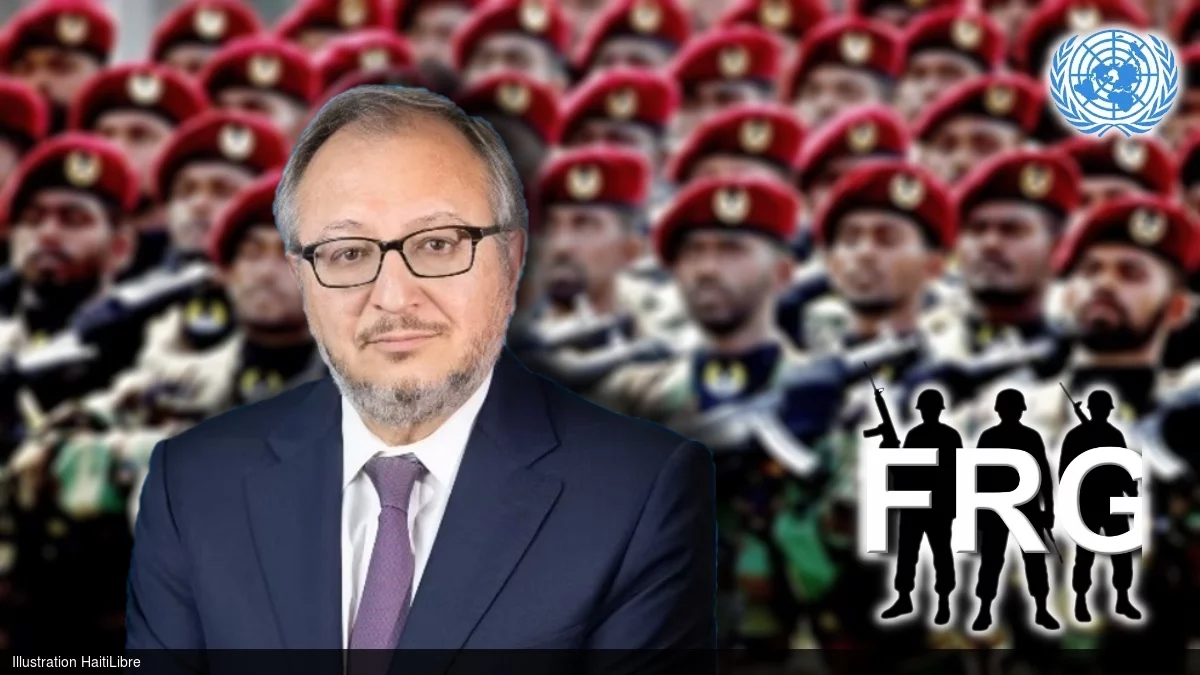
On June 29, 2026, Jack Christofides, Special Representative for the UN-backed Gang Suppression Force (GSF) deployed to Haiti, formally presented the mission’s first strategic report to United Nations Security Council President Leonor Zalabata Torres. The document outlines a comprehensive, time-bound operational roadmap with clear performance benchmarks and a hard deadline of September 30, 2028, for delivering core mission outcomes.
Unlike traditional UN peacekeeping deployments, Christofides emphasized, the GSF operates with three distinct, tiered core objectives. First, the force will launch intelligence-driven operations – carried out either independently or in close collaboration with Haiti’s National Police (PNH) and national Armed Forces (FAd’H) – to steadily reduce and ultimately dismantle the territorial control that armed gangs have exerted across large swathes of the country.
Second, the GSF will prioritize securing Haiti’s most critical national infrastructure, including Port-au-Prince’s Toussaint Louverture International Airport, key maritime shipping terminals, official detention facilities, and the country’s busiest national highway networks. Third, the mission is focused on long-term capacity building for Haitian state institutions, equipping local security and governance bodies to independently manage and contain gang violence once the GSF’s initial mandate concludes.
To achieve these goals, Christofides noted, the GSF must reach its full authorized operational strength of 5,550 uniformed personnel. Once at full capacity, the force will conduct coordinated high-intensity counter-gang operations alongside Haitian security forces to maximize impact on the ground.
The roadmap identifies three priority geographic regions for initial large-scale operations. The West Department, home to the Haitian capital Port-au-Prince where gangs currently control roughly 90 percent of urban territory, holds top priority. Operations in this region will focus on clearing key arterial roads, the capital’s public port, and the international airport to restore the free movement of people and goods.
Next, the Artibonite Department – Haiti’s agricultural heartland and primary breadbasket, where armed groups have unleashed widespread terror that has crippled local food production – will be targeted. Securing this region is widely viewed as a critical step to ease the country’s ongoing humanitarian food crisis and reboot local economic activity.
Finally, the Central Department, a strategic geographic buffer zone, will be secured to block escape routes for gangs fleeing counteroffensives in Port-au-Prince and prevent criminal groups from expanding their control into other regions of Haiti. As the GSF increases its troop numbers over the course of the mandate, operations will eventually expand to cover all 10 of Haiti’s administrative departments.
Christofides was careful to clarify that the September 2028 deadline does not mark the end goal of full national stabilization for Haiti. Instead, the target sets out to achieve the minimum baseline security conditions required to reverse the country’s current trajectory of escalating gang violence, rebuild public trust in state institutions, and create space for Haitian national authorities – backed by sustained international support – to launch a long-term process of institutional reconstruction and governance reform.