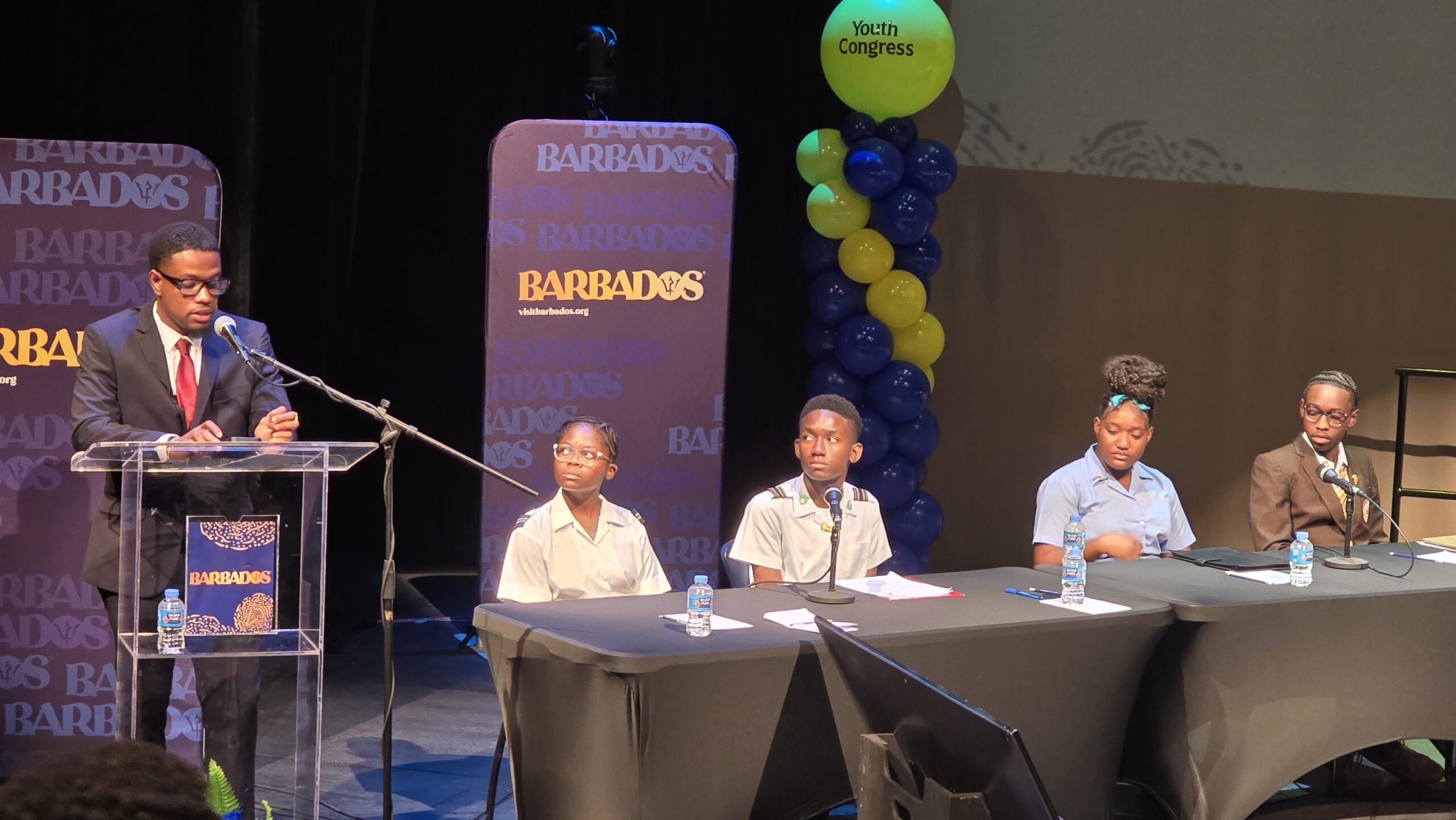
The 2026 Barbados Tourism Youth Congress officially kicked off on Wednesday, bringing together dozens of ambitious young debate competitors from across the island at the Walcott Warner Theatre, located within the University of the West Indies Cave Hill Campus’ Errol Barrow Centre for Creative Imagination. Ahead of the official debate competition, Youth and Culture Minister Senator Shane Archer took the stage to deliver a rallying call to the assembled participants, urging young Barbadians to embrace leadership roles early and contribute their fresh perspectives to reimagining the country’s vital tourism sector.
In his address, Senator Archer pushed back against the widespread misconception that leadership is reserved for older generations, emphasizing that the qualities that define strong leadership have no connection to chronological age. “Leadership is not determined by the number of birthdays that you have celebrated. It is determined by your character, your discipline, your preparation, and your willingness to serve,” he told the assembled students. He encouraged young people to set aside self-doubt rooted in age, claiming their rightful space in industry conversations and speaking their ideas with confidence.
“Youth is energy. Youth is imagination. Youth is possibilities that others may have stopped seeing,” the minister said. But he also stressed that raw talent and untapped potential are not enough to drive meaningful change. Young leaders must put in intentional preparation and quiet work even when their efforts go unobserved, he argued, so that when opportunities arise, they are ready to step forward confidently and claim their moment.
Senator Archer highlighted one of the government’s key initiatives to embed youth in tourism governance: the Junior Minister of Tourism programme. Created to guarantee young people a voice in decision-making spaces long before they reach formal positions of institutional authority, the programme rejects the idea that young people must wait to earn a title before their ideas are taken seriously. “Young people should not have to wait until they hold a title before their ideas are taken seriously. They deserve a seat at the table,” he said. He added that the programme has a proven track record of培育 emerging leaders; past participants have gone on to represent Barbados at regional international events, serving as strong young ambassadors for the island nation.
This year, the top participants from the national congress will earn the opportunity to advance to the regional stage: they will travel to Guyana to join the Caribbean Tourism Organization (CTO) Regional Tourism Youth Congress, held in conjunction with the CTO’s State of Tourism Industry Conference. There, they will sit alongside CTO board members and industry directors, contributing to discussions that shape regional tourism policy across the Caribbean. “Just imagine that one of you will move from this stage at Cave Hill to a regional table in Guyana, carrying the voice, the ideas, and the pride of Barbados. That is not a small opportunity,” Senator Archer told the crowd.
Beyond encouraging youth leadership, the minister worked to reframe public understanding of tourism itself, pushing beyond the common narrative that reduces the industry to just hotels and beachfronts. He explained that tourism is fundamentally a people- and culture-centered sector, built on the lived experiences and daily contributions of ordinary Barbadians across dozens of fields. “Tourism is culture. Tourism is people,” he said. “It is a taxi driver who gives a visitor the first real welcome. It is the chef who tells the story of Barbados through food. It is the artist, the musician, the farmer, the event producer, the environmentalist and a storyteller who helps turn a visit into a real experience.” For Barbados, he added, tourism is a unique space where local culture becomes a viable enterprise, creativity translates to tangible economic opportunity, and community stories can be shared authentically with the whole world.
This year’s national debate centered on five timely themes that are shaping the future of global tourism: multi-generational travel, the role of social media in destination marketing, sustainable destination management, the intersection of tourism and cultural industries innovation, and the evolving identity of tourism professionals in the 21st century. A core overarching question guided all discussions: How can Barbados remain competitive in a crowded global tourism market without sacrificing its unique cultural identity?
Senator Archer noted that emerging technologies, from artificial intelligence to digital storytelling to immersive virtual experiences, are already transforming how tourism operates around the world, and young people are the ones best positioned to lead the industry’s adaptation to these changes. He urged participants not to focus solely on fitting into the existing industry structure, but to challenge the status quo and imagine what a better, more inclusive future for Barbadian tourism could look like. “Do not spend all of your energy trying to fit into the tourism industry as it exists today. Ask how we can improve it. Ask what is missing. Ask how it can become more sustainable, more creative, more inclusive, and more authentically Barbadian,” he said. “The next great tourism experience may not begin in the boardroom; it may begin with an idea from one of you.”
At the close of the national competition, Jahneil McKenzie of Daryll Jordan Secondary School claimed first place, with Yadira Roberts of Springer Memorial taking second place and Harrison College’s Talesa Boyce securing third place.