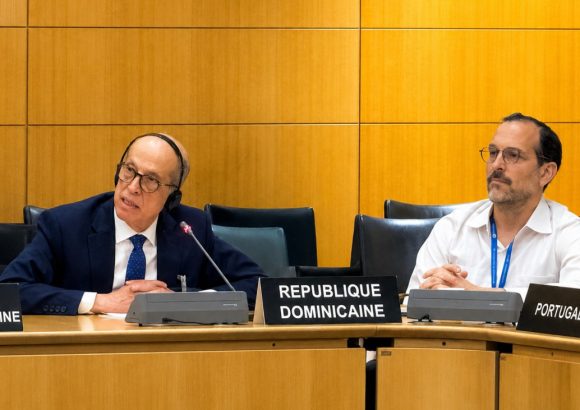
At the OECD’s Inclusive Forum on Carbon Mitigation Approaches held in Paris, a top climate leader has issued a urgent call for nations across the globe to speed up their shift to sustainable models of economic development. Max Puig, Executive Vice President of the National Council for Climate Change, used the platform to stress that global climate action cannot focus solely on cutting greenhouse gas emissions—it must also center the improvement of public social well-being as a core priority.
Puig used his home country, the Dominican Republic, as an example of actionable climate leadership, outlining the nation’s firm commitment to rolling out ambitious climate policies that drive transformative structural change across its most carbon-intensive key sectors. At the heart of this work is the Dominican Republic’s updated national climate strategy, NDC 3.0, which lays out the country’s updated targets and roadmap for climate action. To turn these plans into tangible results, Puig explained that the Dominican government is actively strengthening national systems for climate finance, regulatory transparency, and on-the-ground implementation, all to ensure every climate initiative delivers measurable, impactful outcomes.
Looking across key economic sectors, Puig highlighted the Dominican Republic’s ongoing work to cut emissions in four critical areas: electricity generation, manufacturing, agriculture, and transportation. He emphasized that targeted modernization of these foundational industries is an indispensable step toward building a resilient low-carbon economy. Ultimately, Puig argued that broad, collaborative international cooperation is the only way to lock in long-term economic and social resilience for nations around the world as they confront the growing threat of climate change.