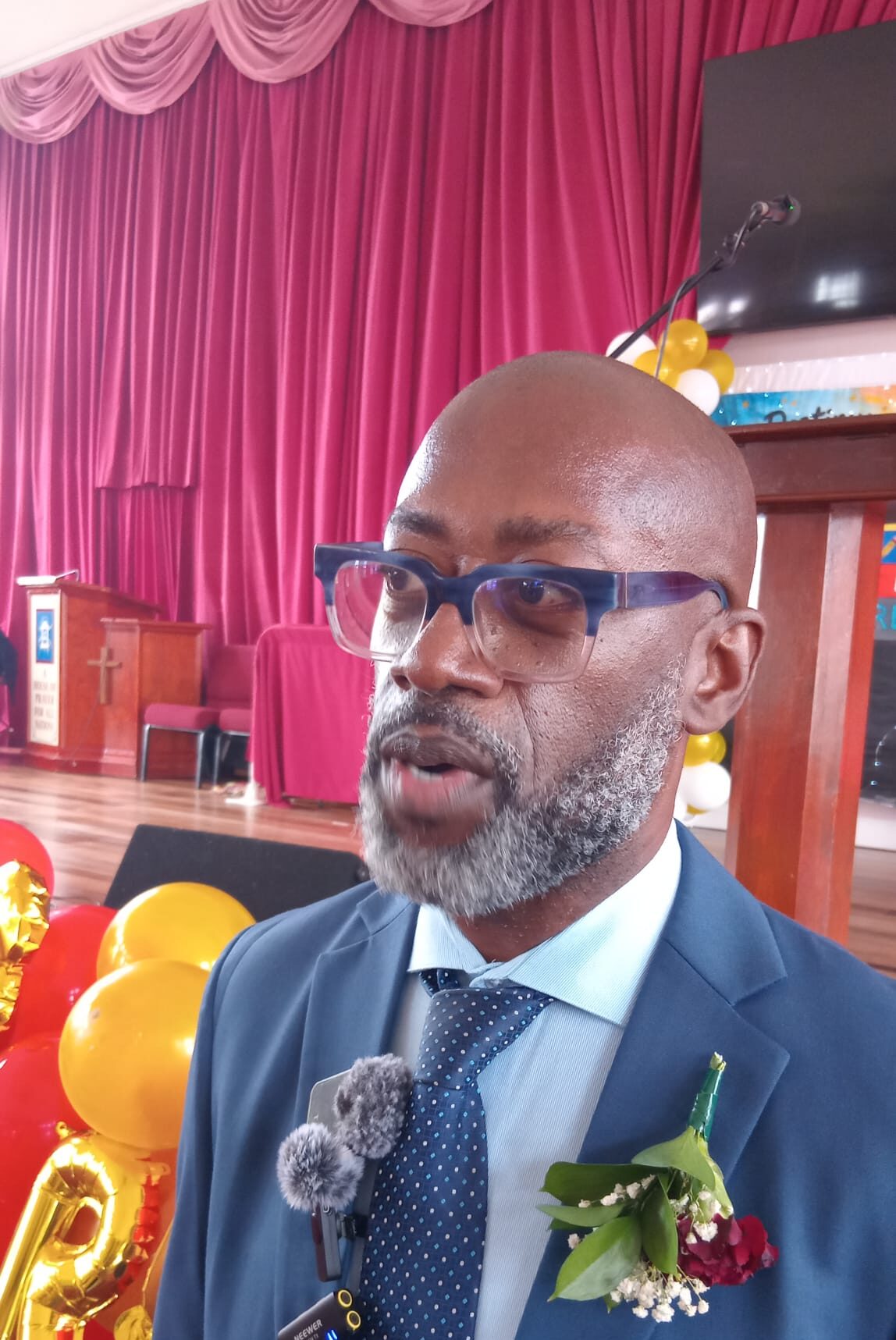
Following the release of 2025 Common Entrance examination results that placed private schools clearly ahead of their public-sector counterparts, the Barbados Union of Teachers (BUT) is pressing the nation’s Ministry of Education Transformation for urgent answers about the growing performance divide between the two education systems.
BUT President Rudy Lovell is pushing for full transparency from the ministry, arguing that any direct comparison of outcomes between private and public schools is inherently unfair given the stark, well-documented gaps in resourcing, parental participation and operational stability that separate the two sectors. The results released Monday made headlines for one key data point: St Gabriel’s, a private Anglican institution, produced both the top-performing boy and top-performing girl in this year’s Common Entrance examination. Notably, the ministry did not release any additional granular data breaking down top-scoring student distribution between private and public schools, leaving broader trends unconfirmed.
“There are multiple external factors that could drive this performance gap between public and private education institutions,” Lovell stated in his address to reporters. “We need the ministry to share its own analysis of what factors are leading to private schools consistently outperforming public ones.”
While Lovell was quick to affirm that teaching staff in both sectors hold equally high qualifications, he outlined three key structural advantages that benefit private schools, starting with funding and resource allocation. This point comes despite Barbados consistently allocating roughly 5% of its gross domestic product to public education, a share that ranks among the highest for North American and Caribbean nations. Even with this substantial government investment, Lovell claims that public school teachers are frequently forced to spend personal funds to cover basic classroom needs that go unmet by public budgets.
“From our perspective, private schools operate with far more robust resourcing than public institutions,” Lovell explained. “Public school teachers already contribute a huge amount of personal funding to keep their classrooms running, purchasing essential learning materials out of their own pockets. We have yet to see whether private school teachers face the same financial burden, and we want clarity on that.”
A second key disparity Lovell highlighted is the level of parental engagement. While public schools do receive support from caregivers, he noted that this involvement pales in comparison to the consistent, heavy participation seen in most private school communities, a gap that directly impacts student outcomes.
The third and most disruptive disadvantage facing public schools, Lovell argued, is ongoing infrastructural and environmental challenges that repeatedly force campus closures. These unplanned shutdowns have severely disrupted the academic calendar for public school students, a crisis that almost never impacts private school operations.
“Any head-to-head comparison of results is unfair when both sectors follow the exact national curriculum set by the Ministry of Education, but operate in completely different conditions,” Lovell emphasized. “When can anyone remember the last time a private school was forced to close for environmental or infrastructural reasons? This year alone, public schools have faced repeated closures tied to these issues, interrupting learning week after week.”
Beyond the private-public performance divide, Lovell also raised alarm over the persistent downward trend in male student performance relative to female peers. When asked whether current government efforts to support male learners are sufficient, Lovell replied that far more action is needed, and called on the ministry to implement a full overhaul of public school staffing frameworks.
A core demand from the BUT is the introduction of specialized teaching roles in core subject areas across public primary schools. “We want to see public schools bring on specialized teachers focused specifically on high-priority subjects like mathematics, English, and reading,” Lovell urged. “This targeted expertise would help address performance gaps and support all learners, including our male students who have been falling behind in recent years.”