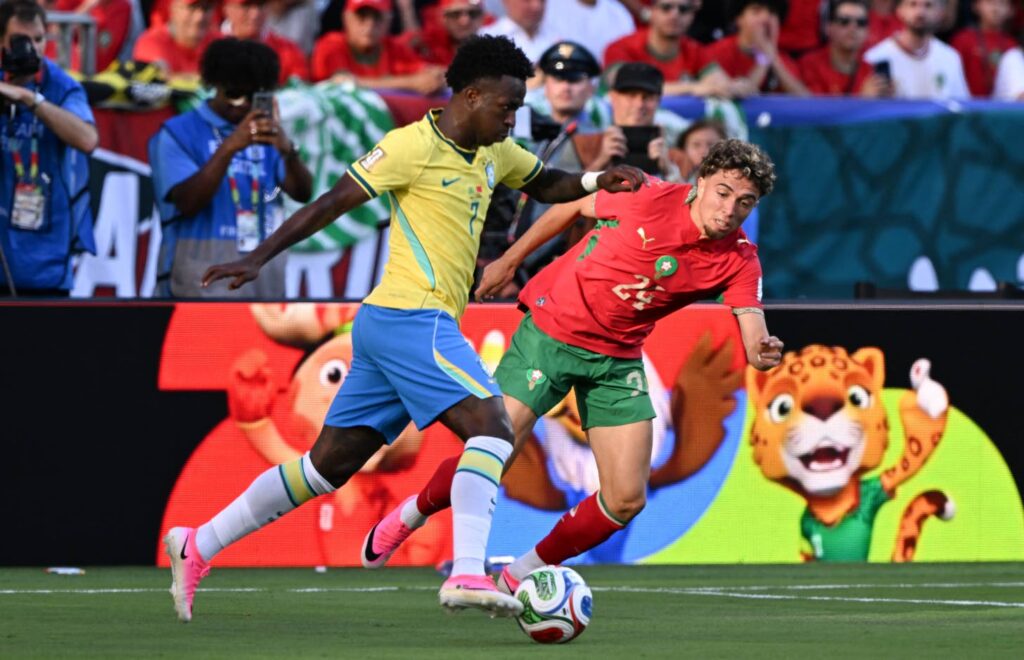
The 2026 FIFA World Cup co-hosted across North America has become the center of a growing debate, centered on a seemingly small rule change that has split players, fans, and analysts: mandatory mid-half hydration breaks. What was introduced as a measure to protect player welfare has sparked accusations of greedy commercialization, disrupted match flow, and permanent damage to soccer’s core identity at the sport’s biggest global tournament.
Netherlands captain Virgil van Dijk became one of the most high-profile critics of the policy following his side’s 2-2 draw with Japan in an air-conditioned, roofed arena in Dallas, Texas on Sunday. The Liverpool defender pointed out that the breaks consistently line up with commercial television cuts, a disruption that detracts from the viewing experience even for neutral audiences watching from home. “I was watching almost all of the games up until today, and every time going into a commercial is a bit… not really that I like it,” Van Dijk told reporters. “I think for the neutral watchers on TV it’s also not great.”
Van Dijk’s criticism echoes widespread fan discontent across tournament host cities. On the same day as the Netherlands-Japan clash, fans in Monterrey, Mexico booed loudly when the first-half hydration pause was called during Sweden’s 5-1 win over Tunisia. Just a day later, spectators in Atlanta’s climate-controlled stadium jeered the break during Spain’s match against Cape Verde, making clear that opposition to the policy is not isolated to one region.
FIFA’s mandate requires two three-minute hydration breaks – one midway through each half – at every World Cup match, regardless of venue conditions or ambient temperature. Even matches played in fully temperature-controlled indoor arenas, like the Dallas Cowboys’ AT&T Stadium where the Netherlands faced Japan, still see play stopped for the pauses. That decision has amplified criticism from those who see the policy as driven by revenue rather than player safety.
For United States broadcasters, the breaks create a built-in window for additional commercial advertisements – a standard practice in major American professional sports, but an unprecedented disruption to traditional soccer broadcast schedules. Leading British football journalist Henry Winter has argued that the policy is a direct assault on soccer’s traditional structure, turning a “game of two halves” into a game of four quarters, all in pursuit of additional advertising revenue.
“the greatest sport and event was damaged for fistfuls of dollars,” Winter said, warning that if the change is accepted at the World Cup, it could soon spread to domestic leagues around the world. He called for widespread pushback, noting that UK public broadcasters the BBC and ITV have already opted not to cut to commercials during the breaks, unlike their American counterparts. “If we tolerate this, our TV games could be next,” he added.
Beyond commercial concerns, many observers have noted that the breaks disrupt the natural rhythm of matches, and often shift momentum unexpectedly between teams. In one high-profile example, debutant side Curacao had fought back to level 1-1 against powerhouse Germany in Houston’s roofed stadium before the first hydration pause. After the break, Curacao’s early momentum vanished completely, with Germany going on to secure a lopsided 7-1 victory. Coaches frequently use the unplanned stoppage to deliver new tactical instructions, creating an additional advantage for teams that have already lost early control of a match.
Not all voices in the tournament have opposed the policy, however. Spain manager Luis de la Fuente argued that player welfare must remain the top priority, noting that elite soccer’s extreme physical intensity makes brief rest stops beneficial for sustaining performance. “It is difficult to sustain that level of physical exertion for long periods, and I believe those breaks offer a brief respite to recharge and continue competing well,” he said.
Even de la Fuente, though, has questioned the one-size-fits-all mandate, pointing out that temperatures vary dramatically across the 16 World Cup host cities. While some southern venues face extreme summer heat, other host locations have recorded mild temperatures in the 15 to 28 degree Celsius range this week, making mandatory stops unnecessary.
Van Dijk echoed that view, calling for a flexible approach that adjusts to the specific conditions of each match. “If it’s really hot, obviously it would be good to put them in,” he said. “But I think you have to look at it in every game separately in my opinion.”
FIFA has repeatedly defended the policy, rejecting accusations that it is motivated by greed, and has stressed that the breaks are intended first and foremost to protect player health. Still, the controversy shows little sign of fading, as traditionalist fans and prominent figures in the sport continue to push back against what they see as an unnecessary change to the sport they love.