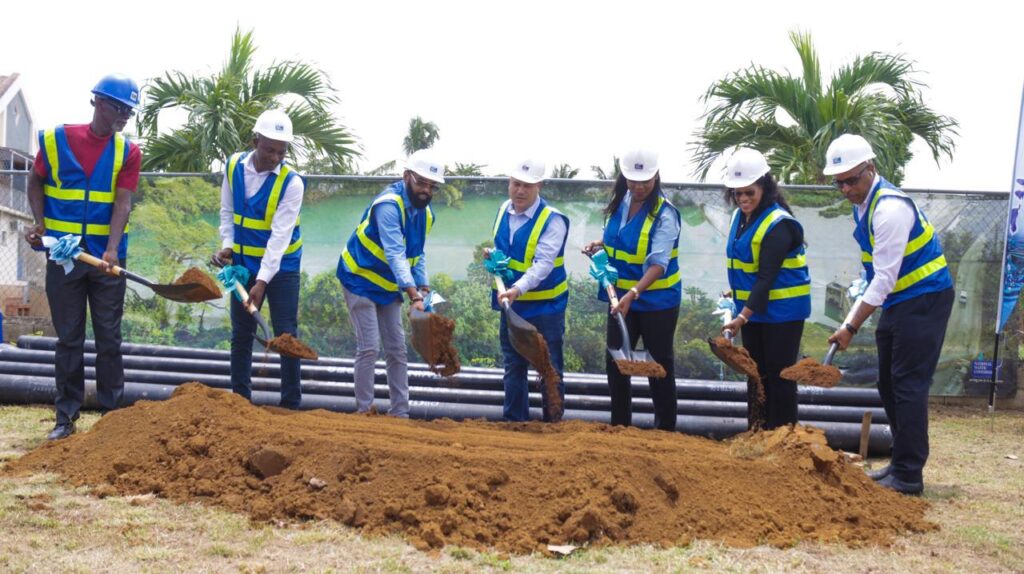
ST ELIZABETH, Jamaica — Officials launched a critical water infrastructure improvement initiative this week, breaking ground on the long-awaited $148 million Santa Cruz By-pass Mains Replacement Project, a core component of the broader Santa Cruz Water Supply Improvement Programme led by the National Water Commission (NWC).
For more than half a century, the region has relied on an outdated three-inch cast iron pipeline laid in the 1970s—an asset that has long exceeded its projected service life. Under the new project, this aging network will be replaced with a robust six-inch ductile iron main built to deliver decades of reliable service. When construction wraps up in November 2026, the upgrade is projected to transform water access for roughly 1,200 individual customers, representing around 300 households across the Santa Cruz By-pass corridor and adjacent communities including New River, Brighton, Friendship Street, and Doctor Rock. Key improvements will include more consistent water flow, stronger overall system integrity, and increased water pressure across the entire service area.
Attending the official groundbreaking ceremony on Thursday was Matthew Samuda, Jamaica’s Minister of Water, Environment and Climate Change, who framed the project as a foundational investment in the region’s future. “The Santa Cruz pipes, laid in the 1970s, are simply past their useful life,” Samuda told attendees. “Today is a major milestone for a project that matters to the future of Santa Cruz. We are investing just under $150 million in your water supply, and I want to assure you that the contractors will ensure you have a Merry Christmas in this area once the project is completed.”
NWC Project Engineer Neville Green explained the technical and operational benefits of the upgrade, noting that the larger, more durable ductile iron pipeline will eliminate the frequent pipe bursts that have long disrupted service. “Installing the durable six-inch ductile iron pipeline will allow us to safely increase system pressure and optimise distribution without recurring bursts,” Green said. “This upgrade will drastically reduce Non-Revenue Water losses, ensuring that the water treated by NWC reaches consumers’ taps rather than leaking into the ground.”
To address community concerns about construction disruption, the NWC has committed to fully repaving affected road segments once pipeline installation is complete, restoring full, smooth access for local motorists and pedestrians.
Samuda also used the event to respond to recent public scrutiny of the NWC’s capital budget implementation, offering new transparency into the commission’s fiscal performance. He confirmed that the NWC spent 94% of its allocated capital budget in the last fiscal year, with the remaining 6% disbursed in April this year. The delay in releasing those remaining funds was tied to after-effects of Hurricane Melissa, he added. Samuda also noted that a recent independent performance audit turned up no allegations of mismanagement or corruption, and that the NWC has already moved forward with implementing all operational and management recommendations put forward by auditors.