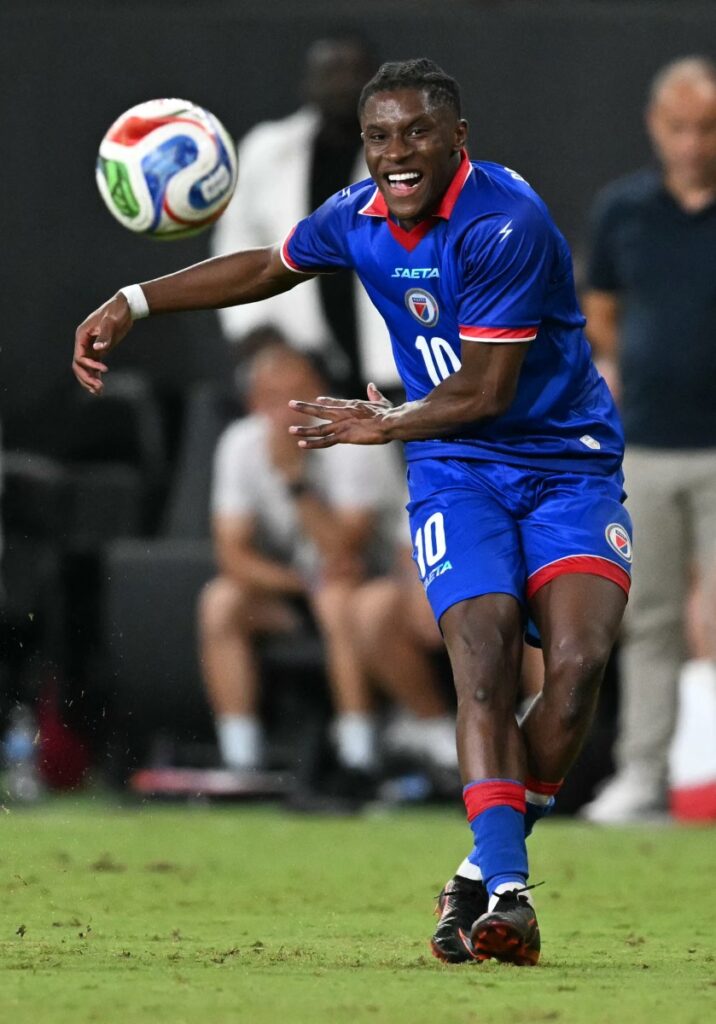
In the soft hum of training drills at Stockton University’s Galloway campus, tucked away near New Jersey’s Atlantic City, Haiti’s men’s national soccer team is chasing a historic milestone that transcends the sport. For a nation grappling with years of crippling political instability, rampant gang violence that has displaced nearly 1.5 million people, and widespread global narratives focused only on its crises, this year’s World Cup run represents far more than 90 minutes of play on grass.
It has been 50 long years since Haiti last graced a World Cup pitch. Back in 1974, the side exited the tournament without a single point, conceding 14 goals across three matches. Now, 5 decades later, the Grenadiers — as they are nicknamed — are gearing up for their opening Group B clash against Scotland in Boston this Saturday, with subsequent matches against global powerhouse Brazil in Philadelphia on June 19 and Morocco in Atlanta on June 24. Ranked 83rd in the FIFA global rankings, they enter the tournament as clear underdogs in one of the competition’s toughest groups, but that label has only fueled their quiet confidence that they can pull off one of the tournament’s biggest upsets.
Much of Haiti’s qualifying success rested on the shoulders of players born outside the Caribbean nation, who carry deep ancestral and familial ties to their homeland. Star midfielder Jean-Ricner Bellegarde, a 27-year-old veteran of three seasons in England’s Premier League with Wolverhampton Wanderers, was born in the suburbs of Paris. He played a pivotal role in Haiti’s surprise qualifying campaign, where the side finished above 2014 World Cup quarter-finalists Costa Rica to secure their spot.
Standing on the training pitch, with young local fans and members of the U.S.-based Haitian diaspora watching on, Bellegarde spoke of what this moment means for a nation that rarely gets to celebrate global achievement. “I feel such overwhelming pride for the Haitian people. The world often carries a narrow, negative image of our country, focused only on the problems we face. But this journey will bring so much joy to the country, to all our people, and to our families,” he told AFP. “This is a huge celebration for everyone back home, and we are all here to savor every second of it.”
Like many of his teammates, Bellegarde takes the tournament one match at a time. “We’re just focusing on the next game, giving everything we have, and seeing where that effort takes us,” he added.
The harsh reality of life back in Haiti has cast a quiet shadow over the team’s World Cup run. A U.S. travel ban means no fans can make the trip from Haiti to cheer the side on in person, and ongoing security chaos forced the team to play all their qualifying matches on neutral ground, far from home fans. But the large, vibrant Haitian diaspora across the United States has stepped in to fill that gap, turning out in huge numbers for two warm-up friendlies in Florida last week, where the side cruised to a 4-0 win over New Zealand — a result that served as a warning shot to their upcoming World Cup opponents.
Derrick Etienne, a 29-year-old winger with Major League Soccer’s Toronto FC, was born in Richmond, Virginia, but retains close family ties to Haiti. He was part of the 2019 Haitian side that reached the semi-finals of the Concacaf Gold Cup, also hosted in the U.S., and he says the outpouring of support from the diaspora has already made the World Cup journey feel special. “The Haitian community here always shows up for this team. When we played in Fort Lauderdale and Miami last week, everyone got to see the incredible support we had and the electric atmosphere they created,” Etienne explained. “It’s obviously really difficult not being able to play in front of home fans in our own country, but at the end of the day, we came here to do something for Haiti. We want to shine a light on what’s happening there, and change the narrative that surrounds our nation.”
For Etienne and his teammates, the goal is simple: to secure Haiti’s first ever World Cup win, a milestone that would make history for the small Caribbean nation. “We’re trying to do something that no Haitian team has ever done before,” he said. “We know it’s an incredibly tough challenge, but we believe in ourselves. We don’t have anything to lose, and everything to gain — that’s the mindset we’re bringing into every match.”
That confidence is boosted by the presence of 25-year-old Sunderland striker Wilson Isidor, a new addition to the national side who scored six goals in the English Premier League last season. Born in France, Isidor made his Haiti debut in March, honoring his father’s home country, and Etienne says the pacey, clinical forward is a game-changing weapon for the side. “He’s direct, strong, technically brilliant, and he can finish really well. Having a player of his quality with us is incredible,” Etienne said.
Speaking after a training session, while taking a break from signing autographs for fans, Isidor echoed his teammates’ sentiment. “I’m so proud to represent the country my dad comes from,” he said. “I hope we have some amazing adventures together on this stage. We came here to deliver a message: we are not just a small nation that only deals with trouble. We are here to compete.”