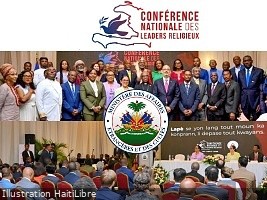
Against the backdrop of long-standing political and social unrest that has shaken Haiti to its core, a landmark two-day gathering focused on national healing got underway on May 28, 2026, at Port-au-Prince’s Royal Oasis Hotel in the district of Pétion-Ville. Headlined by Prime Minister Alix Didier Fils-Aimé and Foreign Affairs and Religious Affairs Minister Raina Forbin, the National Conference of Religious Leaders for Peace, Stability, and Civic Engagement has drawn a diverse cross-section of stakeholders to build collective solutions for the crisis-battered country.
More than 100 religious leaders representing every major faith tradition across Haiti — from Catholic and Protestant communities to practitioners of Vodou — joined sitting government officials, members of the diplomatic and consular corps, representatives from leading international organizations, and civil society advocates for the convening. The conference is structured around four core pressing themes: violence prevention, civic education, targeted support for Haiti’s large youth population, and the development of long-term, sustainable strategies to embed lasting peace, strengthen democratic civic engagement, and rebuild fractured social cohesion across the nation.
In her opening remarks, Minister Forbin underscored the Haitian government’s formal commitment to embedding religious leaders as core partners in all state-led reconstruction initiatives. She emphasized that no project aimed at rebuilding Haiti can achieve lasting success without drawing on the deep spiritual, moral, and community-rooted human capital that faith leaders bring to the table. “Peace is not a task for the government alone — it is a collective project that requires every sector of society to come together,” Forbin stated, adding that sustainable national reconstruction depends on a strategic, peace-centered alliance between the state, faith leaders, local communities, and Haiti’s young people.
Prime Minister Fils-Aimé echoed this framing, praising religious authorities as an “essential moral force” that is critical to rebuilding Haiti’s tattered social fabric and restoring public trust in national institutions. He also reaffirmed his administration’s core priorities: securing the country against ongoing violence, delivering support to the hundreds of thousands of displaced Haitians, and paving the way for a return to full constitutional order through the organization of transparent, credible general elections.
The conference turned next to the socio-economic roots of Haiti’s instability, with Social Affairs and Labour Minister Marc-Élie Nelson bringing a critical focus on equity to the discussions. Nelson argued that efforts to root out widespread insecurity cannot be separated from a broader push for meaningful social justice. Framing religious leaders as the “guardians of the collective conscience” of the Haitian people, he called for a people-centered approach to shaping public policy that centers the needs of the most vulnerable, rather than elite interests. He urged faith leaders to lean into their unique community role to advance solidarity and cohesion across the country.
Pédrica Saint-Jean, Haiti’s Minister for the Status of Women and Women’s Rights, joined a slate of cultural and religious leaders to highlight the urgent work of rebuilding frayed social ties at the local level. Saint-Jean emphasized the critical need to expand social protection for marginalized groups including children, women, and girls, and to empower every Haitian citizen to act as an agent of peace in their own communities.
Following the formal opening ceremony, attendees split into working groups focused on three key strategic priorities: preventing further violence and delivering support to survivors of conflict; expanding civic education to foster a culture of civic responsibility across the country; and developing sustainable economic and social alternatives for Haitian youth, who make up a large majority of the country’s population and have been disproportionately impacted by ongoing instability.
In a break from past national gatherings that have been concentrated exclusively in the capital, the Haitian government has plans to expand the conference model to outlying regions in the coming months. After concluding the inaugural convening in Pétion-Ville, the government will replicate the gathering in Haiti’s Great North and Far South regions, ensuring that community and faith leaders from across the country have a seat at the table shaping Haiti’s reconstruction agenda. The conference marks a major step forward in the government’s effort to position religious communities as core, ongoing partners in building a more stable and peaceful future for Haiti.