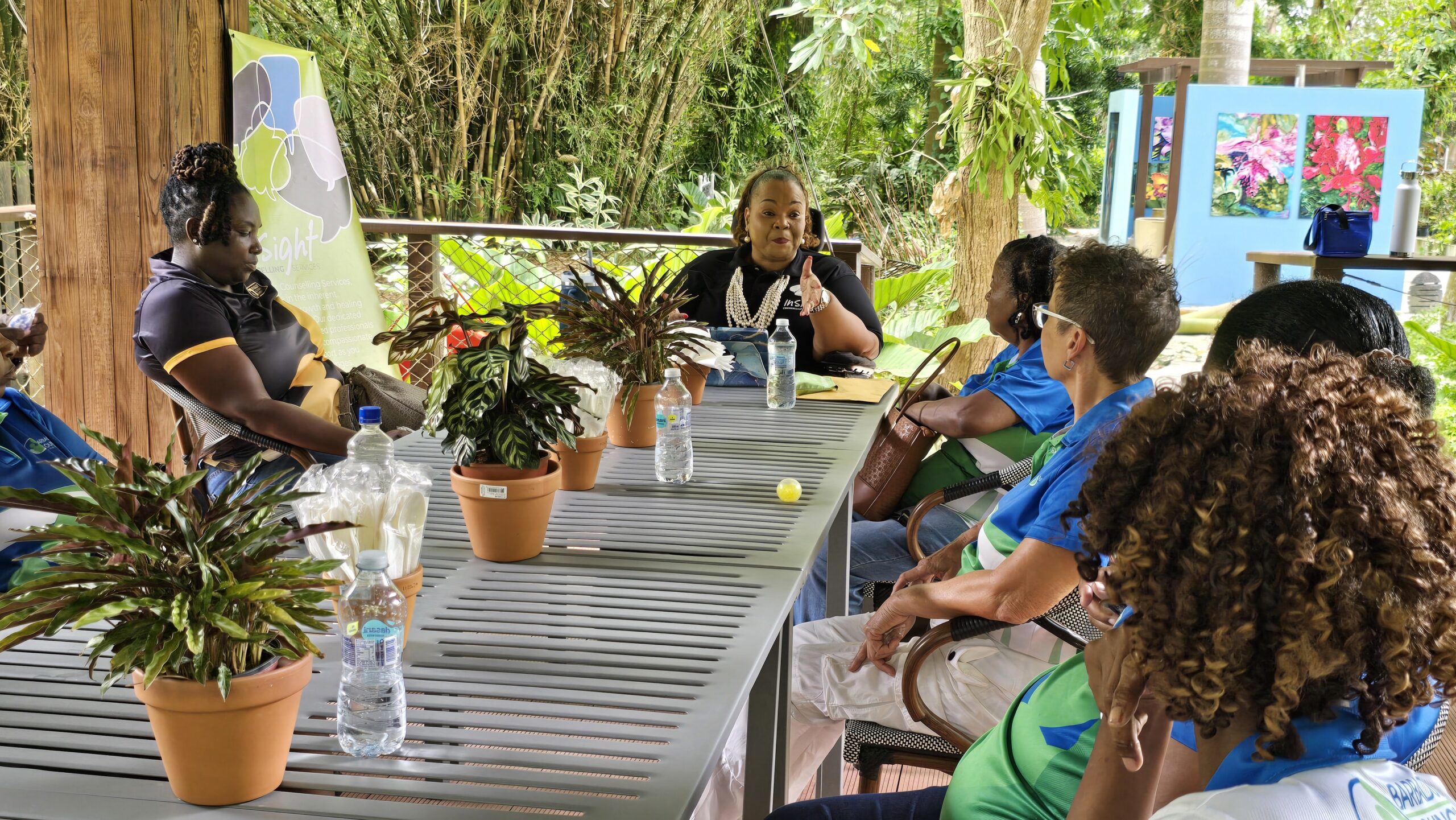
Caregiving for a dependent family member, loved one, or ward is far from a simple undertaking. The constant physical, emotional, and mental demands of the role often leave caregivers struggling under the weight of their responsibilities, even as public focus almost always remains on the people receiving care rather than the people providing it. On Friday, a small but impactful event at a Christ Church garden centre sought to change that narrative, carving out dedicated space to honor, listen to, and support caregivers whose tireless work often goes unrecognized.
Barbados TODAY reporters on site at Nature Care in Lowlands documented the event, a Mental Wellness Day hosted by staff from the Barbados Council for the Disabled (BCD) and led by counselling psychologist Janelle Skinner, who herself lives as a paraplegic. Drawing on both her professional expertise and personal experience as a disabled person relying on care from her mother, Skinner opened with a frank discussion of the little-discussed crisis of caregiver burnout.
“Caregiving drains you in every way – emotionally, physically, mentally – and burnout is a very real experience that far too many caregivers go through,” she explained. Skinner emphasized that caregivers cannot sustain their work without intentional breaks, even short ones, that let them step away from their role and recharge. “Too many caregivers operate in constant survival mode. They pour every bit of energy into the person they care for and completely ignore their own needs. They never stop to ask, ‘What will happen to the person I care for if something happens to me?’ That’s why creating spaces where caregivers can receive care themselves is so critical.”
Speaking from her own experience, Skinner noted that she has learned to spot early signs of burnout in her mother, Joan Skinner-Graham, who has served as her primary caregiver for 26 years. “I do everything I can do independently to reduce her load, but there are some things I cannot do on my own. The key is being attentive to those subtle signs that fatigue is building, both for the disabled person and the caregiver themselves.”
Skinner also pointed to the importance of professional support and strong personal networks, sharing that she sees a therapist herself to manage the emotional weight of her work and personal circumstances. “There is no shame in therapy – it helps. Having a support network means you always have people you can turn to, people who can step into the caregiving role temporarily so you can step back, reset, and refocus,” she said.
For Joan Skinner-Graham, the journey of caregiving began with a devastating phone call 26 years ago, when her daughter was on holiday in New York. “My niece called and said she had bad news. Janelle was in the hospital, paralyzed. I got on a flight the very next day and stayed with her until she could come home,” she recalled. Through decades of care, she has held fast to a core principle: never let the person you care for feel like a burden.
“When you care for a person with a disability, you must never let them see your frustration or anger,” she said. “They will internalize that, think they are a burden, and that sets back their own progress. If you feel overwhelmed, step away for a few minutes, take a breath, and come back when you are grounded. That small break makes all the difference.”
Now retired, Skinner-Graham admitted that the long-term weight of caregiving brings quiet worries, especially as she ages. “Many nights I pray for strength to be here for my daughter. What I’ve seen over the years is that unaddressed stress kills caregivers. Too many people bottle up their feelings instead of reaching out, and that stress makes them sick, and then there is no one left to care for them. That’s why we need more accessible counselling and support for caregivers – we need spaces to talk through what we’re feeling instead of holding it all in.”
When it comes to balancing daily care with other life responsibilities, Skinner-Graham relies on intentional planning and unapologetic self-care. “I plan out my days, and I stick to my plan. I get Janelle set up for her work day, handle household tasks, and when I need a break, I tell her straight: this is mommy’s time. I sit down, play my game, and recharge before I come back. There’s no shame in taking that time for yourself.”
BCD President Patricia Padmore-Blackman, who is blind and cares for a disabled son, echoed that call for intentional self-care for caregivers. “My son has been with me since birth, so it can feel like I never get a break. There are definitely days when I need to step away,” she said, crediting her own support network of family, friends, and professionals for helping her sustain her role over decades. “That support is non-negotiable. We can’t do this alone.”
BCD Operations Manager Roseanna Tudor explained that Friday’s gathering was designed specifically to prioritize the mental and emotional wellbeing of BCD’s own frontline staff, who navigate high-stress, emotionally demanding work supporting disabled people and their families every day. “This event was about reducing emotional fatigue, building stronger connections among staff, and creating a culture of psychological safety,” Tudor said. “When we invest in our staff’s wellbeing, that directly improves the quality of the services we deliver. We need workplaces that prioritize care for the people who care for others, and I encourage every organization to host similar events for their teams.”