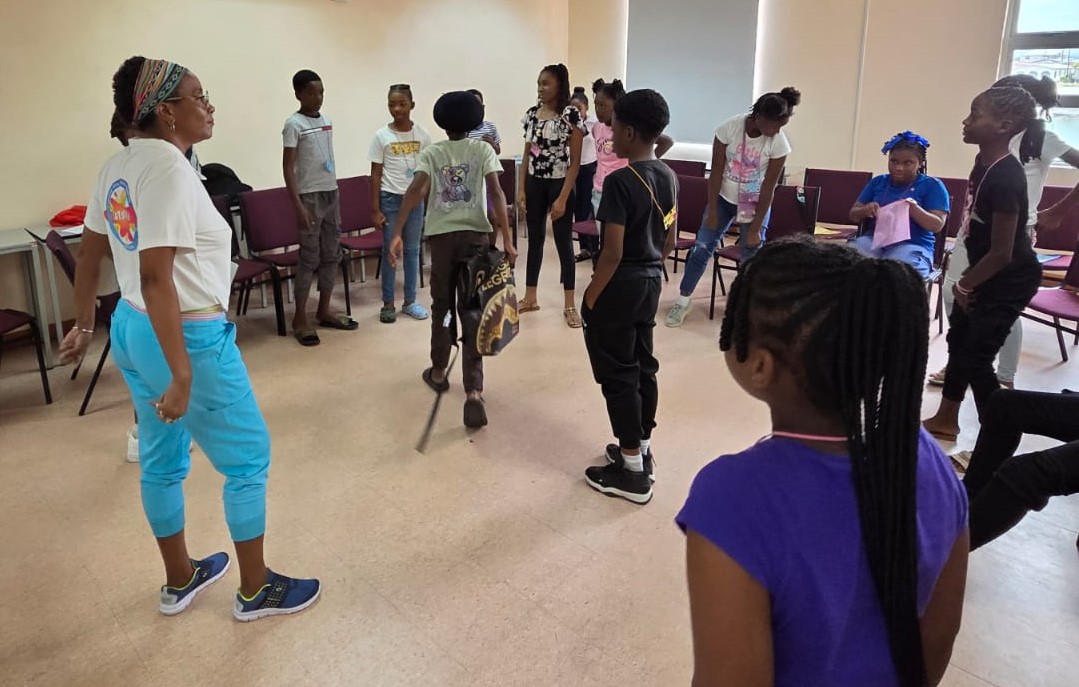
For thousands of young students moving from primary to secondary education, the jump in academic expectations, combined with pre-exam stress and uncertainty about new social environments, can derail even the most motivated learners. Now, a community-focused organization is stepping in with a creative, accessible solution to support the most vulnerable members of this student population.
The Pinelands Creative Workshop, a community arts and education non-profit, has launched Finding Your Balance, a ground-breaking new initiative designed to address two growing challenges: widening academic gaps for at-risk pupils and the rapid rise of exam anxiety ahead of the critical 11-Plus examination, which determines secondary school placement.
Funded by the Maria Holder Memorial Trust, the programme specifically targets students who are falling behind academically or feeling overwhelmed by the impending transition to secondary education. Speaking on Saturday, Pinelands Creative Workshop Chief Executive Officer Sophia Greaves outlined the urgent need that prompted the programme’s creation, noting that the organization had observed alarming gaps in student proficiency ahead of exam season.
“We were seeing a trend where a number of our students… were operating basically at a very early stage, like Class 1, and having significant challenges,” Greaves explained. “Along with that, we saw anxiety issues that normally come as we move towards exam mode.”
Unlike traditional tutoring programmes that rely on rote learning and carry steep costs that put them out of reach for low-income families, Finding Your Balance leverages creative arts interventions including drama, sound-based activities and movement work to equip students with practical social and emotional skills. These tools help young learners navigate common secondary school challenges such as bullying, interpersonal conflict, and the increased academic rigour of higher-level classes. Crucially, the programme also fills an academic gap for families who cannot afford private supplementary tutoring, providing free or low-cost support that continues from a student’s first year of secondary school all the way through to their Caribbean Examinations Council (CXC) exams.
Greaves explained that secondary school classroom dynamics create inherent gaps that the initiative is designed to address, noting that the programme is built to complement, rather than replace, the support offered in mainstream school settings. “The primary reality is that secondary school is not as supportive as primary school,” she said. “Classes are 30 children; there’s no way a teacher can get over concepts with 30 children of different abilities at the same time. We are trying to be complementary to what is offered in schools.”
Recognizing that student success depends on whole-family support, the initiative also extends beyond the student population to engage caregivers through the organization’s “Parenting with a Purpose” seminar series. These sessions provide parents and guardians with holistic social and emotional resources to help them support their children through this pivotal educational transition, ensuring that support reaches every part of a student’s life.