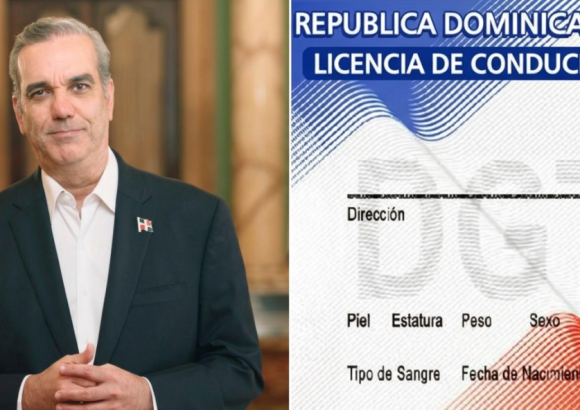
On Friday, Dominican Republic President Luis Abinader signed Decree 330-26, a landmark regulatory update that revises Article 21 of the nation’s Driver’s License Regulations. The reform, centered on balancing road safety improvements with more flexible terms for senior drivers, revises existing validity periods for all driver license categories and overturns the prior two-year renewal mandate for drivers over 65 years old.
This regulatory change draws its legal foundation from Law No. 63-17, the country’s overarching legislation governing mobility, land transportation, traffic management, and road safety. Designed as the core legal framework for all vehicular movement across the Dominican Republic, Law 63-17 requires ongoing regulatory updates to enforce measures that protect all public road users and maintain safe transit conditions.
Under the new rules, license validity timelines are structured by license category and driver age. For light vehicle license categories 01, 02, and 05, licenses will remain valid for 4 years until the driver turns 75. Once a driver passes the 75-year threshold, renewals will be required every two years, matching the strictness of the previous rule for all drivers over 65. For commercial and heavier vehicle categories 03 and 04, licenses will be valid for 3 years before the driver reaches 75 years of age, after which annual renewal will become mandatory.
The revised regulation also retains flexibility for individual health circumstances. If a medical evaluation during license issuance or renewal identifies an underlying health condition that could deteriorate over time and impair a driver’s ability to operate a vehicle safely, authorities may shorten the license validity period regardless of the driver’s age. All existing requirements for periodic health and aptitude evaluations remain in place; these checks are critical to confirming that drivers still maintain the physical, cognitive, and skill-based capabilities required for safe motor vehicle operation.
To enforce the new rules, the decree reaffirms that operating a vehicle on public roads with an expired license remains an offense. Any non-compliance case will be referred to the National Institute of Transit and Land Transportation (INTRANT) for processing, following the procedures outlined in Law 63-17. The decree formally mandates INTRANT to implement all necessary administrative adjustments to roll out the updated regulatory framework smoothly across the country.