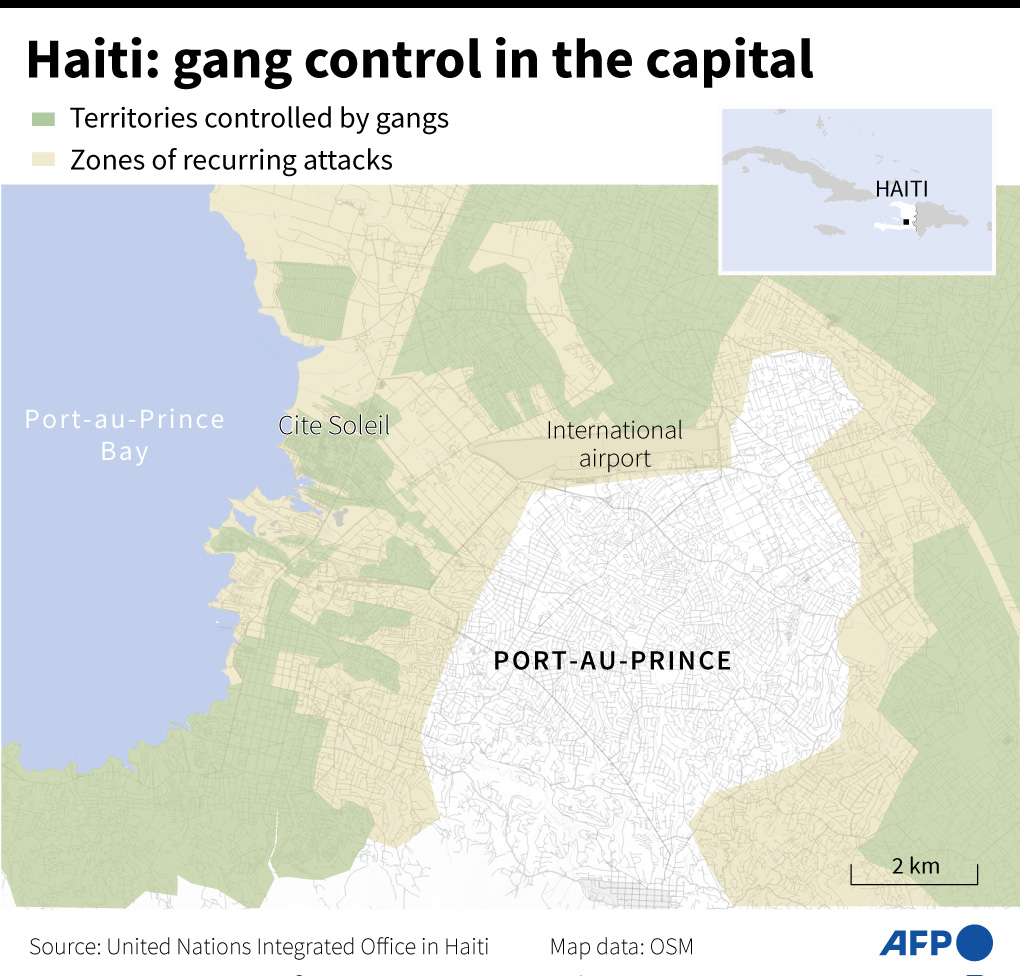
A devastating new wave of gang violence has torn through residential neighborhoods north of Haiti’s capital Port-au-Prince, forcing more than 5,000 residents to flee their homes since Sunday, the International Organization for Migration (IOM) has confirmed. The outbreak of bloodshed is the latest escalation of a years-long crisis that has kept the Western Hemisphere’s poorest nation trapped in chronic instability, as heavily armed criminal organizations control large swathes of territory and carry out widespread human rights abuses including extrajudicial killings, sexual violence, looting, and mass kidnappings. The country’s security collapse accelerated dramatically in early 2024, when coordinated gang attacks destabilized the government enough to force the resignation of Haiti’s unelected prime minister.
Local human rights advocate Fritznel Pierre told Magik 9, a Port-au-Prince-based radio station, on Wednesday that the latest surge of violence, which erupted on May 10, has left widespread destruction in its wake: private residences have been ransacked and burned to the ground, while local commercial shops and public schools have been extensively vandalized. For medical providers operating in the conflict zone, the scale of casualties has overwhelmed existing care capacity. “We’ve never seen so many gunshot victims in such a short period of time,” explained Sarah Chateau, operations director for the medical humanitarian group Doctors Without Borders (Medecins Sans Frontieres, MSF) in Haiti.
As gang clashes spread across northern neighborhoods, multiple medical facilities have been forced to halt services and evacuate all clinical and non-clinical staff. Chateau told AFP that MSF’s facilities have absorbed a flood of patients transferred from other clinics that were forced to close, including Fontaine Hospital, which sits close to the center of the ongoing clashes. “Every time we open the gates to admit new patients, there are members of the public rushing to come inside,” she said. Even facilities that remain operational are not safe from crossfire, Chateau added, describing the chaotic evacuation of patients from other facilities as an extremely high-stress operation, with stray bullets falling across the area even within medical facility perimeters. “We weren’t any safer inside. One of our security guards was hit by a stray bullet,” she confirmed.
On Wednesday, Farhan Haq, deputy spokesperson for the United Nations Secretary-General, reported that medical teams have treated more than 40 people for gunshot wounds in less than 12 hours. He added that the UN Office for the Coordination of Humanitarian Affairs (OCHA) is currently mobilizing a coordinated cross-agency humanitarian response to meet the urgent needs of displaced residents and injured civilians, though operations remain challenging amid the rapidly shifting and highly volatile security situation.
The international community has attempted to address Haiti’s security crisis for more than a year: the UN approved a multinational security support mission in 2023 to assist under-resourced Haitian police in pushing back against gang expansion, but the deployment has been hampered by chronic underfunding and inadequate equipment, leading to inconsistent results. Later that year, the UN Security Council voted to restructure the mission into a more heavily resourced anti-gang intervention force. To date, a 400-strong military contingent from Chad has already arrived in Port-au-Prince to support the operation.
This latest outbreak of violence is the second major displacement event in Haiti’s capital so far this year. Clashes across the same northern districts in March and April displaced nearly 8,000 people, according to UN data, underscoring the persistent deterioration of security even after the deployment of international support.