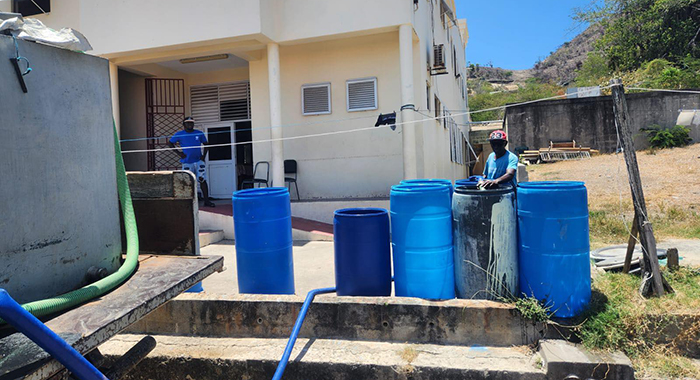
A devastating combination of historic low rainfall, lingering storm damage, and growing demand has pushed the Grenadine Islands of St. Vincent and the Grenadines into what health authorities are calling a “super critical” water shortage, prompting emergency relief measures while the government moves forward with long-overdue infrastructure projects to end chronic water insecurity in the region.
In a radio interview with NBC Radio on May 14, 2026, Health Minister Daniel Cummings — a former general manager of the country’s Central Water and Sewerage Authority (CWSA) — explained that while the entire nation is grappling with drought conditions amplified by the 2021 eruption of La Soufriere volcano, the most severe crisis is concentrated in the smaller Grenadine islands. Unlike mainland St. Vincent, which draws water from natural rivers and mountain springs, the Grenadines have no permanent surface streams and limited groundwater reserves, leaving the chain almost entirely dependent on harvested rainwater stored in private household tanks and public catchment systems.
Cummings outlined three overlapping factors that pushed the region into its current emergency. First, the 2025 wet season brought just 687.1 millimeters of rainfall across the country — less than half the average recorded over the previous four years, which saw between 1,455 mm and 1,552 mm of rain annually. Second, Hurricane Beryl, which made landfall in July 2024, caused widespread damage to the region’s rain-harvesting infrastructure: many rooftops and their water-channeling guttering systems were destroyed, hundreds of private storage tanks were shattered or contaminated after being breached, and public hillside catchment systems that feed large communal storage tanks were also severely damaged. Third, growing domestic and commercial demand for water has stretched already depleted reserves even thinner.
The lingering impacts of the 2021 La Soufriere eruption have also worsened national water stress, Cummings added. The volcanic blast destroyed vast swathes of mountain vegetation on mainland St. Vincent, reducing the natural retention of rainfall and lowering output from the rivers and springs that supply the mainland. Combined with the ongoing rainfall deficit, this has left the country with far less available water to meet population needs.
Since mid-January 2026, the CWSA has been urging all residents to activate their personal household water storage plans as drought conditions worsened. Now, facing an acute crisis in the Grenadines, the authority is relying on what Cummings calls an expensive and stopgap but unavoidable emergency measure: shipping bulk water by sea to the southernmost islands of the chain, including Union Island, before distributing it to communities via trucks. The CWSA has rented multiple private vessels to accommodate the emergency deliveries, and service frequency is being adjusted in real time based on need — for example, officials added a second delivery to the southern Grenadines within three days after the first shipment proved insufficient to meet demand.
“The transportation of water by boats and subsequently by trucks to the various parts of the Grenadine islands is the most expensive and improper way of doing it, but it has got to be done, because the situation is now super critical,” Cummings said, adding that the agency will continue emergency deliveries for as long as they are required. He praised CWSA staff for their rapid response, noting that the agency is performing beautifully within its current operational constraints.
To address gaps in equitable distribution, the CWSA has implemented a new oversight system: a dedicated CWSA staff member is now posted on each Grenadine island to supervise water distribution, ensuring that no resident is left without access to water for extended periods. The agency is also continuously monitoring storage levels, community demand, and delivery intervals to make proactive adjustments to supply, to maintain a minimum baseline of water access for all residents. As the official June 1 start of the 2026 rainy season approaches, CWSA teams are also working to clean and sanitize damaged public storage tanks to capture as much rainfall as possible when wet weather arrives.
Looking beyond emergency relief, Cummings confirmed the country is on track to secure roughly US$53 million in investment for long-term water infrastructure in the Grenadines, including desalination plants, expanded storage facilities, and a full transmission and distribution network. The minister, who first developed these plans when he led the CWSA in the early 2000s, said the projects will finally bring the Grenadines a reliable year-round piped water supply matching the system that has served neighboring Grenada’s Grenadine islands — Carriacou and Petite Martinique — for decades. Emergency water shipments and other short-term measures are only a stopgap, he noted, and the long-awaited infrastructure projects will address the root of the Grenadines’ chronic water insecurity.