As the Caribbean fishing sector slowly rebuilds from the catastrophic damage wrought by Hurricane Beryl two years ago, a landmark United Nations climate fund is preparing to deliver targeted new grant funding to support recovery efforts across the region.
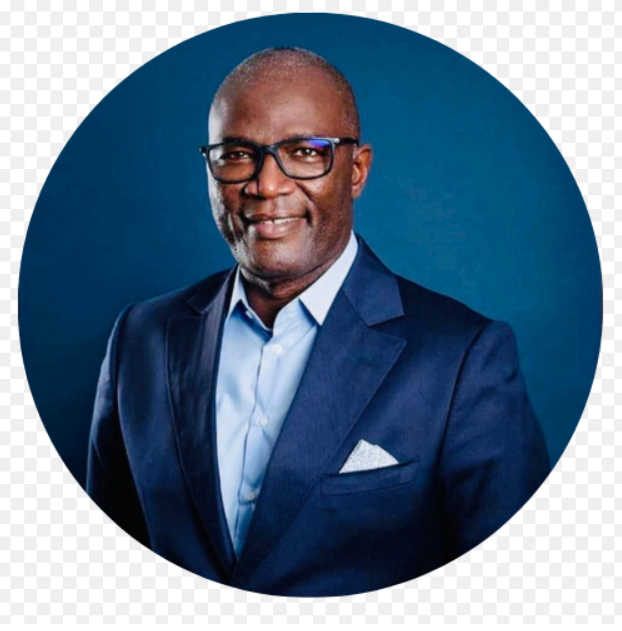
The Fund for Responding to Loss and Damage (FRLD), created under the UN Framework Convention on Climate Change, was designed specifically to support climate-vulnerable nations grappling with the irreversible impacts of climate-driven extreme weather. Now, the fund’s executive director Ibrahima Cheikh Diong is on the ground in Barbados, the small island nation that led global advocacy to establish the financing mechanism, to collect government funding requests ahead of the 2026 Atlantic hurricane season, which kicks off next month.
Barbados has emerged as a global leader in pushing for equitable climate finance, with Prime Minister Mia Mottley becoming one of the most prominent voices in international climate negotiations and a key architect of the fund’s operational framework, the Barbados Implementation Modalities (BIM). On Tuesday, Diong held talks with Deputy Prime Minister Santia Bradshaw to outline the fund’s planned support, a day before he revisited the Bridgetown Fisheries Complex – the facility that bore the worst of Hurricane Beryl’s damage, losing dozens of fishing vessels and sustaining major structural harm.
Earlier this year, the FRLD rolled out a $250 million early intervention grant package under the BIM framework, a milestone for developing nations that bear the brunt of climate change despite contributing the least to global emissions. For Diong, the return trip to Barbados carries deep personal and symbolic meaning: he was on the island in the thick of Hurricane Beryl in 2024, and witnessed firsthand the storm’s destruction and the Barbadian people’s resilience during the initial rebuilding phase.
“I was in Barbados in the middle of Hurricane Beryl. I had a chance to go on the ground and see the damage caused by the hurricane, the resilience of the people of Barbados and the work the government has been doing in rebuilding. So, coming back here, I would like to go back and visit on the ground and see what has happened since the last time I was here,” Diong said.
He added that the visit is also an opportunity to update the Barbadian government on the fund’s progress, acknowledging that Mottley has been the mechanism’s most vocal global champion. “It was here in Barbados a year ago that we launched the Barbados Implementation Modalities (BIM). It is very symbolic to come back and brief the government on progress we have made so far. The whole purpose of the meeting is really to update [Deputy Prime Minister Bradshaw] on the progress we made; and looking ahead, where do we stand on the fund, and hopefully get some support from the government in continuing to advocate for this fund.”
To date, the FRLD has secured $820 million in converted pledges from donor nations around the world, with $440 million already transferred and ready for disbursement. A year ago, the fund’s board approved the $250 million early intervention program, which provides 100% grant funding rather than loans to avoid adding to indebted developing nations’ debt burdens – a response to repeated calls from vulnerable countries that cannot afford to take on new borrowing to recover from climate disasters.
Per the BIM agreement reached in Barbados, at least 50% of all early intervention funding is earmarked for Small Island Developing States (SIDS) and Least Developed Countries (LDCs) – a group that includes Barbados. Initial allocations to eligible countries will range from $5 million to $20 million, with individual nations setting their own funding priorities based on their specific recovery and resilience needs.
Diong is currently facilitating a two-day workshop for CARICOM member states to help governments prepare their funding requests, and reminded regional representatives that June 15 is the firm deadline for submission, with no extensions planned unless the FRLD board votes to approve one. After requests are submitted, the FRLD board will meet in late July to finalize allocations before forwarding recommendations to the fund’s trustee, the World Bank, for disbursement.
“It’s up to the countries, based on their needs, how much they would like to come to FRLD for funding, or other funds as well; ultimately, knowing that when you put that US$5m to US$20m it will be enough to meet their demands. So, we are looking at the gaps we are filling in, and making sure that what we provide can be put to use very quickly, so we can respond,” Diong explained.
Hurricane Beryl made history as the earliest-forming Category 5 hurricane ever recorded in the Atlantic, hitting Barbados as a Category 3 storm in 2024 when it passed roughly 150 kilometers south of the island. While the storm only caused moderate damage to general public infrastructure and did not spark a full-scale humanitarian crisis, it completely destroyed most of Barbados’ fishing fleet, which is only now slowly recovering. Total economic losses from the storm reached $193 million, equal to 0.15% of Barbados’ total GDP. 58% of that total came from physical damage, 36% from ongoing economic losses, and 5% from unplanned recovery costs. Four key sectors – tourism, fisheries, agriculture, and environmental infrastructure – accounted for 84% of all storm-related impacts. Beryl’s unprecedented early formation and disproportionate impact on Barbados underscores the growing volatility of global climate patterns, which continues to amplify the climate vulnerability of Caribbean SIDS that face existential risk from rising seas and intensifying extreme weather.