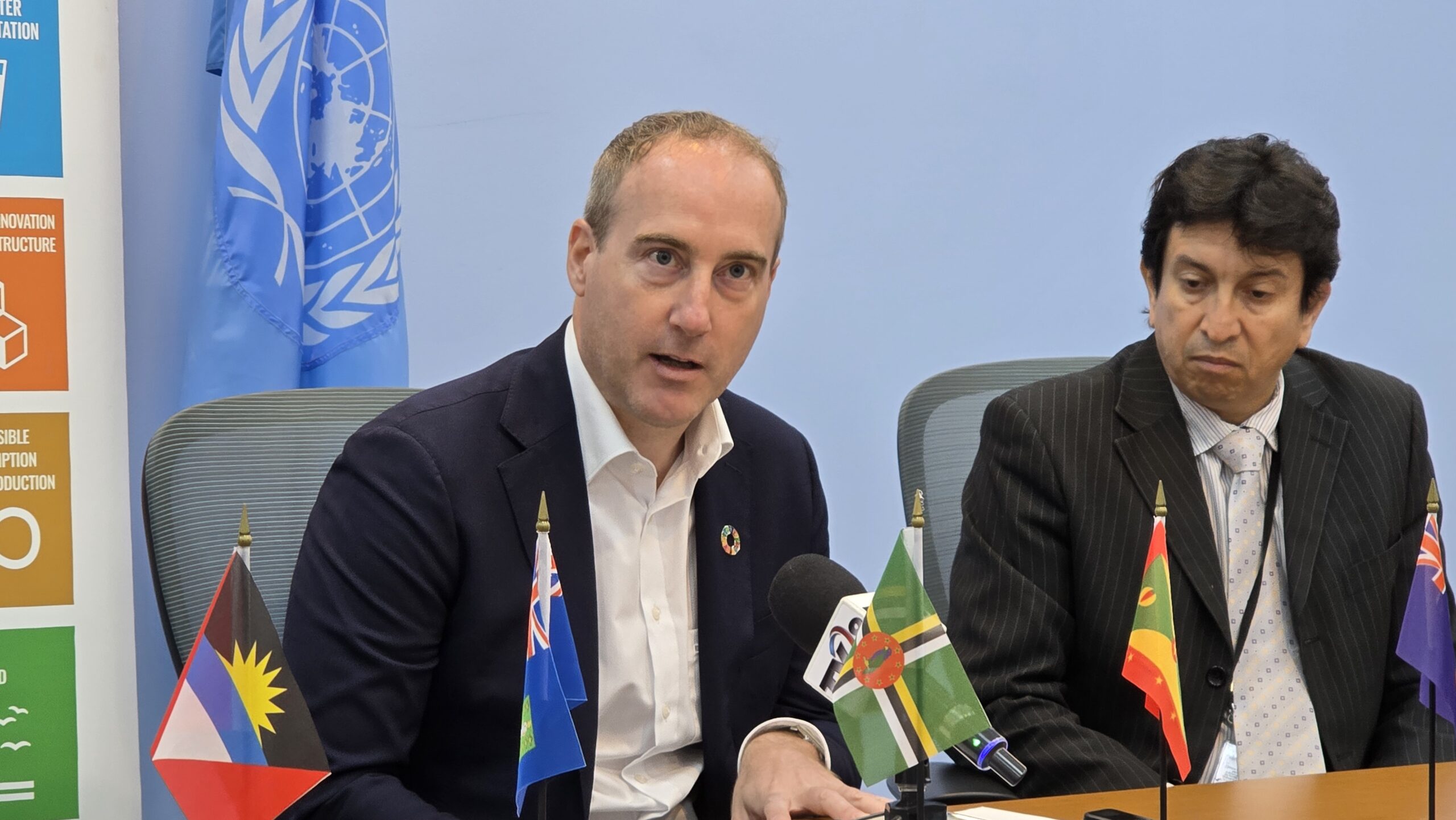
Against a backdrop of contracting populations and widening gaps in available labor, Caribbean nations are positioning an overhaul of migration frameworks as a core strategy to safeguard long-term economic stability, a top United Nations migration official for the region confirmed this Tuesday. Patrice Quesada, regional coordinator for the International Organization for Migration (IOM) in the Caribbean, explained that member states of the Caribbean Community (CARICOM) are actively developing a unified regional migration policy focused on three interconnected challenges: improving labor mobility across borders, reversing the damage of demographic decline, and supporting communities displaced by climate change impacts.
The policy review comes as the UN prepared to launch its 2025 report on socio-economic and demographic trends across the Eastern Caribbean. Quesada emphasized that shrinking and aging populations are a shared crisis across every Caribbean nation, with resulting labor shortages placing unmanageable strain on sectors critical to regional GDP. “Most countries across the region are seeing deep stress in key economic sectors, from construction and public health to the tourism industry that forms the backbone of many local economies,” he noted in an interview.
Beyond addressing immediate labor gaps, Quesada explained that the updated policy will be tailored to align with the unique development priorities of individual member states. What began as a narrow policy discussion has evolved into a foundational development strategy, with migration framed as a tool to strengthen key sectors and advance shared goals. For example, targeted migration schemes can bring skilled workers into the agricultural sector to boost production and shore up regional food security, he added.
The UN’s role in this process is to provide technical support and coordination to member states as they advance the policy framework, Quesada said, noting that both migration shifts and demographic decline are now widely recognized as defining mega-trends shaping the future of the Caribbean. “Migration is now fully integrated into regional cooperation frameworks, acknowledged alongside demographic decline as one of the most impactful trends reshaping the region,” he stated.
As a model for other nations to follow, Quesada highlighted Saint Lucia’s upcoming launch of a national migration policy. The Saint Lucia process was developed through a whole-of-government, whole-of-society approach that centers the country’s specific needs, serving as a pilot that other Caribbean nations can adapt to their own contexts. This flexible model is particularly important because while the region shares broad demographic and climate challenges, each nation faces unique local circumstances that require customized solutions.
Even as the regional framework takes shape, Quesada noted that member states are still engaged in active consultation to resolve key open questions about implementation. Policymakers are grappling with core issues: how to integrate incoming migrant workers into local communities successfully, how to design systems that deliver mutual benefits for both migrants and host nations, and how to replace irregular migration channels with formal, regulated pathways that bring tax contributions to public coffers while protecting migrants from exploitation.
Climate change is also woven into the design of the new regional policy, as the second most impactful mega-trend driving migration across the Caribbean. While slow-onset sea level rise remains a long-term threat, Quesada explained that the most immediate climate-related displacement stems from frequent extreme weather events, including powerful hurricanes and prolonged droughts that are growing more common with rising global temperatures.
“More acutely than slow sea level rise, the Caribbean faces repeated displacement tied to extreme weather: we have seen it with hurricanes for decades, and now we are watching drought conditions become more severe and widespread across the region, with impacts that will only grow in coming storm seasons,” Quesada said. He pointed to two high-profile examples of climate-driven outward migration: the large-scale outflow of residents from Dominica after Hurricane Maria devastated the island in 2017, and the ongoing struggle of Barbuda to repopulate and fully recover after a string of catastrophic hurricanes destroyed much of its infrastructure.
Addressing climate migration requires more than just short-term humanitarian disaster response, Quesada stressed. The UN already works closely with the Caribbean Disaster Emergency Management Agency (CDEMA) to maintain cross-border protocols for temporary evacuation during major hurricanes, allowing people to move safely between islands during crises. But long-term strategy is equally critical: policymakers need to invest in recovery and resilience that gives local residents the choice to stay in their home communities rather than being forced to migrate permanently.
Quesada concluded by calling for expanded long-term regional dialogue focused on climate resilience, sustainable urban development, and upgrading vulnerable infrastructure. The impact of climate change on coastal zones and urban centers, where most critical public and private infrastructure is located, creates hidden mobility pressures that have not yet been fully addressed. This climate-driven shift in population mobility requires targeted, proactive planning that integrates climate action into migration policy from the start, he said.