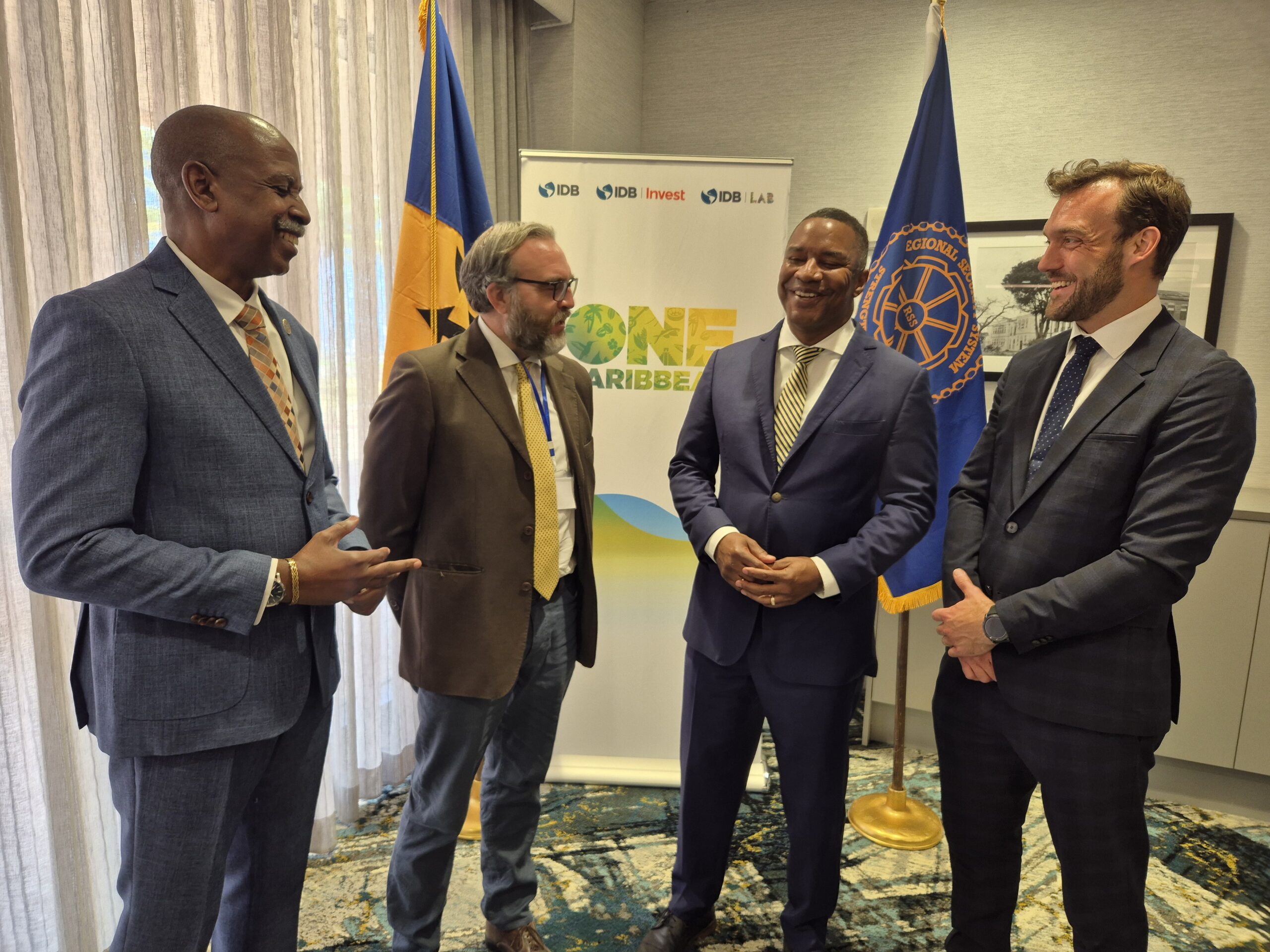
Top legal and security officials from across the Caribbean have gathered in Bridgetown, Barbados, this week for a landmark two-day working forum focused on building a unified regional framework for joint cross-border investigations into financial crime and stolen asset recovery.
Hosted at the Hilton Barbados Resort, the event forms the centerpiece of a broader collaborative initiative led by three key stakeholders: the Caribbean Regional Security System (RSS), the Inter-American Development Bank (IDB), and global governance risk consultancy GovRisk International. The gathering brings together attorneys general, prosecutors, law enforcement commanders, and anti-crime specialists from across the region, alongside international partners focused on anti-money laundering, justice sector reform, and transnational organized crime disruption.
At the core of the forum’s work is the design of a standardized regional model for Joint Investigation Teams (JITs) — coordinated cross-jurisdictional units that bring together investigators, prosecutors, and law enforcement officers from multiple territories to tackle linked criminal cases. Unlike traditional high-level policy conferences, organizers emphasized the event is intended to deliver actionable, practical outcomes rather than abstract discussion.
“This is not a ceremonial event. It is not intended to be an abstract policy conversation,” said Dominic Le Moignan, Executive Director of GovRisk International, in opening remarks to delegates. “It’s a working legal forum with one practical focus: to help the Caribbean move closer to a workable, regionally owned model agreement for joint investigation teams.”
Le Moignan acknowledged that building a cohesive cross-border system across dozens of independent Caribbean jurisdictions comes with steep challenges, including divergent national legal frameworks, conflicting rules of evidence, and mismatched operational command structures. “Crime works across borders, but there are significant challenges for our systems to work as freely,” he explained.
The initiative has already undergone months of preparatory work, including regional consultations, targeted legal analysis, and multi-phase training for law enforcement and legal officials across the Caribbean. Earlier this year, more than 100 regional participants completed virtual training sessions, followed by in-person targeted workshops in Jamaica that brought together officials from Jamaica, Trinidad and Tobago, the Cayman Islands, and the Bahamas. Next week, a second in-person training session will be held for delegates from Barbados, St Kitts and Nevis, Saint Lucia, and St Martin.
With preparation complete, the forum marks the start of the initiative’s most critical phase: drafting a flexible model legal agreement that individual Caribbean nations can adopt or adapt to their own domestic legal systems. Le Moignan told delegates that the drafting process will be led by the region itself, with input from every participating jurisdiction to ensure the framework fits local needs. “We’re asking you to help craft and shape it, to test the ideas, challenge assumptions, identify risks early, and help define what a workable Caribbean model should look like,” he said.
The draft framework is expected to address the full range of cross-border operational challenges, including protocols for secure evidence sharing, coordinated operational command, streamlined asset recovery procedures, and mechanisms to resolve conflicts between different national legal systems.
RSS Executive Director Rear Admiral Errington Shurland, who formally opened the forum, noted that JITs would fill a long-standing gap in regional security by cutting through bureaucratic barriers to improve coordination and information sharing between jurisdictions targeted by connected transnational criminal networks.
Barbados Attorney General Wilfred Abrahams, delivering the forum’s featured keynote address, emphasized that the initiative could not come at a more critical time for the Caribbean, as transnational organized criminal groups increasingly exploit border gaps to move illicit funds and avoid prosecution. “This initiative over the next two days resonates strongly with us as it captures two key principles for us; enhancing regional collaboration and coordination, and this particularly so among law enforcement agencies,” he said.
Abrahams revealed that Barbados is currently moving forward with the establishment of its own dedicated national asset recovery unit, designed to strip criminal networks of the profits generated from illegal activity. “Crime, at the end of the day, is a business. Criminals are businessmen in the business of crime,” he noted.
Francesco De Simone, Chief of Operations at the IDB’s Barbados office, said the regional development bank views targeted financial investigations and asset recovery as among the most powerful tools available to dismantle transnational criminal groups. “Financial crime, corruption, money laundering, and illicit asset flows can undermine economic resilience, public trust, and citizen security in our countries,” he said.
De Simone added that the Caribbean’s limited national law enforcement and judicial resources make cross-border collaboration not just beneficial, but essential. “The resources are scarce. We understand that the demands are coming from different sides, and because of that, we think the joint investigative teams really have the opportunity and the potential to bring scale and hopefully reduce the burden on individual countries,” he said.