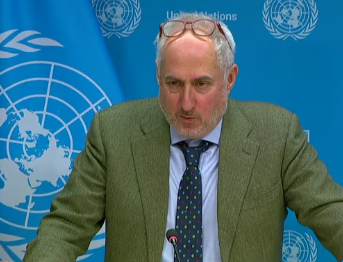
In a stark press briefing from United Nations Headquarters in New York, senior UN spokesperson Stéphane Dujarric has renewed global warnings over the rapidly deteriorating security and humanitarian landscape driven by persistent internal conflicts spanning multiple African nations. The ongoing violence has sent death tolls climbing, forced hundreds of thousands of people from their homes, and stretched already overburdened local and international aid agencies to their breaking point.
The crisis in Sudan remains one of the most pressing emergencies, Dujarric confirmed. Recurrent drone strikes targeting critical infrastructure in Khartoum, the Sudanese capital, have paralyzed core humanitarian operations. Just one day after drone attacks targeted Khartoum’s airport and surrounding urban areas, all incoming and outgoing flights remain suspended — a major disruption given the airport’s central role in moving aid workers and life-saving supplies into the country. Dujarric noted that the UN’s on-the-ground team has already resettled in Khartoum to coordinate relief efforts, but the persistent attacks have blocked their ability to deliver support to vulnerable populations.
Further south in Sudan’s White Nile State, fresh drone strikes hit multiple locations in the city of Kosti, including two fuel stations located in a crowded commercial district, just one day after another fuel station and tanker were hit in the area. The strikes have caused an unconfirmed number of civilian casualties and knocked out critical basic services for local residents. In North Darfur’s El Fasher, the security situation continues to spiral downward: new data from the International Organization for Migration shows that more than 138,000 civilians have fled El Fasher and surrounding rural villages between October 2025 and March 2026 alone, joining the millions of already displaced people across the country.
Against this backdrop, the UN is reiterating its core demands for all warring parties: an immediate ceasefire, full protection for civilians and civilian infrastructure, and unimpeded, fast access for aid convoys to reach communities in need. “We continue to call for an immediate stop to the fighting; for civilians and civilian infrastructure to be protected, and not be targeted; and for aid to be allowed to reach people swiftly, safely, and without any obstruction,” Dujarric told reporters.
In the northeastern Democratic Republic of the Congo’s Ituri Province, UN-led humanitarian negotiations have scored a small, long-awaited victory: after months of blocked access caused by surging violence, aid groups have been able to resume life-saving food distributions at the Plaine Savo displacement camp, where more than 71,000 displaced people are sheltering. This marks the first large-scale food delivery to the site since December 2025, when a wave of armed clashes cut off all access to the camp. Ahead of the delivery, UN Humanitarian Coordinator Bruno Lemarquis and OCHA Ituri head Carla Martinez traveled to the camp to meet with displaced families, local leaders, and aid partners to assess on-the-ground conditions, and called on all armed and state actors to guarantee permanent safe access for aid groups.
Even with the resumption of food aid, the situation in Plaine Savo remains dire. Clashes continue to flare in surrounding areas, leaving displaced families facing acute hunger and constant danger. Local reports confirm that at least 21 displaced residents have been killed since December 2025 while venturing into nearby fields to search for food, underscoring the deadly risk civilians face even within camp perimeters.
The UN peacekeeping mission in the DRC, MONUSCO, has stepped in to support conflict-affected communities beyond humanitarian aid, recently assisting hundreds of people caught in recent armed clashes and escorting final-year secondary students to sit their national exams. At the request of school administrators, 200 students from three schools in Gina, Djugu territory — the site of recent deadly armed clashes between groups including the Convention for the Popular Revolution (CRP) — were escorted by peacekeepers to the provincial capital of Bunia to take their exams. MONUSCO peacekeepers also rescued nearly 200 civilians trapped under CRP fire during the recent violence. After exams conclude on May 7, the students will be escorted back to Gina under armed guard.
To the north in Mali, the UN Office of the High Commissioner for Human Rights is sounding the alarm over a sharp spike in coordinated attacks across multiple towns and cities carried out last week. The attacks caused heavy civilian casualties and forced hundreds of additional families to flee their homes, with more civilian deaths reported in follow-up clashes over the weekend. UN High Commissioner for Human Rights Volker Türk has called for an immediate end to all hostilities, urging all parties to adhere to their obligations under international humanitarian and human rights law to protect civilian lives and critical infrastructure. Malian authorities have launched an official investigation into the attacks, which took place between April 25 and 26 2026.