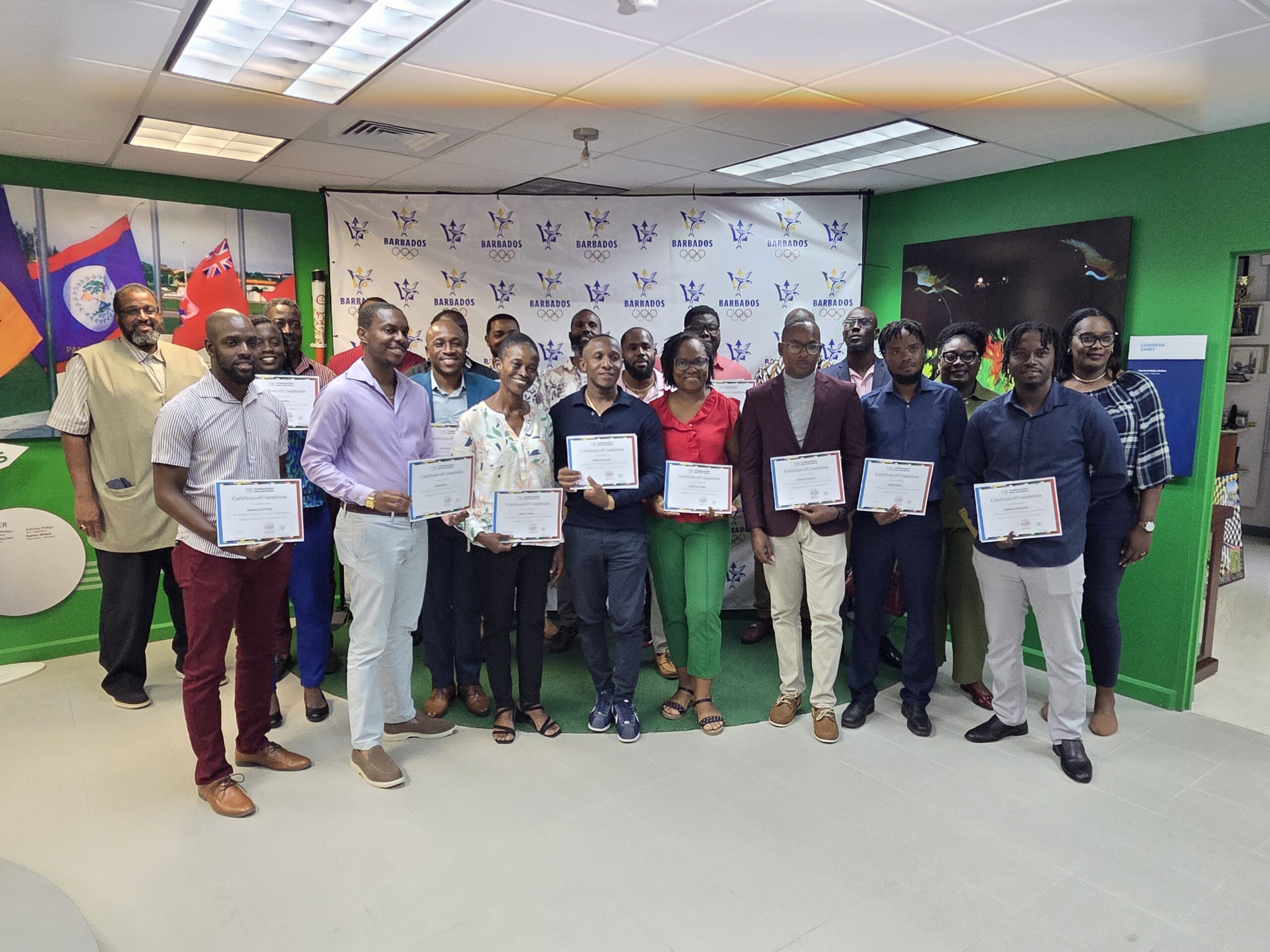
A new cohort of 32 physical education teachers and coaches has completed the regionally focused Caribbean Coaching and Certification Program, emerging with enhanced skills and credentials to advance athletic development across Barbados and the broader Caribbean. The official graduation ceremony was held Tuesday at the headquarters of the Barbados Olympic Association (BOA), where leaders from both the BOA and partner institution Erdiston Teacher’s Training College celebrated the graduates’ achievement and outlined the far-reaching impact of their work.
BOA President Sandra Osbourne opened the formal proceedings by extending gratitude to Erdiston Teacher’s Training College for its collaborative partnership, emphasizing the shared mission of nurturing the next generation of Caribbean youth. Osbourne framed the partnership and the program itself as a living embodiment of core Olympian principles, highlighting the inherently symbiotic relationship between sports and education. “Olympism is far more than competitive sport—it is a philosophy of life that blends athletic practice with culture and learning,” Osbourne explained. “Our work centers on leveraging sport as a tool to advance the harmonious, holistic development of all people, aligned with that foundational philosophy.”
Outlining the growing momentum of national and regional coaching certification efforts in Barbados, Osbourne shared that this group of 32 (comprising 22 male and 10 female education professionals) marks what organizers hope will be the first of many cohorts drawn from the country’s teaching workforce. The graduation follows closely on the completion of a larger group of 120 coaches who graduated one month prior through a combined initiative of the National Coaching Certification Program and this regional Caribbean-focused effort.
Dr. Colin Cumberbatch, Principal of Erdiston Teacher’s Training College, called the milestone a source of great pride for both the institution and the Caribbean sports community. Addressing the graduates directly, Cumberbatch noted that their newly earned certification is a public testament to their dedication, self-discipline, and drive to grow into high-impact physical educators that shape young lives. He stressed that the responsibility of today’s coaches and PE teachers extends far beyond teaching athletic skills: “You serve as the guardians of fair play, clean sport, and safe, inclusive environments free from harm or abuse. This role cannot be overvalued in our current sporting landscape.”
Cumberbatch urged graduates to view their certification not as a final achievement, but as a foundational stepping stone to transformative work across every sector of sports. Whether graduates go on to work in school systems, elite athletic programs, local community outreach, or regional and international competitive circuits, he said their impact will depend not just on the knowledge they gained, but on their integrity, commitment, and willingness to share what they have learned with others.
Speaking on behalf of the entire graduating cohort, Renaldo Gilkes reflected that the program offered a transformative, eye-opening learning experience that challenged his existing approaches to coaching. Echoing a quote from American industrialist Henry Ford, Gilkes noted that growth depends on continuous learning: anyone who stops learning, whether they are 20 or 80 years old, is stagnant, while those who keep learning remain engaged and youthful. Unlike the sport-specific training he had previously completed for his focus area of football, Gilkes explained that the Caribbean Coaching Certification Program provided a broad, cross-cutting foundation that applies to all athletic disciplines.
Gilkes also shared the cohort’s collective commitment to shifting outdated public perceptions of physical education, which he said is still often sidelined as a secondary priority in many Caribbean communities. “We are committed to changing that narrative,” he said. “Physical education will be recognized as the beacon it is: a driver of educational transformation and social advancement across our region.” Closing his remarks, Gilkes cited an ancient Chinese proverb to underscore the long-term impact of the work: short-term planning yields short-term gains, but investing in education creates lasting, generational change that benefits communities for a lifetime.