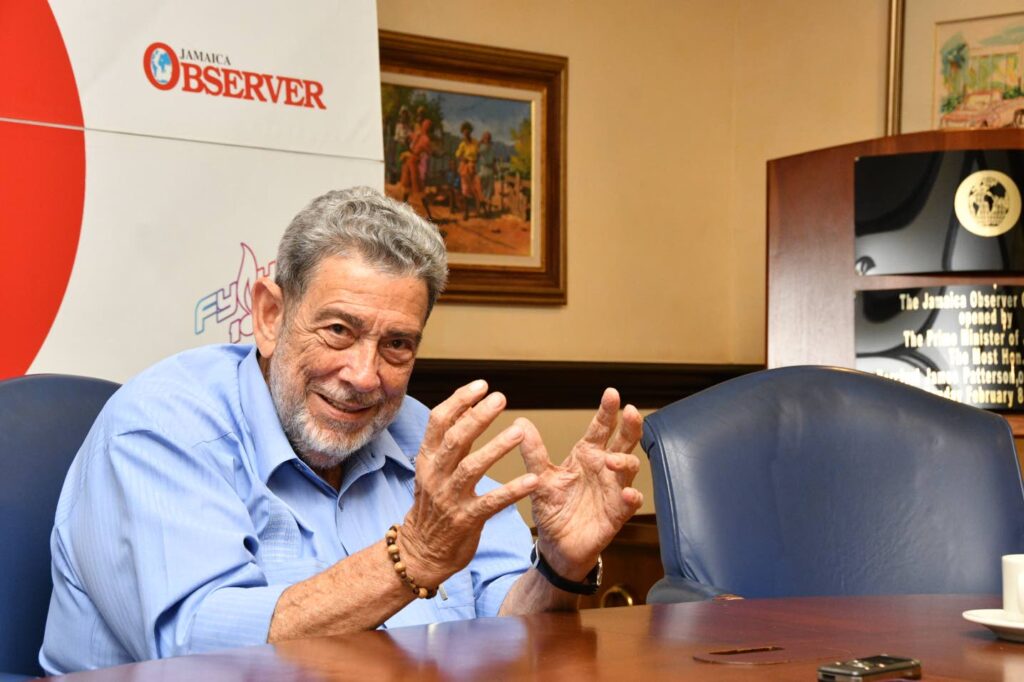
In a candid address at the Jamaica Observer Press Club this Wednesday, Dr Ralph Gonsalves, former Prime Minister of St Vincent and the Grenadines and current senior advisor to the global Repair Campaign, issued a sharp rebuke of diversionary arguments meant to undermine the Caribbean’s decades-long push for reparatory justice for the atrocities of transatlantic slavery and colonial rule.
Gonsalves centerd his remarks on pushing back against growing attempts by critics to shift the narrative of the reparation movement toward African involvement in the slave trade, framing these talking points as deliberate sideshows designed to draw focus away from the systematic role European governments played in building, expanding and profiting from centuries of human trafficking and exploitation. “One of the amazing things that persons who don’t want to confront reparation do is try to keep our minds from the central focus, and take us to sideshows, to distractions,” Gonsalves told attendees. “We have to be careful that we do not fall prey to distractions and sideshows. We have to keep our minds on the main event.”
The veteran Caribbean politician outlined the core structural reality that underpins the reparation campaign, detailing how European state institutions actively orchestrated every stage of the transatlantic slave trade: from encouraging African groups to capture enslaved people, to building coastal forts to detain captives, to transporting them across the Atlantic on European ships, and finally selling them to work on exploitative colonial plantations across the Caribbean. This state-backed system of exploitation generated unprecedented wealth for European powers, while leaving lasting damage to Caribbean societies that persists to this day.
Gonsalves also pushed back against a second common counterargument: that post-colonial development aid and trade concessions from former colonial powers like Britain amount to sufficient compensation for the harms of slavery. He rejected this claim outright, noting that any support the Caribbean has received is minuscule when measured against the trillions in wealth extracted from the region over centuries of colonial rule.
To illustrate his point, Gonsalves cited the post-World War II preferential trade deal for Caribbean banana exports to Britain. Far from an act of altruism, he explained, the arrangement was rooted entirely in Britain’s own economic self-interest: after the war, Britain lacked enough US dollars to purchase bananas from Latin American producers, so it turned to its former Caribbean colonies to meet domestic demand. When Britain joined the European single market decades later, the preferential terms were revoked, leaving Caribbean producers to bear the economic costs. “It’s true we benefited, but they benefited too,” Gonsalves said, emphasizing that even these limited gains cannot offset the centuries of uncompensated exploitation.
Beyond refuting counterarguments, Gonsalves redefined the framing of the reparation movement itself, rejecting attempts to dismiss it as a purely historical debate. Instead, he positioned the quest for reparation as a pressing modern human rights issue, aligned with a United Nations General Assembly resolution passed this past March that formally designated slavery as “the gravest of crimes against humanity.”
“Secondly, the quest for reparation, in a practical sense, is meant to repair the many-sided legacies of underdevelopment, which can be sourced directly to native genocide and the enslavement of African bodies,” he added. Gonsalves drew a direct line between historical exploitation and modern Caribbean development gaps, noting that formerly enslaved people were granted freedom but no access to land, capital, education or generational wealth — a stark contrast to the generous compensation the British government paid to enslavers when it abolished slavery in the 1830s.
The Repair Campaign, the initiative Gonsalves advises, was launched in 2022 by Irish businessman Denis O’Brien. It works in formal partnership with the Caricom Reparations Commission to coordinate advocacy, build public support, and develop actionable reparatory justice plans across all 15 Caribbean Community member states. The collective campaign continues to push European former colonial powers to acknowledge the scale of their historical role in slavery and provide tangible compensation to address the intergenerational harms that shape the Caribbean today.