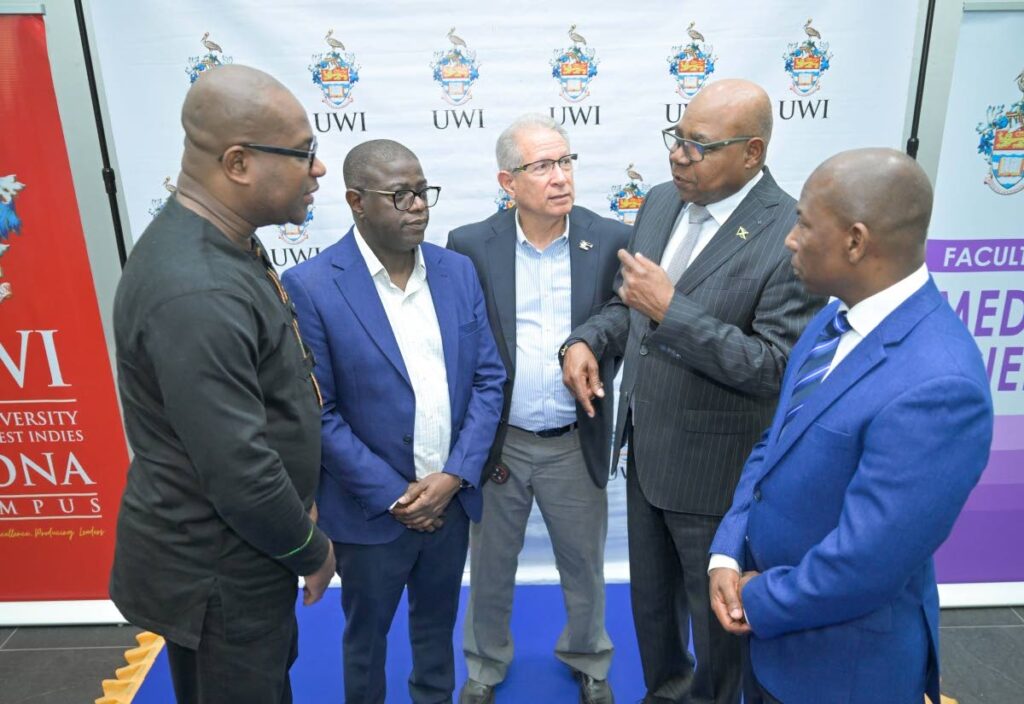
Jamaica has launched a landmark JMD 100 million Research Support Fund for the Faculty of Medical Sciences (FMS) at The University of the West Indies (UWI) Mona Campus, with government officials framing the initiative as a critical intersection of medical progress, public confidence and national economic growth.
Speaking as the keynote speaker at the launch event held last Tuesday in St. Andrew, Tourism Minister Edmund Bartlett argued that the fund is far more than a simple injection of capital into academic research. For Jamaica, whose economy relies heavily on tourism as a primary engine of growth, the initiative opens new pathways for aligned development across health science and the travel sector, he said.
“This represents a launch of possibility, signaling a deeper bond between scientific advancement, societal well-being and the country’s long-term economic future — especially through the lens of tourism,” Bartlett emphasized during his address.
The minister positioned the new fund within a broader national “tourism, health and resilience” strategy, noting that the sustainability of Jamaica’s $3 billion-plus tourism industry hinges entirely on public trust. Unlike common perceptions that frame tourism as only driven by scenic beauty and cultural attractions, Bartlett pointed out that modern travelers prioritize assurance of safety, stability and proactive health preparedness when choosing destinations.
“Tourism is not merely about movement of people across borders — it is about confidence,” Bartlett said. “Trust is the decisive factor that drives travel decisions, attracts foreign investment and encourages visitors to return year after year.”
That foundational trust, he explained, can only be built on a robust public health system, cutting-edge local research capacity and a proven ability to respond rapidly to emerging public health crises. Bartlett defined tourism health resilience as a nation’s ability to anticipate, detect and mitigate health threats without derailing economic stability, a mandate that extends beyond clinical care to protecting tourism workers, supporting resort-dependent communities, and upholding strict standards for food safety, water quality and public sanitation.
To turn this vision into reality, Bartlett called on FMS and the affiliated University Hospital of the West Indies to take a leading role in strengthening Jamaica’s national destination assurance framework. Medical researchers and clinical professionals, he noted, are the unsung guardians of Jamaica’s global reputation as a safe, welcoming travel destination.
Demonstrating the Jamaican government’s commitment to the initiative, the Tourism Enhancement Fund (TEF) has contributed JMD 10 million to the overall research fund. The National Health Fund (NHF) has added JMD 35.4 million to the pot, earmarked specifically for advancing research into mental health and maternal health outcomes. Additional funding is expected to come from private sector and institutional partners in the coming months.
Looking ahead, Bartlett laid out an ambitious vision for UWI Mona to grow into a central pillar of Jamaica’s national health security architecture. His vision includes expanded access to telemedicine for rural and underserved communities, more coordinated emergency response systems, and greater integration of artificial intelligence into clinical care and public health monitoring. He also called for the fund to be used to support ground-breaking interdisciplinary research that connects medical science, tourism policy, data governance and AI ethics, creating a model that can be replicated across small island developing states.
Through all these efforts, Bartlett stressed, protecting the health of both international visitors and Jamaican citizens remains the core mission — one that is inseparable from sustaining the country’s tourism industry and delivering inclusive long-term national development.