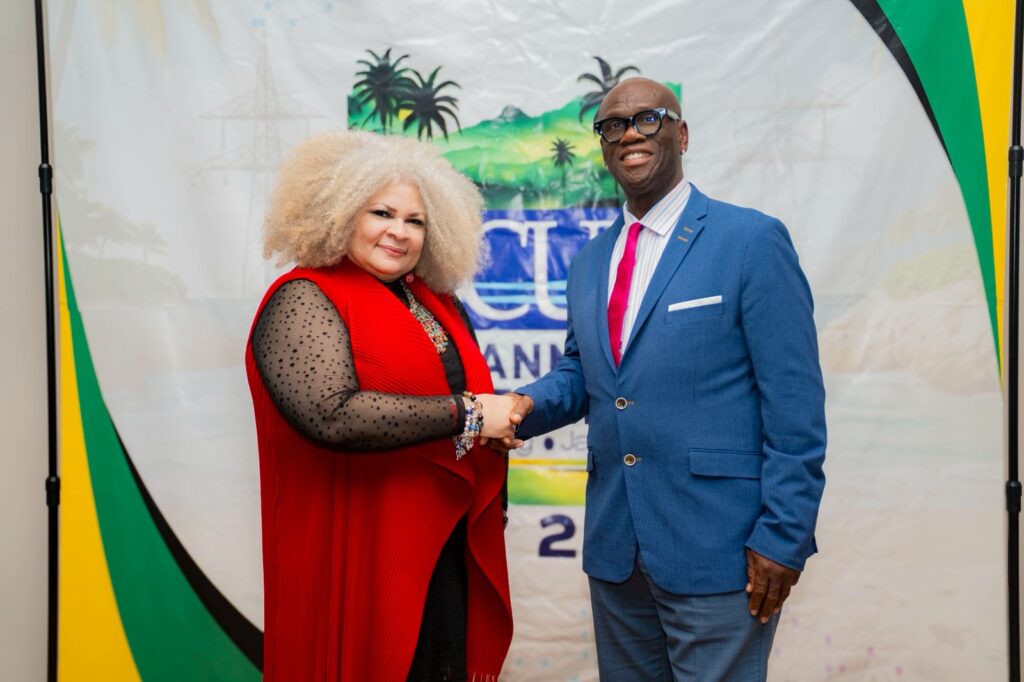
Against a backdrop of growing demand for advanced wireless connectivity and the accelerating global shift to 5G technology, Caribbean telecommunications regulators are turning to cross-border partnership to address shared regulatory challenges, with a new secondment agreement between Jamaica and the British Virgin Islands leading the charge. The Spectrum Management Authority of Jamaica (SMA) and the Telecommunications Regulatory Commission of the British Virgin Islands (TRC BVI) have launched a targeted cooperation initiative that will see two experienced SMA telecommunications engineers deployed on secondment to the TRC BVI, with the core goal of upgrading and strengthening spectrum management operations across the British Virgin Islands. The partnership was formally unveiled this week at the 20th annual conference of the Organization of Caribbean Utility Regulators (OOCUR), hosted at the Ocean Coral Spring Convention Centre in Falmouth, Trelawny, Jamaica, which runs from April 27 to May 1, 2026. In a joint statement released Wednesday, the two agencies framed the agreement as a tangible, action-oriented example of deepened regional integration, at a time when Caribbean regulators across the board are grappling with surging consumer demand for wireless services, the rollout of new digital technologies, and the complex infrastructure and regulatory adjustments required for full 5G adoption. The collaboration took center stage during a joint plenary presentation Tuesday, titled “Strengthening Our Regional Connections: TRC British Virgin Islands and Spectrum Management Authority of Jamaica Collaboration”, led by SMA Managing Director Dr. Maria Myers Hamilton and TRC Chief Executive Officer Guy Lester Malone. During the presentation, the two leaders laid out the concrete objectives of the partnership: the secondment arrangement will boost the TRC BVI’s spectrum operations by building local technical capacity, upgrading the territory’s spectrum monitoring and inspection capabilities, and fostering two-way knowledge sharing between the two regulatory bodies. Representatives from both agencies emphasized that the initiative carries outsize significance for small island developing states (SIDS) across the Caribbean, which frequently face disproportionately complex regulatory demands despite their smaller geographic and market sizes. “This partnership reflects the practical value of regional collaboration,” Dr. Hamilton noted in comments included in the joint release. “By sharing technical expertise, strengthening institutional capacity and learning from each other’s experiences, small island regulators can better prepare for the future of telecommunications and spectrum management.” Echoing her remarks, Malone emphasized that regulatory harmonization across the region is not just a strategic benefit for small island states—it is an operational necessity. “Our markets may be small, but our regulatory challenges are complex and increasingly interconnected,” he explained. “Collaboration with the SMA allows us to strengthen our technical capability while contributing to a broader Caribbean model for regulatory cooperation.” Over the course of the secondment, the partnership will deliver a suite of key outputs designed to lay the groundwork for long-term regulatory improvement in the BVI and serve as a blueprint for other regional cooperation efforts. These deliverables include standardized spectrum monitoring guidelines, comprehensive field measurement reports, formal 5G readiness assessments, evaluations of mobile network coverage and quality of service, hands-on technical training for local TRC staff, structured cross-organizational knowledge transfer, and final strategic recommendations to guide future regulatory policymaking in the territory.