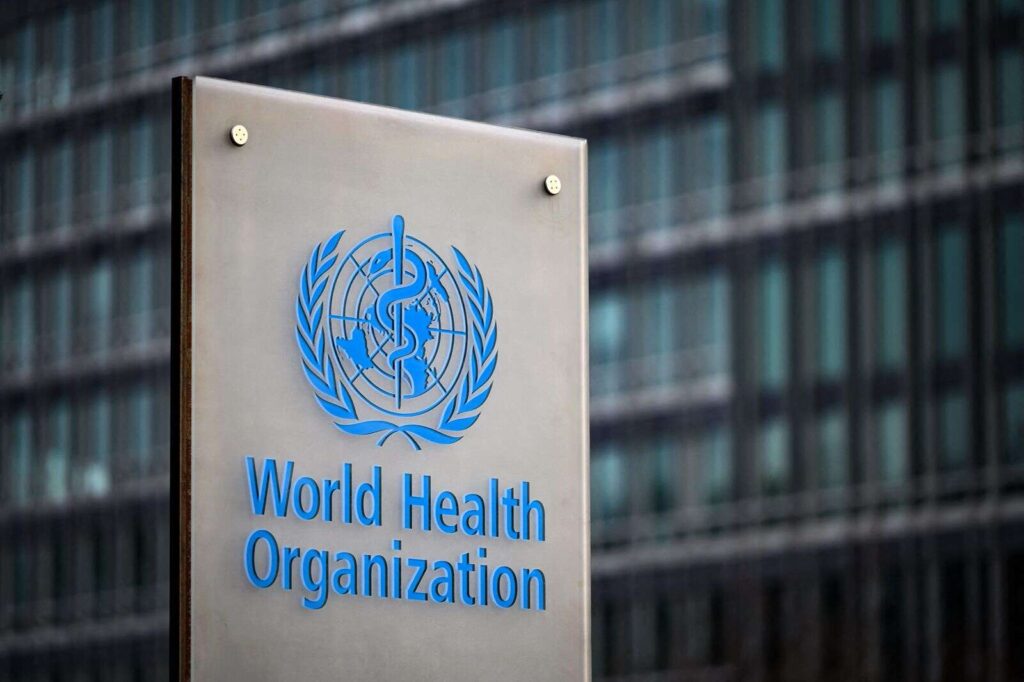
GENEVA, Switzerland — In a press briefing Wednesday at the United Nations’ global health body, World Health Organization Director-General Tedros Adhanom Ghebreyesus delivered an update on the United States’ planned exit from the agency, confirming that Washington has failed to meet its key financial obligation required to complete the withdrawal process. When former President Donald Trump took office for his second term in January 2025, he formally submitted the mandatory one-year withdrawal notice to the WHO, a step that aligns with the withdrawal conditions the U.S. set when it joined the organization back in 1948. Under the terms of that 1948 accession agreement, two requirements must be fulfilled for the withdrawal to take effect: a 12-month advance notification, and full settlement of all outstanding membership dues. Tedros noted that the first condition has already been satisfied, as the notice period came to an end in January 2025, but the second obligation remains unfulfilled. As of the briefing, the WHO has not received any payment from the U.S. to cover its overdue membership fees for 2024 and 2025, which total approximately $200 million. Tedros added that the WHO has received no official indications from Washington that the payment is forthcoming. For decades, the United States held the position of the WHO’s largest single contributor to the organization’s core budget, accounting for a significant share of its annual operating funds. While the outstanding payment is a formal requirement for withdrawal, Tedros emphasized that the organization’s core concern extends far beyond the unpaid funds. “To be honest, it’s not about the money,” Tedros told reporters from the UN Correspondents Association ACANU. “The issue is health security needs universality and the US, by withdrawing, makes itself unsafe and makes the rest of the world unsafe. So it’s lose-lose.” The WHO chief stressed that the organization’s top priority right now is encouraging the U.S. to reverse its decision and re-engage with global health cooperation. “Where there is a vacuum, the virus wins. It’s as simple as that. It’s global cooperation and solidarity which is the best response,” he said. A formal vote on the U.S. withdrawal will be taken during the annual meeting of the World Health Assembly, the WHO’s supreme decision-making body, which is scheduled to convene in Geneva from May 18 to 23. Currently, the U.S. flag is no longer displayed outside the WHO’s Geneva headquarters, a visible marker of the strained relationship between Washington and the agency. Unlike the U.S.’s 1948 accession terms, the WHO’s formal constitution does not include an explicit provision for member state withdrawal. In January, shortly after the withdrawal notice period expired, U.S. Secretary of State Marco Rubio and U.S. Health Secretary Robert F. Kennedy Jr. issued a sharp public rebuke of the WHO, claiming that the agency had disrespected the contributions the U.S. has made to global public health over decades and that “insults to America” had continued up to the present day. The WHO pushed back against these accusations in a direct response, stating that the claims were unfounded and that the reverse of what the U.S. officials claimed is true. Despite the public friction, Tedros confirmed that regular communication channels remain open between the WHO and the U.S. Department of Health and Human Services. “We keep in touch every now and then,” Tedros told reporters, confirming that he still speaks regularly with Kennedy.