A newly released diagnostic assessment of 150 Barbadian primary school students has uncovered stark learning disparities in core academic subjects, pushing a local education charity to call for immediate, targeted support across all regional primary institutions to help at-risk students prepare for their high-stakes 11+ entrance examinations.
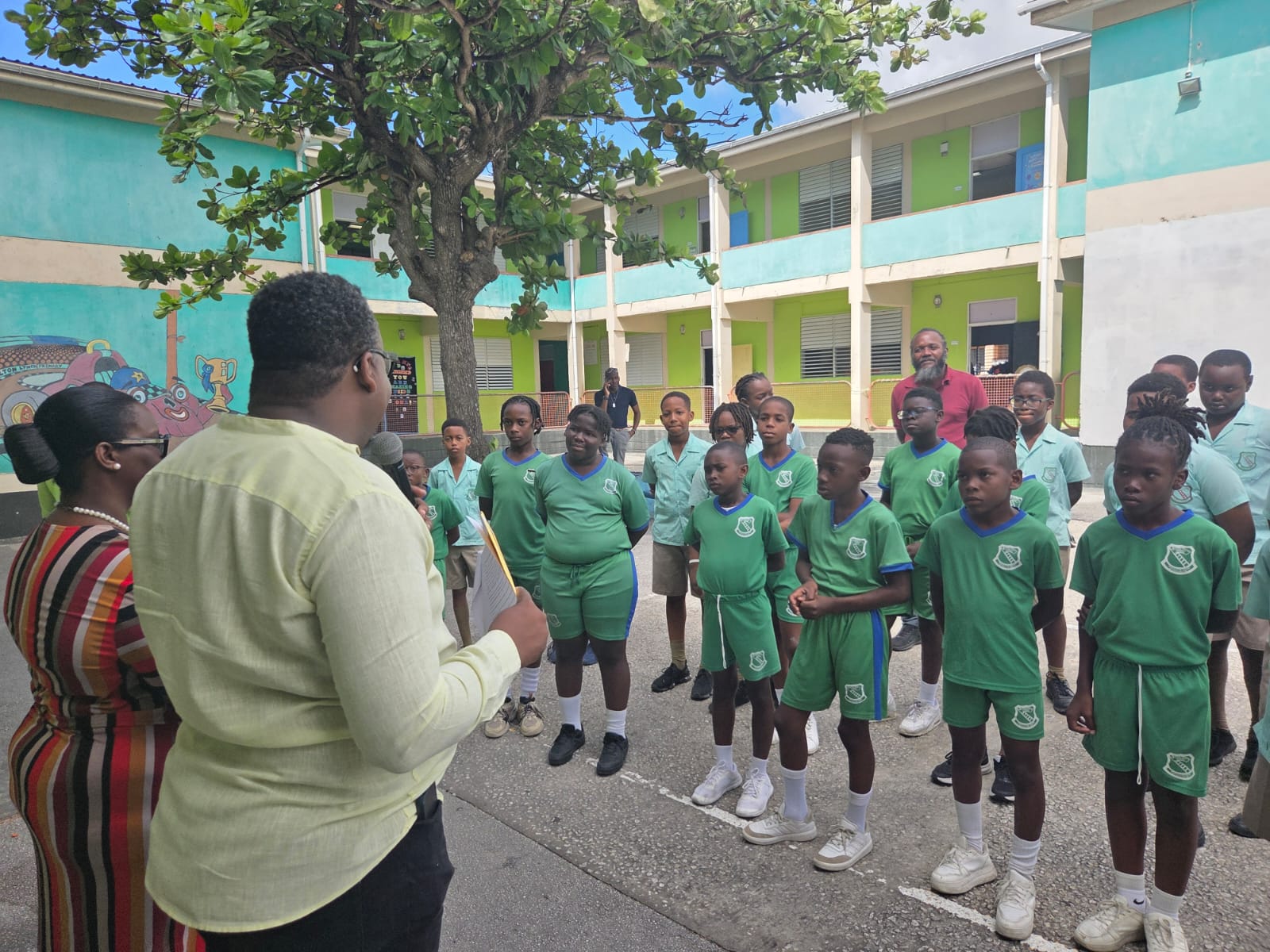
The assessment was carried out by Trident Charity, an education-focused nonprofit founded and led by Quincy Jones, a former first-time candidate for the Democratic Labour Party (DLP) in February’s general election. Jones shared the preliminary findings during on-site visits to two participating schools: Milton Lynch Primary School and Christ Church Girls’ School, both located in the Christ Church East Central electoral constituency where Jones ran for office.
In total, 12 primary schools across the parishes of Christ Church and St Michael took part in the initiative, which was designed to act as a formative diagnostic tool. The goal of the project was not just to test students, but to generate actionable data that could help parents and educators tailor support to students as they approached the final stretch of preparation for the 11+ exam, a key milestone that determines secondary school placement. The mock examination assessed student proficiency across three core domains: written composition, mathematics, and English reading comprehension.
Overall, the results painted a picture of deep stratification within the student cohort, with a clear gap emerging between high-performing students and those in need of urgent academic support. Just 8% of participating students earned the top A (Excellence) grade, and another 22% scored a B (Good), combining to make up less than a third of all test-takers. The largest share of students, 45%, reached a C (Satisfactory) grade, but the charity flagged the remaining 25% of results as a major cause for concern: 15% scored a D (Developing), and 10% scored an E, a rating that signals a need for significant, immediate improvement to reach grade-level standards.
Jones framed these findings as a call to action rather than a cause for despair, emphasizing that early intervention can close gaps before they become insurmountable. “These results tell us two important things,” Jones shared in remarks following data analysis. “First, there is a solid academic foundation among many students, and second, there is an urgent need to support those who are falling behind. This is not a crisis; it is an opportunity to intervene early, close the learning gaps, and give every child a fair chance at success in the 11+ examination.”
When broken down by subject, the data identified written composition as the area of greatest weakness. Only 18% of test-takers earned top marks in writing, while 40% performed below the expected grade-level standard. Jones noted that students struggled most with foundational writing mechanics: grammar rules, sentence structure, logical organization of ideas, spelling, and subject-verb agreement were all common pain points for low-performing students. In contrast, English reading comprehension showed far stronger results, with roughly 60% of students scoring above 70% on that section of the exam. Even so, Jones pointed to a “noticeable gap” between a student’s ability to understand a written text and their ability to clearly communicate their analysis and ideas in writing.
Mathematics results presented what Jones described as a “mixed picture.” While 35% of students earned strong scores, an equal 35% scored below the 50% pass threshold. The assessment uncovered major gaps in basic numeracy skills and strategic problem-solving, particularly in the exam’s extended response section. Jones added that many students lost unnecessary points to careless calculation errors and a lack of practice showing their step-by-step working, a habit that not only costs points but also makes it harder for teachers to identify where students are going wrong in their reasoning. Key foundational topics including decimals, percentages, angles, and fractions were consistent areas of weakness, with Jones estimating that between 10% and 15% of participating students need immediate one-on-one or small-group intervention to get on track for the official 11+ exam.
In the immediate aftermath of the assessment, every participating student and their family has received an individual performance report breaking down their strengths and weaknesses, paired with practical study and test-taking tips. Looking ahead to the 2026–2027 academic year, Trident Charity has committed to moving beyond data collection to build out a sustained support system for struggling students. Planned programs include small-group tutoring for all students scoring below 50% on the diagnostic, a structured sequential writing program to build composition skills from the ground up, and targeted mathematics support that prioritizes explicit instruction in step-by-step problem-solving. The charity also plans to roll out monthly mock exams to track student progress over time, and introduce family engagement initiatives to help parents support their children’s learning at home.
Jones emphasized that the vast majority of students who are currently behind can make significant gains with the right targeted support, reaffirming the charity’s core mission to ensure no child is left behind due to unaddressed learning gaps. “Our findings indicate that over 60% of these students can significantly improve with the right support,” Jones said. “Trident Charity is committed to implementing targeted programmes and differentiating learning approaches to ensure no child is left behind. We are focusing on early intervention to ensure that every student has the tools they need to excel.”