With just three weeks remaining until thousands of Barbadian students sit the high-stakes Common Entrance Examination, two veteran education experts are challenging deep-rooted generational stereotypes that tie future success exclusively to admission at one of the island’s historic, elite high schools. Their message ahead of the test is clear: individual effort, mindset and ambition—not school placement—shape long-term achievement.
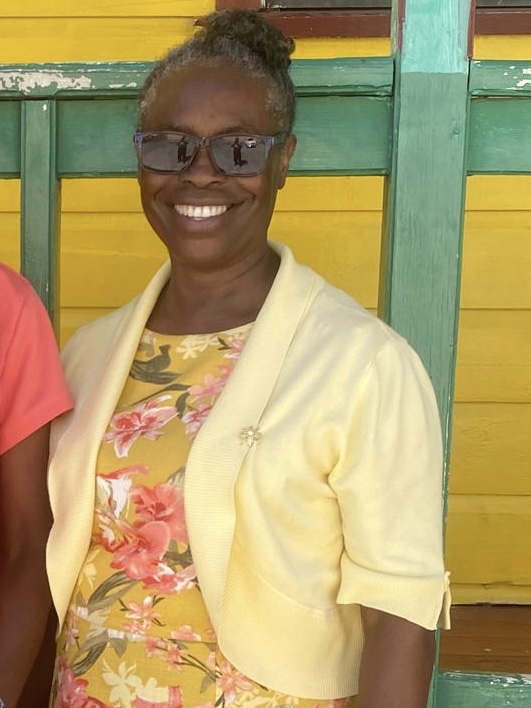
Dr. Shantelle Armstrong, an accomplished academic and entrepreneur who earned her PhD in management with a concentration in corporate governance via a CIBC scholarship in 2023, is speaking from personal experience to encourage this year’s cohort of test-takers. Speaking exclusively to Barbados TODAY, Armstrong emphasized that students should never allow projected school placement to define their potential. “You can achieve or try to achieve or seek to go to whatever school you choose… don’t let that define you… always do your best,” she said.
For decades, 11-plus exam school placement has created a rigid social and academic hierarchy in Barbados that shapes how students, parents and even community members perceive ability—a bias that lingers long after students enter secondary school. Armstrong, who now runs her own consulting firm Strategic Governance Advisory Limited and serves as a director at her husband’s company KASA Maintenance Services Inc., has built a career that defies this long-held narrative. Her own academic record, which includes a first-class honors bachelor’s degree and a master’s degree with distinction, alongside peer-reviewed published research, serves as proof that institutional labels do not dictate outcomes.
“Control over any form of success ultimately lies with the individual, not the institution,” she argued. “We all end up… at the same university, so all control is within… no other person’s hands. It’s really you that has control over your destiny. You define yourself… the school doesn’t define you. It really is not where you go, it’s what you do out there.”
Armstrong acknowledged that harmful stereotypes still persist, and can erode the confidence of students placed at less celebrated institutions. “People still make them feel uncomfortable and make them feel as if a school defines you,” she said. “But you… have the control over you.” She added that her appeal extends beyond just students concerned about placement: even those who earn a spot at the country’s most prestigious secondary schools must prioritize consistent effort to succeed. “Even if you pass… You still have to do work,” she noted.
Marcia Best, a retired primary school principal with 12 years of leadership experience at Eagle Hall Primary and Luther Thorne Memorial Primary, echoed Armstrong’s remarks, calling the pervasive ranking of Barbadian schools a “faulty mindset” passed down through generations. Best argued that the quality of education has no connection to a school’s location, physical campus or reputation. “Education has its value, and I don’t think the geographical location, the size, nor the actual building of the school has anything to do with the delivery of education,” she said.
Drawing on her decades of experience nurturing young learners, Best stressed that every primary school across Barbados equips students with the tools they need to grow into productive, successful citizens, regardless of the institution’s reputation. “Our boys and girls… are nurtured… to be productive citizens of our country. So we see ourselves as mission builders,” she explained.
She warned that the artificial divide between “prominent” and “ordinary” schools damages student self-perception and reinforces unfair social stratification. “Everyone is equal… but unfortunately this mindset has been fed to parents and the children themselves become a part of a faulty perception.”
Addressing students who may already feel discouraged about potential placement outcomes, Best emphasized that daily effort and personal responsibility are the true drivers of success. She pointed to a long track record of inconsistent outcomes to back up her claim: some students at elite schools underperform, while many students at less well-known institutions outperform expectations and go on to thrive in higher education and careers. “There are children who will go to what we consider prominent schools and will come out equally qualified with those who would have attended the so-called less prominent schools,” she added.
The conversation comes as Barbados engages in ongoing national discussions about comprehensive education reform, including proposals to eliminate the 11-plus Common Entrance Examination entirely. Best noted that shifting deep-rooted cultural perceptions will require more than just policy change; broad public outreach and sustained dialogue will be necessary to undo decades of intergenerational bias. “It’s going to be an uphill task… this whole idea has been passed from generation to generation,” she said.
For the 2024 cohort sitting the exam in just three weeks, however, both Armstrong and Best are calling on students across the island to approach the test with confidence, set aside the pressure of stereotypes, and focus on their own individual potential.