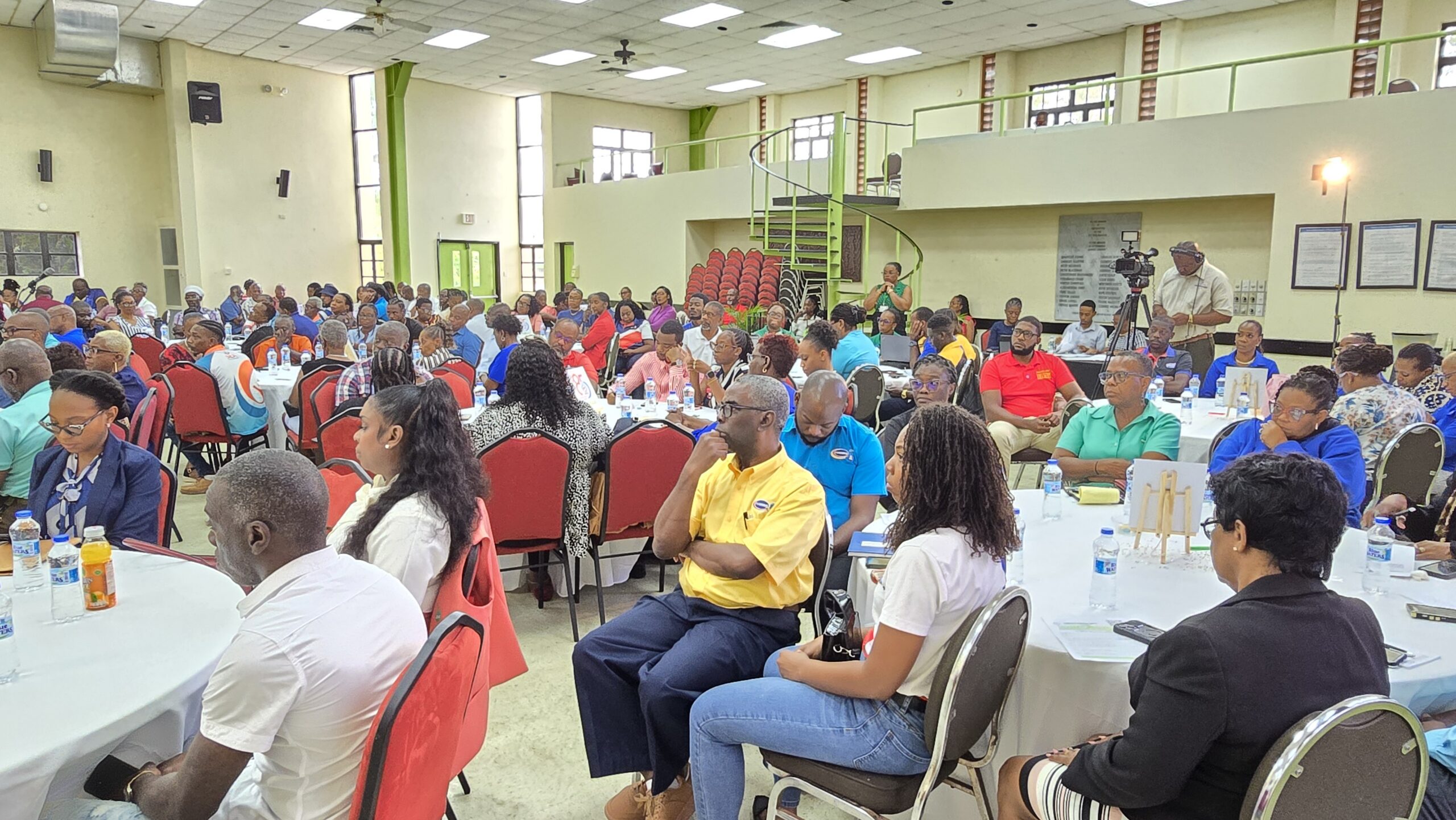
Amid rising job-related pressures and rapid technological transformation reshaping workplaces across Barbados, a growing movement to reframe work around human health and dignity gained momentum on Thursday, when both top government labor officials and union leaders gathered to demand stronger protections for workers’ mental and physical wellbeing.
The call for a balanced, human-first approach to work took the spotlight at the opening of the Barbados Workers’ Union (BWU)’s two-day Occupational Safety and Health 360 Conference, hosted at the union’s Solidarity House headquarters. The event convenes labor stakeholders to align local workplace practices with global guidelines set by the International Labour Organization (ILO), which has centered its 2024 policy focus on a people-centred, prevention-first framework for occupational safety and health.
Barbados Minister of Labour, Social Security and Third Sector Colin Jordan emphasized that ILO conventions and standards are clear: human workers must always take priority over machinery, capital, and other production inputs. “A human-centred approach to development, work, business and every productive effort means we must recognize that people are the foundation of every workplace,” Jordan explained. “They deserve to be treated very differently from inanimate tools like machines.”
Jordan stressed that this philosophy must be woven into every workplace policy and daily practice, noting that workers bring far more to their roles than just physical output. “When a person shows up to work, they are not a tool – they are a whole human being, bringing both their mind and their body to the job. We have to strike a balance between hitting production goals, working efficiently, and protecting the whole person whose labor powers every task,” he said.
The labor minister also drew attention to growing modern stressors, particularly the rise of digital technology, that are increasingly draining workers’ mental health even outside formal working hours. “Technology can leave us mentally exhausted when we clock out, so this year’s conference theme – ‘Mind, Body and Work in Balance’ – is more critical than ever,” he added. While Jordan acknowledged that striking this balance is no simple challenge, he noted that the conference provides a structured space for stakeholders to collaborate on solutions. “Like balancing worker protection and production, finding this equilibrium takes work, but it is achievable,” he said. “These 360 safety conferences give us space to talk through challenges and map out a path forward. We keep pushing for open social dialogue, where workers, employers and managers can talk meaningfully with a shared goal of doing what works for everyone.”
BWU General Secretary Toni Moore echoed Jordan’s call, reinforcing that the focus on holistic worker wellbeing aligns with the union’s core mission as it approaches its 85th anniversary. “When we talk about balancing mind, body and work today, we are not shifting to a new direction as we look ahead to our next 85 years – we are living out the core purpose of this union,” Moore said. “We are strengthening systems that protect workers physically, mentally and socially, to make sure the next generation of workers inherits safer, healthier, more humane workplaces than we have now.”
Moore pointed out that evolving work practices have steadily piled more pressure onto workers over recent decades. “You can see how work has changed: every year, employers expect faster output from teams. Even if you are physically and professionally able to meet the demand, that constant push raises the emotional stakes for every worker,” she explained. “On top of that, workers are dealing with rising cost of living stress, and new technologies that are completely redefining what our jobs look like.”
She added that workplaces are still adapting to post-pandemic shifts, including the rapid acceleration of digital adoption forced by COVID-19 public health measures. “We had talked about integrating technology for years, but COVID forced us to learn new tools overnight to stay connected to our teams – that’s been a real benefit in many ways, so I’m not saying new technology is all bad,” Moore noted. “But we have to keep it in balance. All these unregulated pressures show up in our minds first: burnout, anxiety, constant emotional fatigue. Then they show up in our bodies, as chronic illness and even preventable workplace injuries – when you’re stressed and distracted, you’re far more likely to trip, cut your hand on machinery, or have another avoidable accident. Worker stress is not an abstract issue – it’s a real threat to safety.”
Moore called for targeted training to help employers and supervisors spot early warning signs of mental health struggles among their teams, arguing that mental wellness must be treated as a core pillar of occupational safety, not an afterthought. “As leaders and industry partners, our job is to build work environments where people feel their mental health is supported, their bodies are protected, and work never pushes people past their breaking point,” she said. She closed by calling on all stakeholders to recommit to building safe, supportive workplaces that center worker dignity, alongside clear systems to protect work-life balance. Ultimately, Moore said, workplaces should prioritize “respect, rest, family life and human dignity” above constant productivity gains.