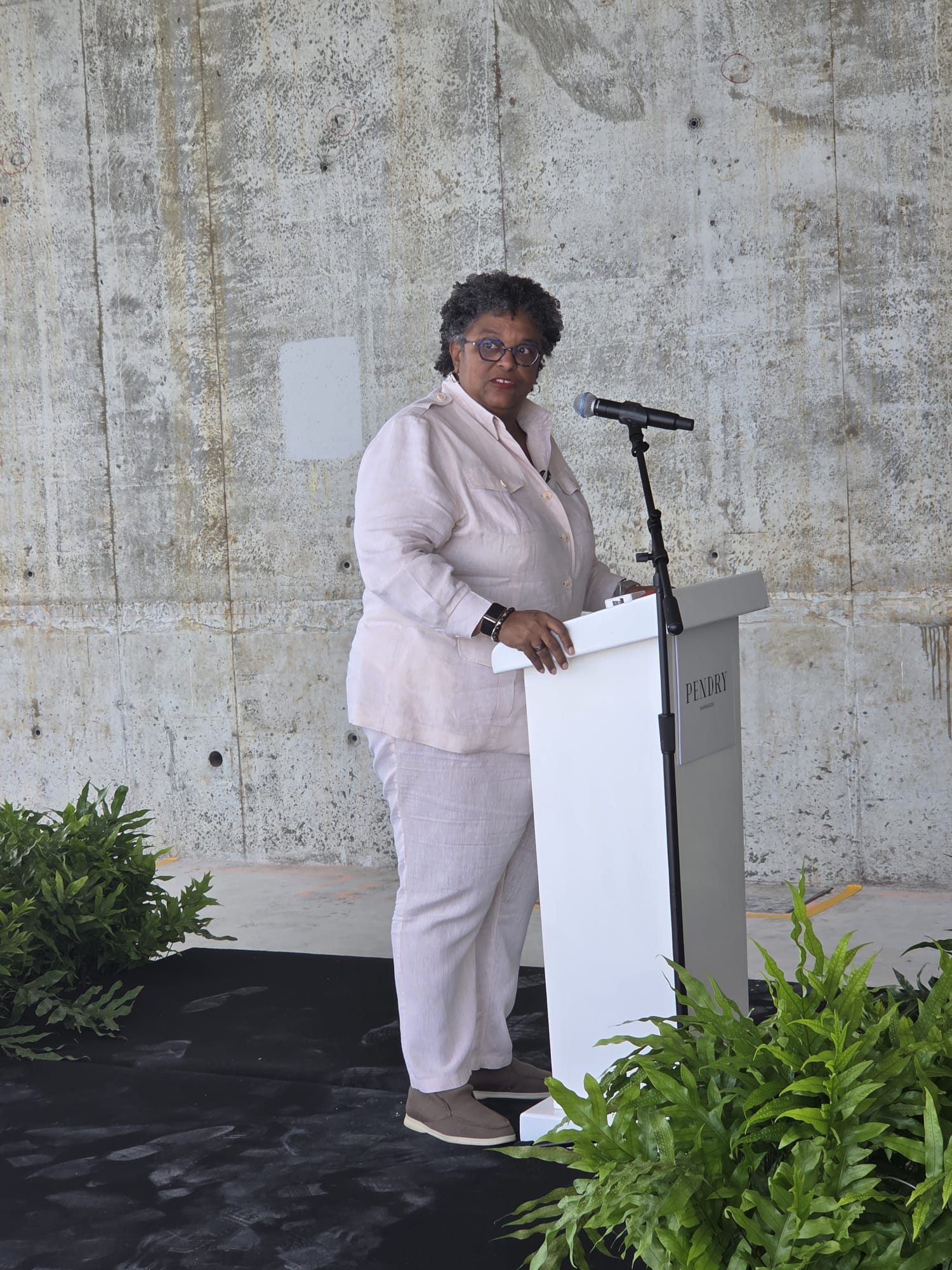
On Tuesday, Barbadian Prime Minister Mia Mottley announced a sweeping water security initiative tailored to address longstanding supply challenges in the island’s northern region, anchor the country’s climate resilience, and underpin its ambitious ‘Tourism 3.0’ growth strategy. The announcement was made during a formal ceremony attended by developers and senior government officials at the luxury Pendry Hotel Residences in St Peter, where Mottley framed upgraded water infrastructure as a foundational requirement for keeping national development on pace with booming tourism and residential expansion across the northern parishes.
At the core of the new policy package is a purpose-built desalination facility in St Lucy, designed exclusively to serve the water needs of northern Barbados. As one of the 15 most water-scarce nations on Earth, Barbados faces unique systemic challenges meeting rising demand amid accelerating regional growth, Mottley explained. To tackle this gap, the government has made a formal commitment to constructing the island’s second desalination plant, a project that will guarantee consistent, high-quality water access for both local residents and international visitors. In a break from traditional fully state-led utility development, Mottley confirmed that the new facility will open its shareholding to the general public. While the Barbados Water Authority will retain a major stake in the project, ordinary ratepayers will be given the opportunity to become partial owners and earn returns from the operation, ensuring the benefits of public infrastructure are shared broadly across the island.
Beyond the long-term desalination project, Mottley also laid out a clear timeline to resolve the immediate, long-running issue of discolored ‘brown water’ that has plagued households across St Lucy and St Peter for years. Over the past 13 months, the government has spearheaded an aggressive program to replace aging, corroded water mains that are the primary cause of frequent service disruptions and supply inefficiency in the region. When the initiative was first launched, many skeptics claimed the full replacement of all mains in St Lucy could never be completed, Mottley recalled. But the project is already nearing completion, with all main replacements on track to be finished by the end of May.
While global supply chain bottlenecks have pushed back the timeline for final filtration system upgrades slightly, Mottley confirmed that all critical equipment is set to arrive on the island within the next few weeks, with full installation and activation scheduled for August. Joking with the audience that improvements are already noticeable, Mottley noted that the water running to many northern homes is now ‘even lighter than my suit.’
Mottley emphasized that these infrastructure investments are far more than a quality-of-life upgrade: they are a core survival strategy for Barbados as it confronts the escalating impacts of the global climate crisis. Unlike many other Caribbean nations, the most persistent climate threat for Barbados is prolonged drought rather than hurricanes, making proactive water management a non-negotiable pillar of national security. Every component of the country’s growing new tourism product is being designed with green and digital efficiency standards to align with this water security goals, she added. For Barbados’ rebranded ‘Tourism 3.0’ development agenda to succeed, reliable access to clean water is an non-negotiable prerequisite, and these investments will lock in the stable supply the sector needs to grow.
Drawing on Barbados’ 60 years of independent statehood paired with the fresh energy of its status as a young republic, Mottley argued that the island is well-positioned to build a sustainable, respected future on the global stage. ‘No one owes us a living,’ she stated, ‘and that is why we are determined to command the respect that will ensure we can sustain our quality of life and use this as an anchor to the linkages which are necessary.’ By the time filtration upgrades are completed in August and the new desalination plant comes online, northern residents can expect a fully stabilized, reliable water supply that meets national quality standards. Ultimately, Mottley framed the initiative as a unifying national project that centers the most basic human need: consistent access to clean, safe water for every community across the island.