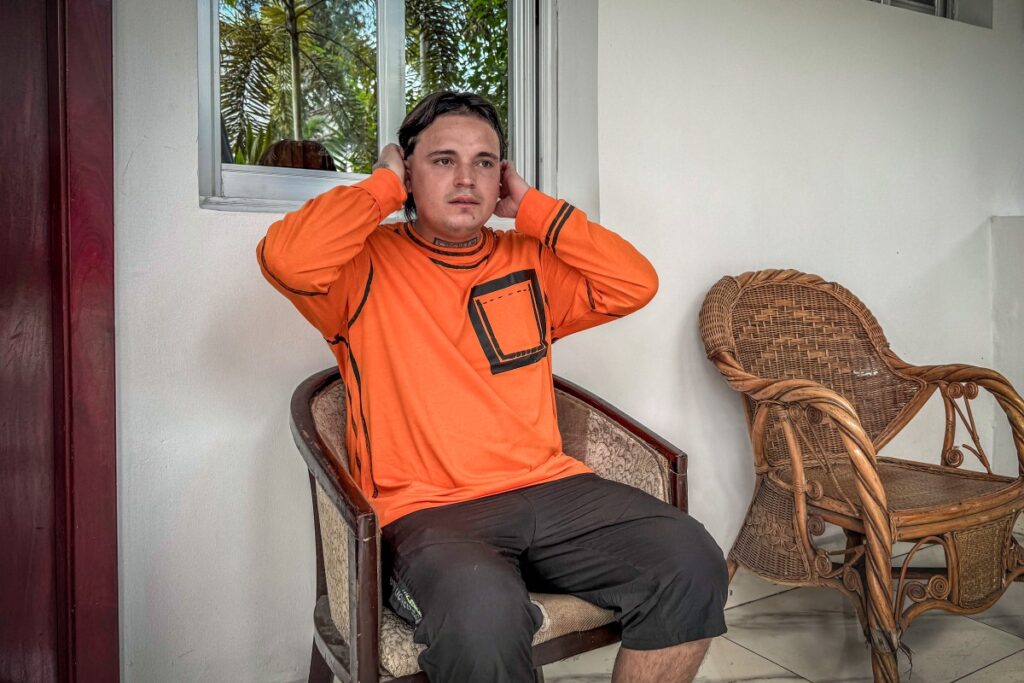
Fifteen Latin American migrants who sought asylum in the United States now find themselves trapped in a restricted airport-area compound in Kinshasa, the capital of the Democratic Republic of Congo, the latest group caught in a deeply controversial Trump-era immigration policy that deportes undocumented migrants to third-party nations thousands of kilometers from their home regions.
What was supposed to be a path to safety in the US has turned into an ordeal of uncertainty and poor treatment for the group, who told AFP they endured a 27-hour transcontinental flight with their hands and feet bound in shackles before being deposited in the central African country. For 30-year-old Colombian migrant Gabriela, the situation has been nothing short of terrifying. She only learned her final destination one day before the deportation, and now struggles to navigate a country where she does not speak the official French language.
“I didn’t want to go to Congo. I’m scared, I don’t know the language,” Gabriela explained, summing up the despair shared by the entire group.
DR Congo is one of at least seven African nations that have agreed to accept deported migrants under the US scheme, which typically offers the host countries financial or logistical backing in exchange for taking in deportees. Other participating nations include Cameroon, Equatorial Guinea, Eswatini, Ghana, Rwanda and South Sudan. The first cohort of deportees arrived in Kinshasa last Friday, and to date, host country authorities have released almost no public information about what will happen to the migrants after their arrival.
The International Organization for Migration (IOM), which manages the migrants once they are issued short-stay visas, says it only offers assisted voluntary return for migrants who formally request the service. Since their arrival, all 15 South American migrants have been confined to a gated compound near Kinshasa’s main airport, barred from leaving the premises even as they wait for their fate to be decided.
The compound itself consists of rows of small, plain white-walled cabins where the group sleeps. Uniformed police and military vehicles are stationed outside the perimeter, and unidentified private military contractor personnel have also been spotted on site. Confined to the grounds, the migrants pass their days glued to their mobile phones, desperately trying to reach family members back home with no local language skills to help them navigate their new surroundings.
The group says they have each received roughly $100 in aid from IOM officials, but are not allowed to receive outside visitors. Multiple migrants, including Gabriela, have already fallen ill with fevers, vomiting and severe stomach issues since arriving. While some have been given basic medication, Gabriela says no licensed healthcare worker has ever come to the compound to examine the sick migrants.
Four of the migrants confirmed they have only been issued seven-day short-stay visas, which can be extended for a maximum of three months. Once the initial week-long visa period expires, however, the migrants say they have been told all official support will end, leaving them to survive on their own in one of the world’s poorest nations. The World Bank estimates nearly 75% of DR Congo’s 102 million population lives below the international poverty line, and Kinshasa, a megacity of 17 million, suffers from widespread lack of access to consistent running water and electricity, with dilapidated infrastructure across most residential areas.
“They’ve got us cornered because they tell us: if you don’t accept the repatriation programme, you’ll be stuck in a mess here in Congo,” Gabriela said, visibly distressed. “That is inhumane and unfair.”
For 25-year-old Colombian Hugo Palencia Ropero, who spent five months in US immigration detention before being deported, the situation in DR Congo is more frightening than the instability he left behind in his home country. Though he acknowledged the compound provides basic meals, room cleaning and security, he says the uncertainty of his future makes every day unbearable.
“I’m more afraid of being here in Africa than in Colombia,” Ropero said. “If the seven days go by and we don’t receive any further assistance, things will get very difficult for us, especially since we don’t have work permits.” He added that he would accept any travel document offered to him just to leave DR Congo as soon as possible.
The arrival of the Latin American deportees has already sparked fierce pushback from Congolese civil society and social media users, who question why their already resource-strapped nation should absorb migrants deported from the US. The scheme, first implemented under the Trump administration, continues to draw widespread criticism from human rights groups over its lack of transparency and disregard for migrant wellbeing.