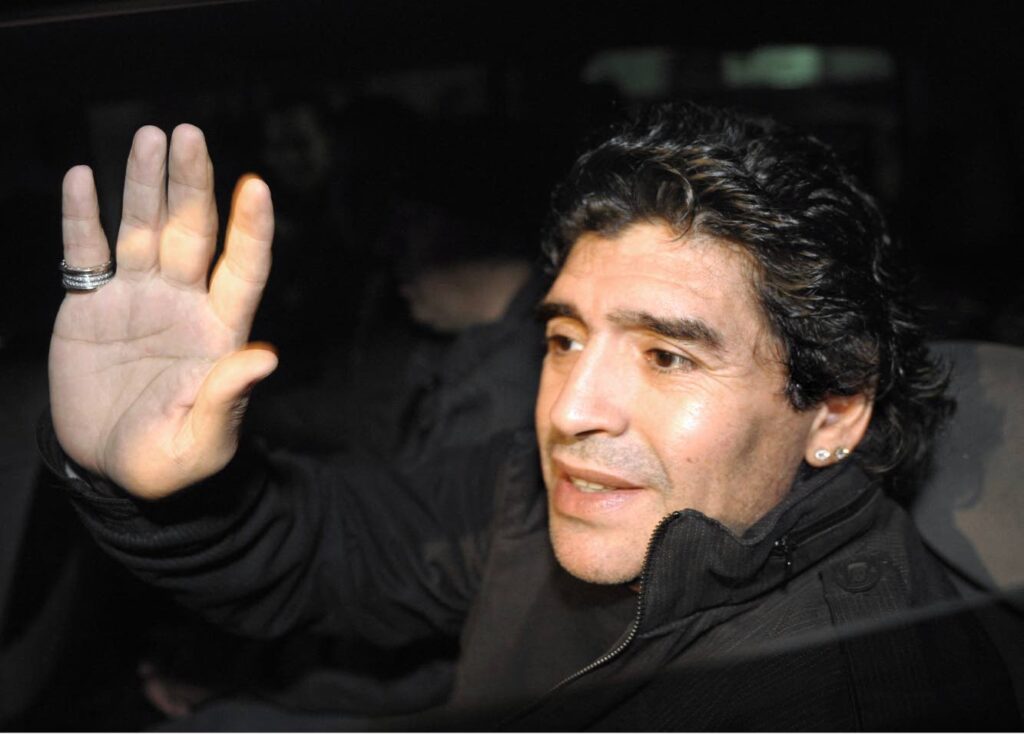
Nearly three years after the sudden passing of Argentine football icon Diego Maradona, his daughter Gianinna Maradona took the stand in a San Isidro, Argentina courtroom Tuesday, delivering emotional testimony alleging widespread, damaging manipulation of her family by Maradona’s medical circle in the days leading up to his November 2020 death. Her appearance is a key moment in the ongoing retrial of seven medical professionals, who stand accused of gross negligence that directly contributed to the 60-year-old legend’s fatal heart failure.
Maradona died just two weeks after undergoing emergency surgery to remove a brain blood clot, while recovering at a rented private home in Tigre, a suburb of Buenos Aires. At trial, Gianinna detailed how the core medical team — including neurosurgeon Leopoldo Luque, psychiatrist Agustina Cosachov and nurse Carlos Diaz — pressured her and her siblings to agree to at-home convalescence instead of ongoing care in a monitored hospital facility. She told the court the clinicians framed home recovery as the only safe, medically sound option, promising the residence would be outfitted with all necessary life-sustaining equipment to manage Maradona’s post-operative care.
Gianinna said she and her siblings placed full trust in the team’s medical guidance, a decision that has left her family permanently fractured. “I trusted these three people, who only manipulated us and left my son without a grandfather,” she told the courtroom, her voice breaking with emotion. Over the course of her 90-minute testimony, she fought back tears while recalling the chaotic moments after Maradona suffered cardiac arrest, when she rushed to his side only to be told by ambulance responders that resuscitation efforts were futile.
At the center of the trial is a critical question: did the medical team’s choice to move Maradona out of a clinical care setting for at-home recovery put the football star’s life at unnecessary risk? The defendants have pushed back against the charges, arguing that Maradona, who struggled publicly with substance addictions to cocaine and alcohol for decades, died of natural causes unrelated to their care decisions.
If convicted on charges of homicide with possible intent — a legal designation for actions taken with full knowledge that they could result in another person’s death — each of the seven defendants faces a prison sentence ranging from 8 to 25 years.
Maradona, whose unforgettable performances led Argentina to a 1986 FIFA World Cup title, cemented his status as one of the most talented and iconic athletes in the history of global football. His death in 2020, which came at the height of the global COVID-19 pandemic, sent the entire nation of Argentina into a period of national mourning. Despite public social distancing restrictions in place at the time, tens of thousands of grieving fans gathered in Buenos Aires to view Maradona’s casket lying in state at the presidential palace, a testament to the deep cultural impact of the star.
This is not the first legal proceeding over Maradona’s death. The initial trial was scrapped entirely last year, after investigators uncovered that one of the presiding judges had secretly participated in an unauthorized documentary about the case, creating a catastrophic conflict of interest. The current retrial, overseen by an entirely new panel of judges, launched last week and is projected to run for a minimum of three months as prosecutors and defense attorneys present evidence and testimony.