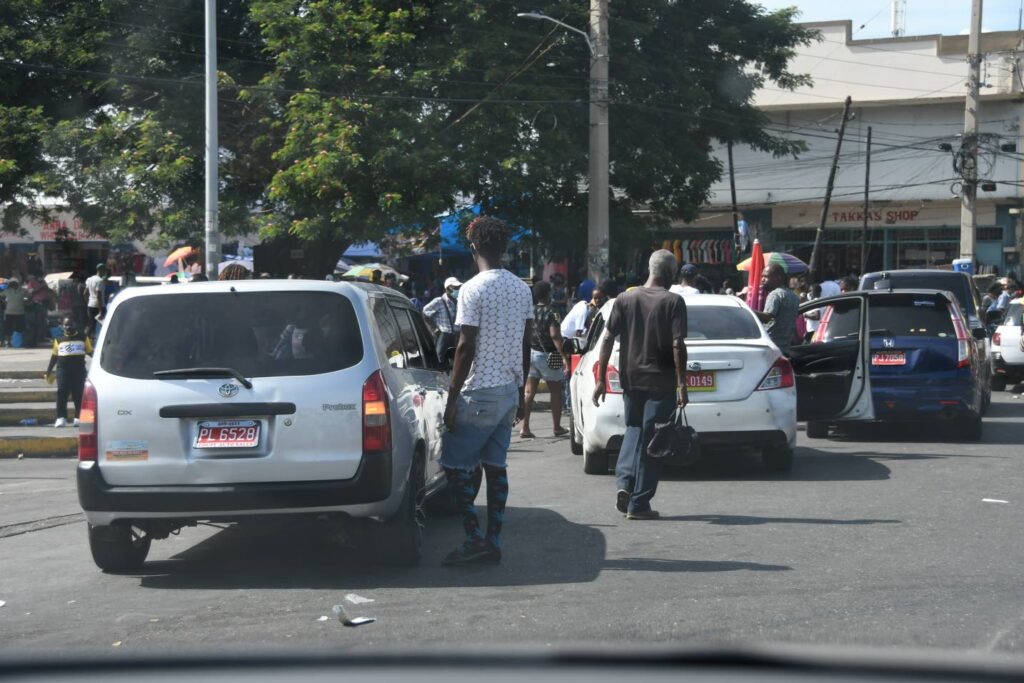
For two straight years, Jamaica’s taxi operators have tightened their belts, absorbing frozen fares while the island’s economy navigated one crisis after another. Today, that unending financial pressure has reached a breaking point: many operators now struggle to cover basic operating costs, and dozens have already lost their vehicles to loan repossession. The latest surge in global fuel prices, triggered by ongoing geopolitical tensions in the Middle East, has completely shattered their fragile hopes of finally securing the delayed fare adjustment they have waited years for. Adding to their anxiety, recent discussions among local officials about potential work-from-home mandates to cut national fuel consumption have left the industry bracing for even steeper losses.
Lorraine Finnikin, president of the All Voice Taxi Association, outlined the sector’s crisis during a recent press conference, warning that reduced commuter travel from work-from-home policies would deliver a fatal blow to already strained operator earnings. The conference came after Energy Minister Daryl Vaz publicly warned Jamaicans to prepare for sharp fuel price increases, confirming the government can no longer afford to cover billions in fuel subsidies to keep consumer costs low.
Vaz has since announced a new pricing framework for the state-owned refinery Petrojam Limited, tied directly to global market fluctuations. Under the new tiered system, consumers began seeing higher petroleum prices as early as this week, a change that has hit fuel-reliant taxi operators particularly hard.
Finnikin explained that the last fare adjustment for Jamaica’s route taxis and rural stage carriages came in October 2023, when a 19% hike was implemented as the first phase of an approved 35% total increase designed to offset rising operating costs. The remaining 16% increase was scheduled to roll out in 2024, but implementation has been delayed indefinitely. Over the past three weeks alone, operators have seen their costs skyrocket, pushing many to the edge of insolvency.
To illustrate the scale of the fuel cost increase, Finnikin shared data with the Jamaica Observer: for a Probox, one of the most common taxi vehicles in Jamaica, daily fuel costs jumped from between J$5,500 and J$6,000 before the latest Middle East crisis to between J$7,300 and J$8,600 today — a daily increase of up to J$2,600 just for fuel. Beyond fuel, operators are also facing steep jumps in other overhead costs, including stationery supplies for licensing and documentation, and vehicle maintenance. Some maintenance parts and services, particularly engine lubricants, have increased in price by as much as 80% in recent months. While these maintenance costs are not incurred daily, they still add a massive extra burden to operators already struggling with daily fuel costs.
“The gas is really killing us,” Finnikin said. “The worst part is that we cannot increase our fares, so daily incomes have stayed exactly the same, and operators have to cover the extra fuel costs out of their existing earnings. For years, we have been operating at barely break-even levels — this extra cost is pushing many under.”
Work-from-home proposals have added a new layer of fear, Finnikin noted, because most operators upgraded their vehicles over the past five years to meet new industry standards, and more than 70% of those upgrades were financed through loans. With commercial banks offering few accessible loan options for small operators, most have turned to micro lenders that charge exorbitant interest rates, requiring steep weekly repayments. Over the past four weeks alone, Finnikin said rural association leaders have reported a sharp rise in vehicle repossessions as operators can no longer cover both weekly loan payments and inflated fuel costs. If current conditions continue, the country could see mass repossessions that put hundreds of operators out of work, he warned.
While a small number of operators have responded by illegally raising fares to cover costs, Finnikin has urged members to hold off and remain patient — but he cautioned that the sector can only absorb so much strain before widespread collapse occurs. Over the past two years, operators have repeatedly delayed their demand for the final 16% fare hike in response to broader economic conditions. When inflation began falling to a stable 4% by mid-June 2025, operators were confident the hike would finally be approved — but the general election was called shortly after, and no government would implement a fare increase ahead of a vote, so operators once again tightened their belts to wait.
Operators shifted their hopes to a November 2025 implementation, but that hope was washed away when Category 5 Hurricane Melissa made landfall on October 28, 2025, devastating infrastructure and destabilizing the national economy. By late November, the Bank of Jamaica and the Planning Institute of Jamaica (PIOJ) warned of broad price increases for goods and services across the first quarter of 2026, a shift that directly impacts the transportation sector, the largest mover of goods and people across the island. After Hurricane Melissa, prices began rising as early as December 2025, and while operators hoped post-hurricane recovery would stabilize inflation quickly, the Middle East conflict delivered another crippling blow. Now, operators are clinging to the promise of a definitive timeline for the fare increase from Minister Vaz, who said last month that a timeline would be released within weeks. As of last Wednesday’s post-Cabinet media briefing, Vaz confirmed no final decision has been made on movement curtailment measures to address rising fuel costs.