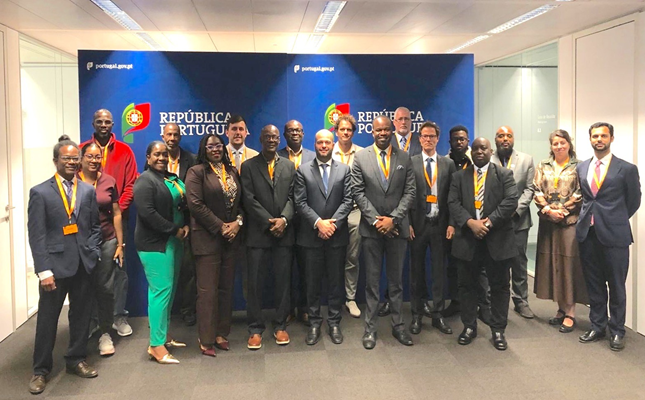
As the 2026 Global Sustainable Islands Summit (GSIS) approaches, a three-member delegation from St. Kitts and Nevis, including Naftalie Errar, Project Coordinator at the Nevis Electricity Company (NEVLEC) and lead for Nevis’ transformative Geothermal Energy Project, is participating in a high-level regional geothermal study tour across Portugal. The trip, organized under the European Union’s landmark Global Gateway initiative, has sparked growing international attention on Nevis’ emerging potential to become a trailblazer for geothermal power across the Caribbean.
The study visit kicked off in Lisbon with opening strategic discussions headlined by Portugal’s Secretary of State for Energy, Jean Barroca, bringing together senior energy officials from across the Caribbean. Participating island nations include Dominica, Grenada, St. Lucia, Saba, St. Vincent and the Grenadines, alongside St. Kitts and Nevis. Key regional governing bodies — the Organisation of Eastern Caribbean States (OECS), the Caribbean Centre for Renewable Energy and Energy Efficiency (CCREEE), and the Caribbean Electric Utility Services Corporation (CARILEC) — are also represented at the event, underscoring the widespread regional commitment to advancing accessible, scalable clean energy solutions for small island states.
After wrapping up initial talks in Lisbon, the full delegation will travel to the Azores archipelago, stopping at the islands of São Miguel and Terceira for on-site engagement with local geothermal plant operators and energy institutions. These hands-on sessions are designed to give Caribbean stakeholders firsthand insight into proven geothermal operations, covering critical topics from grid integration strategies and sustainable resource management to innovative financing structures and risk mitigation frameworks.
For Nevis, the lessons from the Azores hold particularly high stakes. Like most small Eastern Caribbean island nations, Nevis grapples with a constrained national power grid, some of the highest electricity costs in the world, and acute vulnerability to global energy market shocks. The Azores, a Portuguese island archipelago that has successfully integrated geothermal energy into its local energy system, offers a tested, economically viable model that aligns directly with Nevis’ unique geographic and energy challenges.
Insights gained from the study tour will directly shape Nevis’ ongoing work to move its geothermal project from the development phase into full-scale commercial power generation. For the island, the project is far more than an energy infrastructure investment: it represents a cornerstone for long-term energy independence, downward pressure on household electricity costs, and strengthened overall economic resilience.
The Portugal study visit will culminate at the GSIS 2026, set to take place April 20–22 in Gran Canaria, Spain, where delegation members will join a high-profile EU-Caribbean roundtable focused on expanding energy and infrastructure partnerships. The roundtable will create critical connections between Caribbean energy decision-makers and European public and private sector stakeholders, opening doors to new financing opportunities, tested policy frameworks, and targeted implementation support for regional geothermal projects.
As global momentum accelerates around equitable sustainable development for small island states, Nevis has emerged as an active, forward-thinking leader through its geothermal ambitions and consistent participation in high-level international climate forums. Beyond the tangible benefits for Nevis residents, the island’s geothermal project has the potential to serve as a replicable blueprint for renewable baseload power across the Caribbean. If successful, it could also lay the groundwork for expanded cross-island energy collaboration, including the future export of surplus clean power to neighboring island nations.