As Haiti’s catastrophic humanitarian collapse accelerates to unprecedented levels, the United Nations has approved the release of $140.5 million in urgent emergency funding to deliver life-saving support to more than 1 million vulnerable Haitians. The intervention comes as official data confirms that more than half of the Caribbean nation’s total population now requires critical assistance, with widespread gang violence, crippling food insecurity, and mass forced displacement pushing millions of families to the edge of survival.
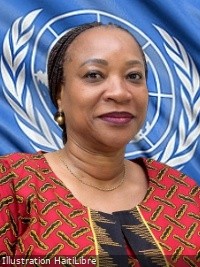
Nicole Boni Kouassi, the UN Humanitarian Coordinator for Haiti, emphasized that the newly allocated funding will address the most immediate needs across the country, covering core services from food assistance and clean drinking water to emergency healthcare and temporary shelter. A key focus of the intervention will be targeted support for at-risk and marginalized groups: this includes protection services for women and children vulnerable to gender-based violence, medical and mental health care for survivors of sexual assault, nutritional treatment for acutely malnourished children, and tailored assistance for people living with disabilities. Funding from the UN Central Emergency Response Fund (CERF) will also keep educational programming running, allowing children to continue learning amid ongoing instability.
Aid distribution will be prioritized for the hardest-hit regions, identified through a rigorous, data-driven needs assessment. To overcome access barriers that have blocked aid from reaching cut-off communities, a portion of the funding will be allocated to support the UN Humanitarian Air Service and critical logistical operations that allow frontline humanitarian workers to reach isolated populations.
Current humanitarian data paints a devastating picture of Haiti’s crisis: an estimated 6.4 million Haitians—more than half the country’s total population—require life-saving humanitarian assistance, and nearly 6 million are facing acute food insecurity that puts them on the brink of famine. Escalating gang-related violence has forced nearly 1.5 million people to flee their homes, with half of those displacements recorded in just the last 18 months. This new funding injection not only delivers immediate relief to vulnerable communities but also bolsters the UN’s 2026 Haiti Humanitarian Response Plan, a coordinated initiative that requires a total of $880 million to address the full scale of the unfolding crisis.
The $140.5 million package is made up of three complementary allocations, all managed by the UN Office for the Coordination of Humanitarian Affairs (OCHA): $121.5 million from the Haiti Humanitarian Fund, $10 million from CERF earmarked for chronically underfunded emergencies, and $9 million from CERF to sustain humanitarian air operations.
The three funding streams are tightly aligned with broader ongoing humanitarian efforts and other donor initiatives across the country. The Haiti Humanitarian Fund allocation targets 26 hard-hit communes across six priority intervention sectors, while the CERF underfunded emergencies allocation supports specific gap areas including education, support for women and girls who have survived gender-based violence, and civil documentation services that enable Haitians to access basic government and aid services.
All funding decisions were developed through a context-specific analysis that accounts for ongoing security risks, and aid programming is tailored at the individual commune level to ensure safe, accountable delivery. Enhanced safeguards are in place where security conditions are most volatile to uphold core humanitarian principles and maintain the longstanding commitment to do no harm to affected communities.
On behalf of the entire humanitarian community operating in Haiti, Kouassi extended gratitude to all donors that have contributed to OCHA’s pooled funding mechanisms. Key 2026 supporters include the United States and Canada, which have backed both the Haiti Humanitarian Fund and CERF, alongside other leading CERF donors the Netherlands, the United Kingdom, Norway, and Denmark.