As the United States prepares to co-host the men’s FIFA World Cup this summer, a controversial new controversy has erupted over planned surge pricing for public transit trips to tournament match venues, drawing sharp condemnation from international football fan groups, top elected officials, and long-time tournament attendees. Multiple media reports have revealed that two major public transit agencies are considering dramatic price increases that would push round-trip fares far above their standard event-day rates, leaving many traveling supporters facing hundreds of dollars in unexpected travel costs just to reach stadiums.
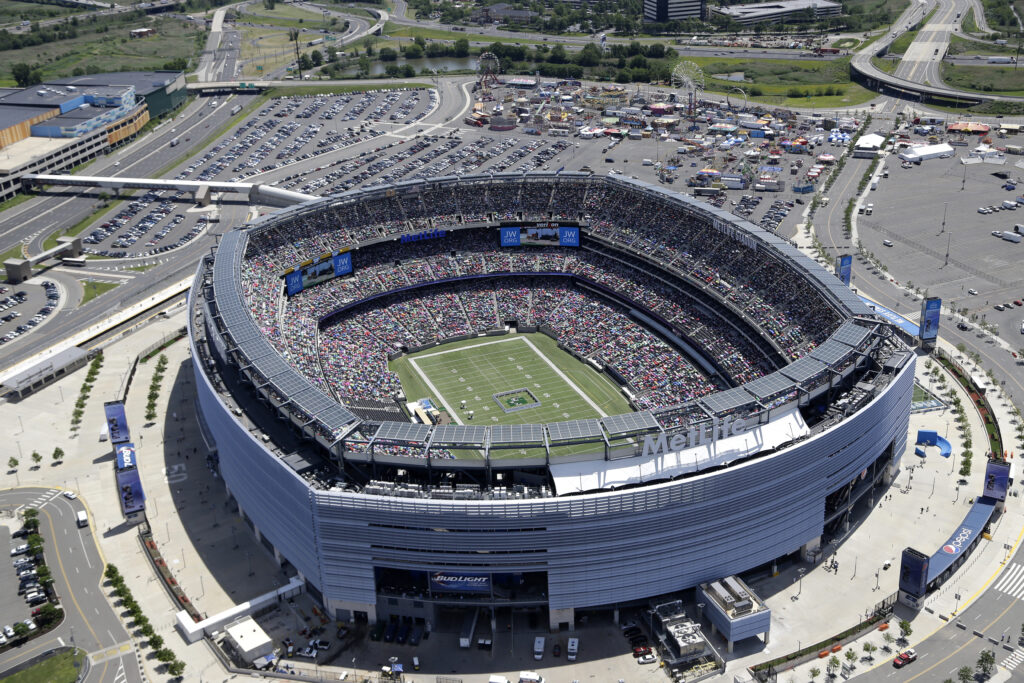
According to a recent report from sports outlet The Athletic, New Jersey Transit (NJT) has drafted plans to charge passengers more than $100 for a single round-trip ticket between Manhattan’s Penn Station and MetLife Stadium, the New Jersey venue set to host eight World Cup matches. For context, the same journey typically costs just $12.90 round-trip on non-event days, and even for major regular events at the stadium, fares remain far lower than the proposed World Cup rate. Separately, the Massachusetts Bay Transportation Authority (MBTA) has publicly confirmed it will charge $80 for round-trip tickets between Boston and Gillette Stadium, where multiple group-stage matches will be held – a four-fold jump from the agency’s standard $20 event-day fare.
International fan groups have been among the loudest critics of the proposed hikes, arguing that the price increases price out ordinary working-class supporters in favor of wealthy attendees. Guillaume Aupretre, a spokesperson for the largest French supporters’ association, told Agence France-Presse that the pricing structure runs counter to longstanding World Cup norms. “It’s a disgrace. In recent tournaments, transportation was either included in the ticket price or offered at a heavily discounted rate for ticket holders,” Aupretre said. “They keep piling on the extra costs without giving any thought to the fans.” He added that the policy amounts to FIFA shutting out the sport’s most loyal supporters to cater exclusively to wealthier fans. France is scheduled to play all three of its Group I matches at the Boston and New Jersey venues, meaning French fans will face the full brunt of the inflated fares.
UK fan group Free Lions, which represents traveling England supporters, also voiced anger over the pricing in a social media post, writing: “Another day, another rip off at this World Cup. What on earth is going on?” England also will play its group-stage matches at the same two venues, leaving its traveling fan base facing the same steep costs.
The transit pricing controversy comes as FIFA already faces widespread backlash over exorbitant match ticket prices for the 2026 tournament, which is being co-hosted by the U.S., Mexico, and Canada. FIFA, the global governing body for football, has not yet responded to AFP’s request for comment on the transit fare dispute.
Top American political leaders have stepped into the controversy, calling on FIFA to cover all public transit costs for the tournament, pointing to the massive $11 billion in projected revenue that FIFA is expected to earn from the 2026 event. Senate Minority Leader Chuck Schumer, a Democrat from New York, publicly demanded that the governing body take responsibility for the costs in a social media statement Tuesday. “The least FIFA can do is ensure New York residents can go to the stadium without being gouged at the turnstile,” Schumer wrote. “I am demanding FIFA step up and cover transportation costs for host cities and states.”
New York Governor Kathy Hochul also criticized the proposed hikes, writing on social platform X that “Charging over $100 for a short train ride sounds awfully high to me.”
NJ Transit has pushed back slightly on the reports, with a spokesperson telling The Athletic that no final decision has been made on World Cup-specific pricing, describing the leaked $100 fare figures as “unconfirmed speculation.” The agency did not respond directly to AFP’s request for comment. The Athletic also reported that hosting eight matches in New Jersey is expected to cost the transit agency roughly $48 million overall, with most of that cost tied to expanded security requirements for the tournament.
Not all host cities are moving ahead with price hikes, however. Federal authorities have already allocated $100 million in total federal funding to cover transit-related costs for host cities across the country, including $8.7 million for the Boston and Massachusetts region, $10.4 million for the New York-New Jersey metro area, and $9.6 million for Los Angeles. Los Angeles’ transit agency has already committed to keeping standard fares in place for World Cup match days: a round-trip from downtown Los Angeles to SoFi Stadium will remain just $3.50, the same as it is on any other day.