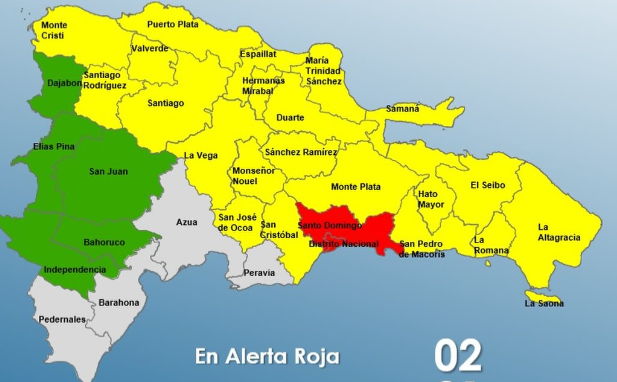
The Caribbean nation of the Dominican Republic has activated a tiered national weather alert system as ongoing rainy conditions raise flood and landslide risks across large swathes of the country, according to joint updates from the nation’s top meteorological and water resource agencies.
The country’s Emergency Operations Center upgraded Santo Domingo province and the National District, which encompasses the capital’s core urban area, to the highest-level red alert, marking these regions as facing the most immediate danger from the unstable weather. In addition to the red alert zones, 21 Dominican provinces remain under mid-level yellow alert, a designation that signals elevated but less immediate risk. Prominent among the yellow-alert provinces are popular coastal and inland hubs including Puerto Plata, a top tourist destination, Santiago, the nation’s second-largest city, San Cristóbal, La Vega, La Altagracia, home to the major resort region of Punta Cana, San Pedro de Macorís, Samaná, and Duarte, with particular warning issued for low-lying Bajo Yuna communities. Five southwestern provinces — San Juan, Dajabón, Elías Piña, Independencia, and Bahoruco — have been placed on the lowest alert level, green, indicating milder potential risk compared to other parts of the country.
The alert framework comes after multiple days of rainfall that have left soil across most of the country heavily saturated, increasing the likelihood of flash floods and mudslides as new precipitation continues to move through the region. Local emergency management authorities have issued clear public guidance to reduce avoidable risk: residents across all affected provinces are strongly urged to avoid attempting to cross swollen rivers, creeks, and steep ravines with fast-moving high water, and to stay far away from unsecure recreational swimming areas that have become dangerous due to the weather.
Beyond inland flood risks, the Dominican Institute of Meteorology (INDOMET) has issued a separate warning for maritime activities. Operators of small and medium-sized watercraft have been told to exercise extreme caution when operating near the national coastline, and advised against all travel into open offshore waters. The warning cites multiple hazardous ocean and atmospheric conditions, including strong gusting winds, abnormally high swells, reduced visibility from ongoing rain and cloud cover, frequent thunderstorms, and the potential for waterspouts to form over coastal waters.