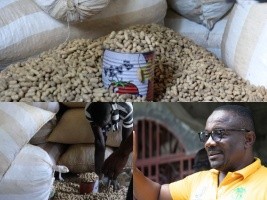
Haiti’s Ministry of Agriculture is launching a targeted initiative to boost peanut production in the agricultural commune of Durcis, part of a broader national push to strengthen food security and lift rural farming communities. Led by Agriculture Minister Marcelin Aubourg, the program kicked off with the distribution of premium, high-yield peanut seeds to local farmers, delivered under the umbrella of the Resilient Agriculture for Food Security Project (PARSA), a initiative supported by World Bank funding.
During his working visit to Durcis, a region long recognized for its untapped agricultural potential, Minister Aubourg held direct consultations with members of local farmers’ associations. These conversations allowed the ministry to center farmer needs in its programming, hearing firsthand the core challenges facing small-scale producers and ensuring future interventions align with on-the-ground realities.
The peanut seed distribution in Durcis is just one component of a far larger sector-wide support effort across Haiti. By the end of the program’s current phase, PARSA will deliver a total of 130 tons of improved peanut seeds to revitalize the crop, a strategic agricultural commodity, across four key departments: South, Nippes, Central, and Grand’Anse. This distribution follows earlier support distributed during the 2026 spring planting campaign, which included 200 tons of bean seeds, 3.5 million cassava cuttings, 1.3 million banana seedlings, and 2.6 million yam transplants. All of these inputs are designed to ramp up overall agricultural output across intervention zones and reduce the financial burden on smallholder farmers working to improve their harvests.
Beyond distributing critical planting materials, Minister Aubourg outlined a long-term vision for modernizing Haiti’s agricultural sector that centers on expanding reliable water access. He emphasized that functional irrigation infrastructure is a non-negotiable foundation for consistent, stable agricultural production. Moving forward, the ministry plans to upgrade and expand national hydraulic infrastructure to meet the growing water needs of farming communities, ensure year-round access to this critical resource, and reduce output volatility caused by drought and inconsistent rainfall, directly advancing national food security goals.
As part of the broader push to increase domestic agricultural output across all subsectors, Minister Aubourg also announced plans to open a new bovine artificial insemination center in the South Department in the coming months. The facility will deliver modern reproductive technologies to local cattle farmers, with the goal of boosting both national milk and meat production by improving livestock genetics and overall sector productivity. The minister highlighted the key technical and financial support provided by the Food and Agriculture Organization of the United Nations (FAO) for this new initiative, underscoring how targeted international cooperation remains central to growing Haiti’s agricultural sector and delivering long-term food security for the Haitian people.