KHARKIV, Ukraine — What was meant to be a temporary pause in fighting for Orthodox Easter has quickly devolved into a familiar cycle of cross-border accusations of violence, marking yet another setback to diplomatic efforts to end Europe’s deadliest conflict since World War II. Just hours after a 32-hour bilateral ceasefire went into effect on Saturday afternoon, Ukraine’s military command published a detailed account of nearly 470 breaches of the truce carried out by Russian forces.
The ceasefire agreement itself emerged after a weeks-long back-and-forth: Ukrainian President Volodymyr Zelensky first proposed the holiday truce more than a week before it was scheduled to take effect, with Russian President Vladimir Putin ultimately ordering his forces to hold fire on Thursday. The Kremlin outlined that the truce would run from 1:00 pm GMT Saturday through the end of Sunday, a 32-hour window that both sides had formally agreed to observe.
By late Saturday, however, Ukraine’s military documented hundreds of hostile actions in a public post on Facebook. In total, officials recorded 469 ceasefire violations, including 22 enemy infantry assaults, 153 artillery barrages, 19 attacks from attack drones, and 275 strikes from first-person-view (FPV) loitering drones. Across the entire day Saturday, the military added, Russian forces launched 57 air raids, dropped 182 guided aerial bombs, deployed more than 3,900 drones of all types, and carried out 2,454 separate shelling attacks targeting both Ukrainian civilian population centers and frontline military positions.
Russia has pushed back with its own accusations of Ukrainian truce violations. In Russia’s border Kursk region, Governor Alexander Khinshtein claimed that a Ukrainian drone strike targeted a local gas station in the town of Lgov, leaving three people injured — including an infant.
In his Saturday evening public address, Zelensky used the widespread violations to call for an extended holiday ceasefire, framing the outcome as a clear test of Russian intentions to the global community, including the United States. “We have put this proposal to Russia, and if Russia again chooses war instead of peace, this will once again demonstrate to the world, and to the United States, who really wants what,” he said.
For residents of Kharkiv, the northeastern Ukrainian city that sits just kilometers from the Russian border and faces near-daily Russian attacks, the widespread violence matched the deep skepticism many held ahead of the truce. Sixty-five-year-old Oleg Polyskin said he held faint hope the short 36-hour truce might hold, but added that he put no faith in Russian promises. “But even if you’re going to church, there is no 100-percent guarantee that everything will be peaceful… you shouldn’t trust Putin and his government,” he said. Sixteen-year-old Sofiia Liapina echoed that wariness: “It would be nice if nothing happened tonight and it was quiet, without air-raid alerts. But we can’t know — because our neighbours can’t be trusted.”
The violence began even before the truce was scheduled to begin. Ukrainian authorities reported that in the hours leading up to the 1:00 pm GMT start time, Russia launched a massive wave of at least 160 drones across Ukraine, killing four civilians in the country’s eastern and southern regions and wounding dozens more. For its part, Russia reported that a reciprocal wave of Ukrainian drone strikes sparked a large fire at an oil depot and damaged multiple residential apartment buildings in its southern Krasnodar region.
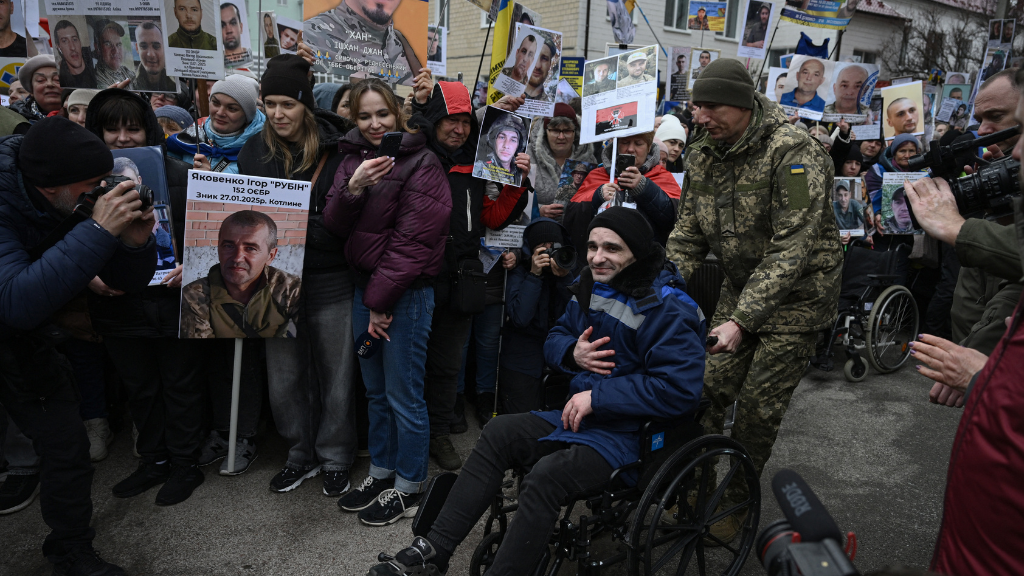
This year’s Easter ceasefire follows an identical arrangement in 2024, which also collapsed after both sides traded accusations of hundreds of truce violations. Amid the tensions over the truce, however, the two warring parties managed to complete a significant prisoner of war exchange on Saturday. Each side released 175 captured military personnel, plus seven civilians, for a total of 350 service members and 14 civilians returned home. “I still haven’t really realised that I’m finally here — that now I can make my dreams reality, that I am finally free,” said Maksym, a Ukrainian soldier who regained his freedom after four years in Russian captivity.
Beyond the temporary holiday truce, long-running diplomatic efforts to end the full-scale conflict, now in its fourth year, remain deadlocked. US-led peace talks have stalled in recent weeks, in large part due to competing global priorities sparked by the ongoing war in the Middle East. Even before the escalation of tensions between Iran and Israel, progress on a Ukrainian peace deal had moved at a glacial pace, held up by intractable disagreements over territorial claims.
Ukraine has proposed freezing active hostilities along current front lines, a framework that Russia has flatly rejected. Moscow demands that Kyiv cede full control of all remaining Donetsk region territory held by Ukrainian forces — a non-negotiable demand for the Ukrainian government. Kremlin spokesman Dmitry Peskov further confirmed last week that Russia had not held pre-truce discussions with either Ukraine or the United States, and that the Easter ceasefire was not tied to ongoing end-of-war negotiations.
Since the full-scale invasion began, the conflict has claimed hundreds of thousands of lives on both sides and forced more than 14 million Ukrainians to flee their homes, according to United Nations figures, making it the deadliest European conflict since World War II. Russia has captured small additional swathes of Ukrainian territory over the past year, but at the cost of massive personnel and equipment losses, according to the US-based Institute for the Study of War (ISW). Kyiv has managed to push back against Russian advances in the southeast in recent months, and Russian territorial gains have slowed sharply since late 2025, the ISW reported. Today, Russian forces occupy just over 19 percent of Ukraine’s internationally recognized territory, most of which was seized in the first weeks of the 2022 full-scale invasion.