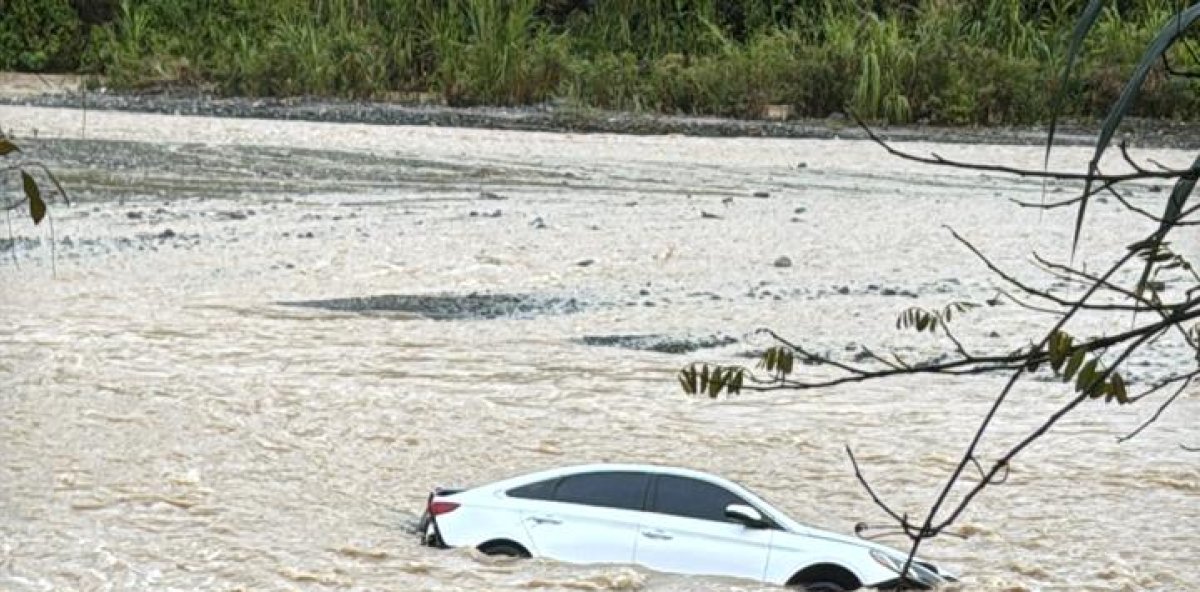
Pre-emptive alerts from national emergency and meteorological agencies failed to prevent a mass stranding incident in central Dominican Republic over the Easter holiday weekend, when the overflowing Nizao River left dozens of visitors and local residents trapped in isolated communities of San José de Ocoa province.
Alcedo de los Santos, mayor of Rancho Arriba municipality, clarified the root cause of the crisis that unfolded on Holy Saturday, pushing back on common assumptions that the incident stemmed from recreational bathers ignoring safety warnings in the river. He explained that regional authorities had completed evacuations of all riverside resorts before floodwaters began to rise, clearing the river and its immediate banks of any visitors. The true source of the crisis, he told local newspaper Hoy, was the simultaneous evacuation of recreational groups scattered across a far wider area.
Fifteen small rural communities beyond the Nizao River are popular destinations for campers and ecotourism enthusiasts, who flocked to the region over the four-day Easter holiday weekend. Once flood warnings were issued, all of these visitors attempted to exit the area at the same time, triggering crippling traffic jams on the region’s already inadequate rural road network. “There were too many vehicles on the road and unfortunately those who couldn’t get out in time were the ones who were left behind,” de los Santos said in his interview.
The mayor added that local infrastructure conditions exacerbated the gridlock. Narrow local roads, combined with informal, random parking by visitors, left no room for vehicles to maneuver and extended traffic delays long enough for floodwaters to cut off the exit route. The Nizao River spilled its banks around 8:00 p.m. on Saturday, right as the stream of returning vacationers hit its peak, submerging the only exit road and leaving those who had not crossed stuck in the isolated communities on the opposite side.
In the aftermath of the overflow, dozens of people remain trapped, with many requiring emergency shelter and basic assistance. De los Santos confirmed that he personally facilitated shelter for roughly 25 stranded young travelers who had been exploring the mountain and river areas, hosting the group at the local town hall after they were left with no accommodation options for the night.
As of Monday, the situation remains unresolved, with many trapped people expected to miss the return to their workplaces. “It’s still raining today, and they’re stuck on that side,” de los Santos noted, adding that communication with the affected groups is a growing source of concern. With many visitors running low on phone battery, their families back home are left in the dark about their safety, amplifying anxiety around the incident.