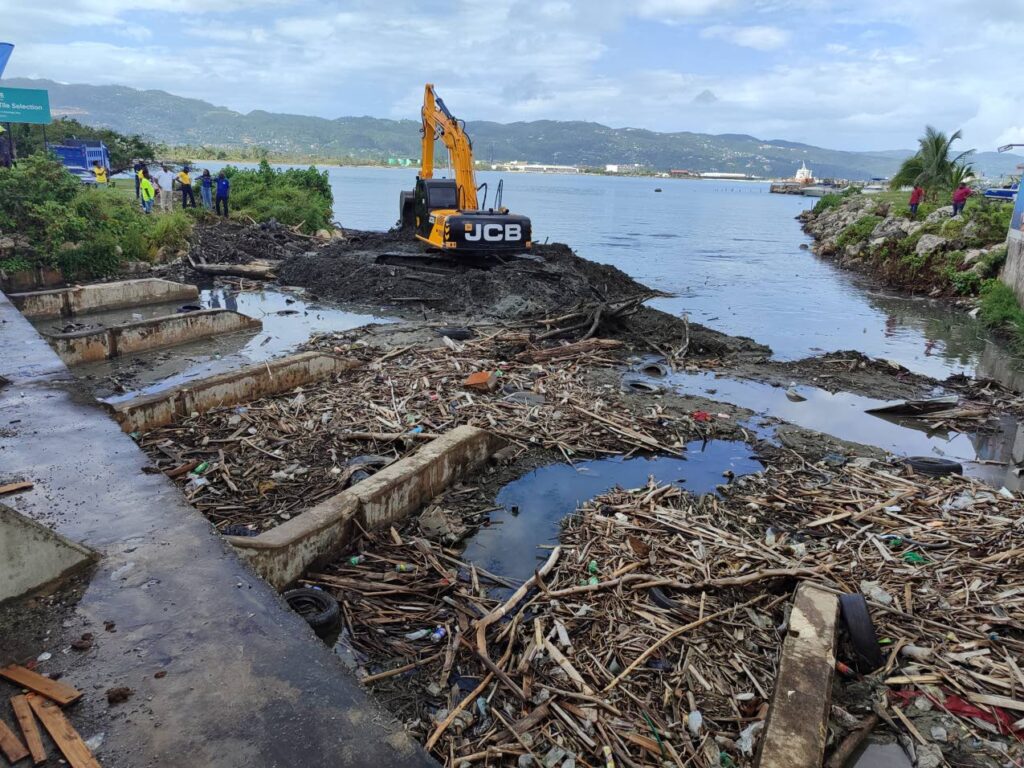
In a pre-hurricane season cleanup operation carried out on Tuesday in Montego Bay, St James, a team from Jamaica’s National Solid Waste Management Authority (NSWMA) hauled away more than 10 full truckloads of accumulated waste from the city’s high-risk South Gully waterway. During the operation, NSWMA head Audley Gordon made a public call for local municipal authorities to step up their ongoing responsibilities for keeping the nation’s gullies and drainage networks clear of blockages.
Gordon told reporters on site that the one-time deep cleaning of South Gully, a task that formally falls under the jurisdiction of the St James Municipal Corporation (SJMC), falls outside the NSWMA’s core everyday mandate. The work is being funded under the agency’s $1.5-billion national Debris Management Programme, a post-storm initiative launched to clear residual debris left behind when Hurricane Melissa swept across the island in October of the previous year.
Gordon emphasized that the operation was a critical proactive step ahead of the upcoming Atlantic hurricane season, noting that South Gully’s outlet under the local underpass has a long-standing reputation as a major flooding hotspot when heavy rains hit. “We couldn’t roll out a national debris management programme and ignore the massive build-up of waste that had clogged this key underpass,” he explained. “Our goal is to do our part to ensure unobstructed water flow through this channel before the first heavy storm of the season arrives.”
When crews arrived at the site, they found the gully outlet completely choked by a massive accumulation of silt, overgrown vegetation, illegally dumped household garbage, discarded old tires, and assorted other debris. Gordon stressed that while the NSWMA’s one-time deep clean is a major boost for flood resilience, long-term solutions require consistent, scheduled upkeep from the responsible local bodies.
“This cannot be a single, isolated intervention,” he warned. “Periodic routine maintenance is non-negotiable for this underpass and all similar flood-prone sites. If these channels are not kept clear, flooding risks will remain a constant threat every time we face heavy rainfall.” Repeating his appeal directly to local government stakeholders, Gordon pushed for proactive, regular cleaning schedules to prevent dangerous blockages from re-forming.
Deputy Mayor of Montego Bay Dwight Crawford, who was present to observe the cleanup operation, acknowledged Gordon’s call for sustained action. He pushed back, however, on the implication that the municipal corporation has neglected its responsibilities, stressing that the SJMC has carried out consistent maintenance work on both the North and South gullies for years.
“We are extremely grateful for the support and extra effort NSWMA has brought to this project today; their work will make our ongoing flood management efforts far easier,” Crawford told the Jamaica Observer. “The truth is, the St James Municipal Corporation has played a major role in maintaining these critical drainage systems for years, and we will continue these routine maintenance operations moving forward.”
Crawford added that the municipal corporation is set to open coordinated talks with the National Works Agency (NWA) to secure additional support for island-wide drain clearing efforts ahead of the storm season. “Hurricane season is already upon us, and residents across Montego Bay feel understandable anxiety when heavy rain begins to fall. We are actively reaching out to NWA to request their additional support in addressing these persistent flood risks,” he said.
Tuesday’s completion of the South Gully cleanup marks the official end of the second phase of the NSWMA’s national Debris Management Programme. Gordon outlined the three-phase structure of the initiative: the first $500-million phase launched immediately after Hurricane Melissa passed, wrapping up before the Christmas holiday season; the second phase kicked off at the start of the new year, and concluded with the South Gully work on Tuesday; and a third phase will begin imminently, with a shifted focus.
“The third phase will look a little different from the first two,” Gordon explained. “In the months right after the storm, many homeowners were still assessing damage, fundraising for repairs, and sorting out which building materials could be reused. Now that reconstruction is underway, residents are discarding damaged materials like old unusable zinc roofing and rotted construction timber that need to be removed.”
Gordon added that the NSWMA will step up monitoring and enforcement during the third phase to ensure all discarded post-storm construction waste is disposed of properly at approved facilities, rather than dumped illegally in waterways. He also issued a direct appeal to all residents, particularly those living in communities along gully banks, to avoid illegal dumping and properly contain all household waste.
“When waste is left loose and uncontainerized, it is only a matter of time before wind and rain carry it into gullies and waterways, eventually flowing out to sea to damage fragile marine ecosystems,” he noted. “We all have a responsibility to be better stewards of our environment. Properly containerizing your household waste is one simple, critical step everyone can take to improve our waste management and protect our natural resources.”