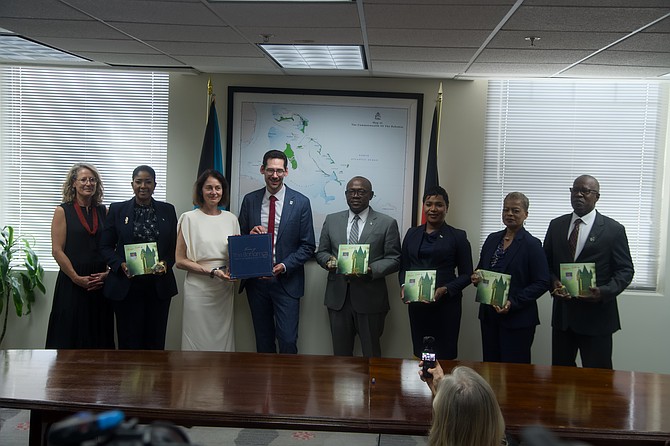
In a significant diplomatic move, The Bahamas and Germany have formally established a sister city relationship between their respective municipalities named Nassau, revitalizing a historical connection dating back to the 17th century. The agreement, signed by government officials from both nations, establishes a comprehensive framework for bilateral cooperation across multiple sectors including cultural exchange, economic development, educational initiatives, and environmental sustainability.
Deputy Prime Minister Chester Cooper emphasized the pragmatic nature of the partnership, stating that the arrangement must yield measurable outcomes including enhanced tourism flows, increased commercial activity, and substantive knowledge transfer rather than serving as merely symbolic. The collaboration is expected to generate tangible economic benefits through expanded trade opportunities and strengthened tourism connections between the regions.
Minister for Grand Bahama Ginger Moxey characterized the agreement as part of a broader strategy to develop people-centered international relationships. The visiting German delegation participated in cultural immersion activities designed to foster deeper connections with Bahamian communities, underscoring the agreement’s focus on genuine cultural exchange.
The historical significance of the partnership was highlighted by Mayor Manuel Liguori, who noted that the Bahamian capital received its name in 1694 in honor of King William III of England, who belonged to the German House of Nassau. This historical connection has been maintained through intermittent engagement over centuries, including official visits, cultural exchanges, and symbolic recognitions such as German landmarks named after the Caribbean nation.
Director General Latia Duncombe revealed that the concept of formalizing this relationship was initially proposed in the 1960s but never implemented until now. The current agreement has been carefully structured to align with national development priorities and is designed to deliver practical, long-term benefits for both communities. Officials anticipate the partnership will encourage increased travel between the destinations, deepen mutual cultural understanding, and create new avenues for cooperation in entrepreneurship, education, and sustainable development.