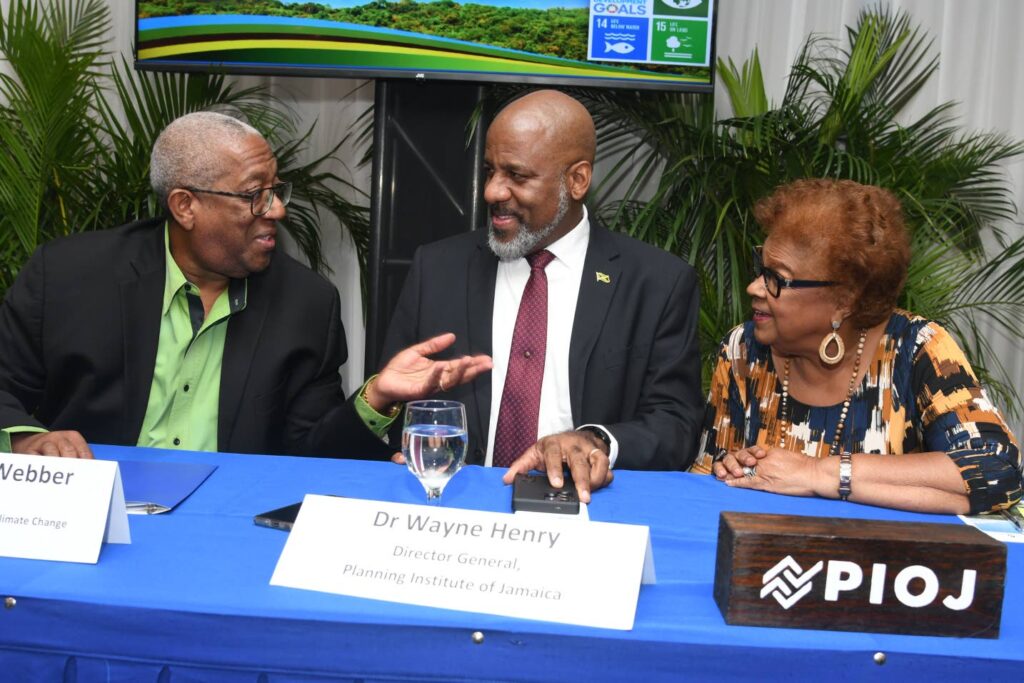
Jamaica’s groundbreaking climate adaptation initiative, the Government of Jamaica/Adaptation Fund Programme, concluded with celebratory ceremonies marking its transformative achievements. Launched in November 2012 with $10 million financing through the Planning Institute of Jamaica (PIOJ), the comprehensive program successfully enhanced climate resilience across multiple sectors through three strategically designed components.
The multifaceted approach targeted coastal protection in northeastern Jamaica, improved water and land management in vulnerable farming communities, and strengthened institutional capacity at national and local levels. Implementation involved collaboration with key agencies including the National Environment and Planning Agency, National Works Agency, Disaster Preparedness Office, Rural Agricultural Development Authority (RADA), Forestry Department, and Social Development Commission.
Professor Dale Webber, Jamaica’s Special Envoy for Climate Change, declared the initiative a pioneering model for small island developing states (SIDS) during his keynote address. He emphasized that while scientifically grounded, the program’s success derived from tangible, visible outcomes that delivered immediate community benefits. “What has been achieved here is not just theoretical—it was practical, visible, and continues to be impactful,” Webber stated while representing portfolio minister Matthew Samuda.
The program’s documented accomplishments include coastline stabilization protecting critical infrastructure and community assets, support for fisheries and coastal livelihoods adapting to changing marine ecosystems, and advanced reforestation improving land management practices. Capacity-building initiatives trained shelter managers and deployed a Climate Risk Atlas enabling evidence-based planning at local levels, with particular attention to gender-inclusive resilience strategies.
Notable success stories emerged from participating communities. The Forestry Department’s private forestry program coordinator Shawnette Russell-Clennon reported significant reforestation progress with over 20,000 fruit and lumber trees planted, particularly aiding recovery from Hurricane Melissa’s devastation in October 2025. Fishermen from St Mary received climate-resilient equipment and training, including boat upgrades and emergency ramps for extreme weather conditions.
Agricultural communities experienced substantial improvements through RADA’s technical advice and farmer peer schools. Jasmine Hyde, RADA’s zonal director for St Ann and St Mary, reported enhanced productivity, improved irrigation systems, and better land management minimizing landslides. Professor Webber concluded by calling for accelerated international climate finance processing, noting Jamaica has demonstrated institutional capacity and implementation expertise but requires expanded funding to scale successful interventions.