The 116th edition of Jamaica’s premier high school athletics championship, known as Champs, continues its legacy as a global sporting phenomenon in 2026. The competition’s rich history traces back to 1910, but the 1926 edition stands as a particularly remarkable chapter in its storied existence.
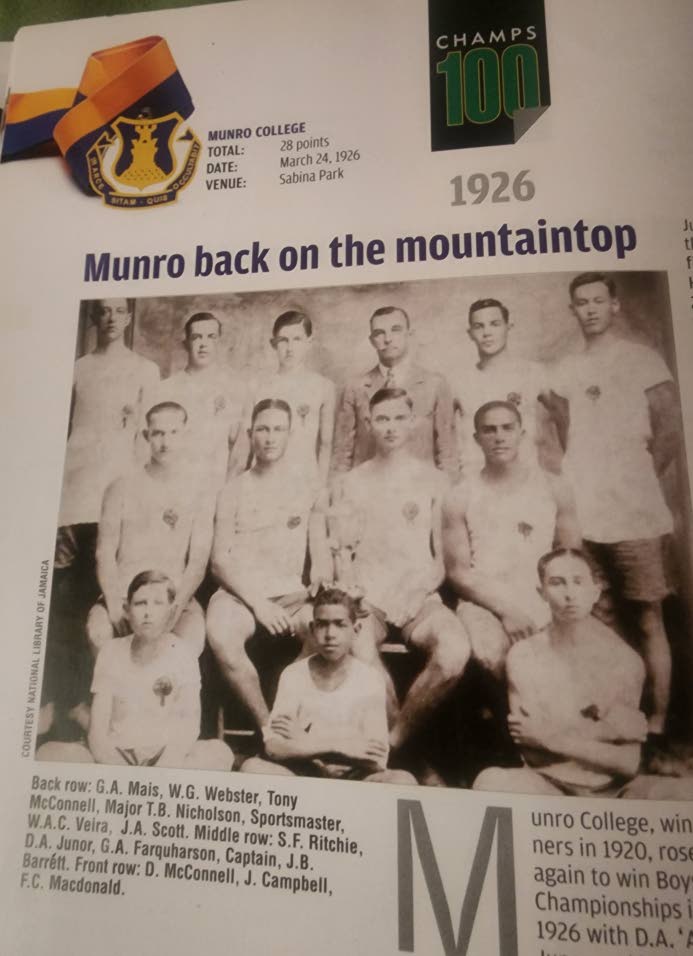
Amid global turbulence in 1926—including the UK General Strike, Emperor Hirohito’s ascension in Japan, and technological breakthroughs like John Logie Baird’s mechanical television demonstration—Jamaican school athletics witnessed its own historic moments. Munro College spectacularly reclaimed the championship title they first won in 1920, finishing with 28 points ahead of rivals Wolmer’s Boys’ (25.5 points) and Jamaica College (21 points).
The competition saw extraordinary individual performances, particularly from Munro’s DA ‘Alty’ Junor, who dominated four events: the 100-yard dash (10.35 seconds), 220-yard sprint (24 seconds), long jump, and 120-yard hurdles. Historical accounts from the Champs 100 book describe Junor’s hurdles victory as so decisive that competitors were only reaching the tenth hurdle as he crossed the finish line.
Technical innovations emerged during the games, with starter Dr. F L Aris abandoning traditional starting commands due to numerous false starts in the 100-yard final. His solution—simply positioning runners and firing the gun—proved effective.
The 1926 championship also featured Beckford and Smith High School (now St Jago High) making their debut appearance, though they failed to register any points. Another notable achievement came from H W Myers, who set a new Class One high jump record of 5 feet 11 inches, simultaneously establishing a Jamaican national record.
Junor further demonstrated his athletic versatility by placing second in the pole vault to a teammate, cementing his reputation as Munro’s most accomplished all-round sportsman, with additional excellence in football and cricket. The era’s communication limitations were highlighted by the coach’s triumphant telegram proclaiming ‘We shall probably win’—a prediction that proved decisively accurate.