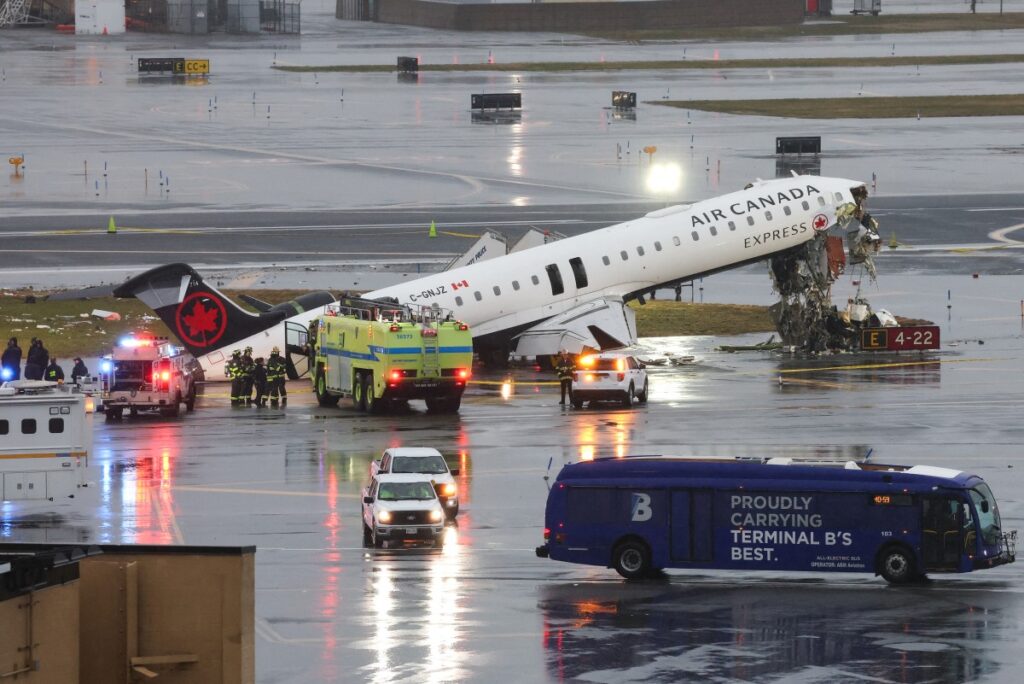
NEW YORK — Federal investigators are pursuing a multi-layered system failure theory rather than controller distraction as the primary cause of Sunday’s fatal collision at LaGuardia Airport that claimed two pilots’ lives. The National Transportation Safety Board (NTSB) leadership emphasized that aviation accidents typically result from multiple breakdowns in safety protocols rather than isolated human errors.
Chair Jennifer Homendy addressed media speculation regarding potential controller distraction due to a separate odor emergency on a United Airlines flight—the same incident to which the responding fire truck was dispatched. ‘I would caution pointing fingers at controllers and saying distraction was involved,’ Homendy stated. ‘Our aviation system is incredibly safe because there are multiple, multiple layers of defence built in to prevent an accident.’
The investigation has revealed that two air traffic controllers were managing both departure clearances and ground traffic control during the midnight shift, a staffing level Homendy described as ‘common practice across the national airspace.’ However, she acknowledged the NTSB’s previous concerns about fatigue during overnight shifts, while clarifying there’s no current indication this was a contributing factor.
A critical safety system failure has been identified: The Airport Surface Detection Equipment, Model X (ASDE-X) designed to track aircraft and ground vehicles failed to generate a collision alert because the emergency vehicle lacked a required transponder. This technological gap represents one of several system vulnerabilities under investigation.
NTSB lead investigator Doug Brazy confirmed the team is analyzing substantial evidence, including over 25 hours of cockpit voice recordings and 80 hours of flight data. The final moments captured on the cockpit recorder show the co-pilot transferring control to the captain six seconds before impact, though the reason remains unclear.
The tragedy marks LaGuardia’s first fatal accident since 1992. The Queens-based airport, ranking as New York’s third-busiest with 33.5 million passengers in 2024, now faces scrutiny over its ground safety protocols. This incident follows another recent aviation disaster—the January 2025 collision near Washington between a passenger jet and military helicopter that killed 67 people—raising broader questions about integrated airspace safety management.