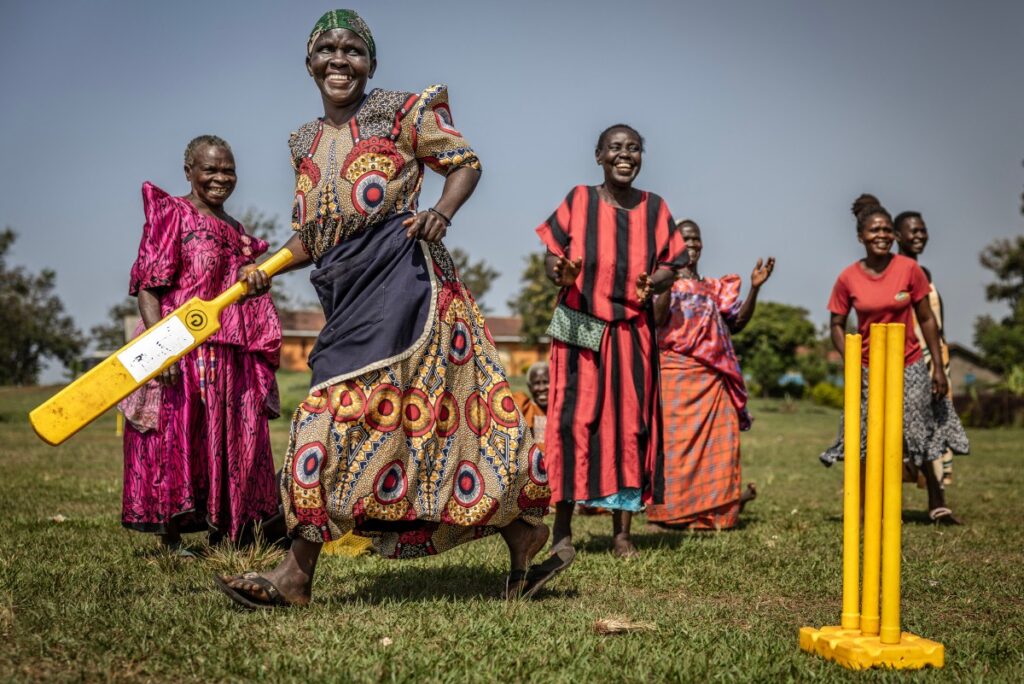
In the rural landscapes of eastern Uganda, an extraordinary sporting movement is transforming the lives of elderly women. The so-called ‘cricket grannies’ of Jinja district have embraced an unlikely passion for cricket, turning their weekly gatherings into both physical therapy and social sanctuary.
Approximately 80 kilometers from Kampala, women aged 50 to 90 assemble weekly at a local playground, their floor-length dresses swishing as they swing cricket bats barefoot. What began as a modest initiative in 2025 with just ten participants from Kivumbuka village has expanded dramatically, now engaging over one hundred grandmothers in regular athletic activity.
The program originated from cricket coach Aaron Kusasira’s innovative approach to community engagement. Initially focused on children’s coaching, the 26-year-old recognized that elderly caregivers’ unfamiliarity with cricket often prevented youth participation. His solution: involve the grandmothers first, creating a supportive environment for all generations.
Medical benefits have proven significant for participants. Jennifer Waibi Nanyonga, a 72-year-old grandmother of 29, reports remarkable improvements: ‘My legs used to hurt, but they no longer do. I spent the whole of last year without seeing a doctor for my back, yet it had previously been paining me.’
The sessions combine jogging, stretching, and cricket fundamentals, creating what Kusasira describes as ‘unintentional exercise’ through friendly competition. This addresses a critical health concern identified by the World Health Organization—physical inactivity among elderly women globally represents a leading risk factor for noncommunicable diseases. Sedentary lifestyles currently cost public health systems approximately $27 billion annually, a figure projected to rise without intervention.
Beyond physical health, the cricket gatherings provide profound psychological benefits. Participants describe the program as antidote to isolation and depressive thoughts. ‘When at home, you have no company and spend your time buried in your thoughts,’ noted Patriciah, who preferred to give only her first name. The weekly meetings offer catharsis through shared counseling and problem-solving among peers.
For Coach Kusasira, the program’s success transcends athletic achievement. ‘From the kids to the elders, provided I see the smiles… it’s enough. I know that is a day well spent,’ he reflects, highlighting the intergenerational harmony that has become the program’s most significant accomplishment.