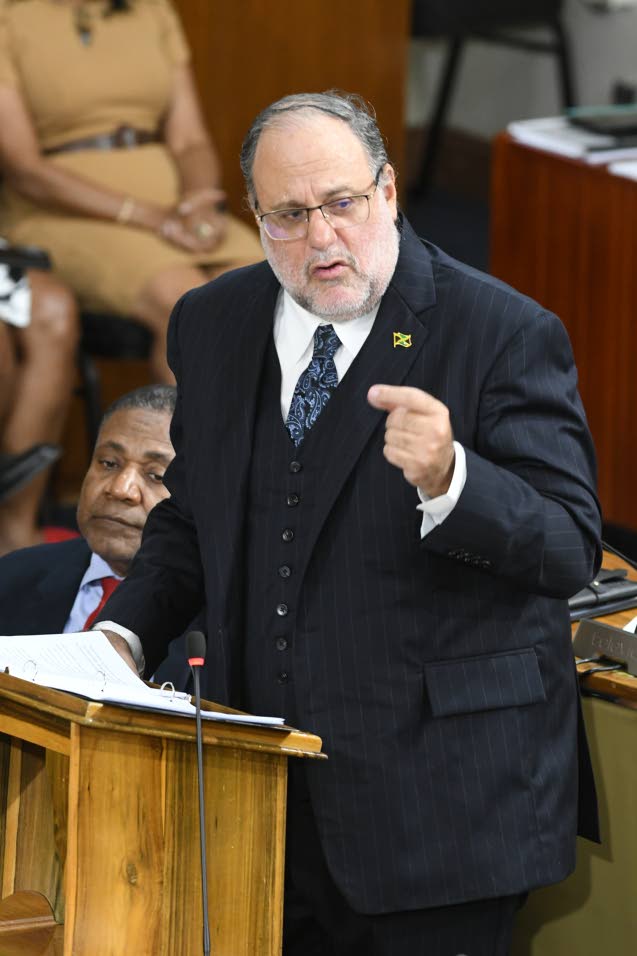
Jamaican Opposition Leader Mark Golding has issued a compelling call for the nation to pursue legal action against major carbon-emitting countries through the International Court of Justice (ICJ). The demand comes in response to the catastrophic devastation wrought by Hurricane Melissa, which struck Jamaica as a Category 5 storm in October 2025, causing an estimated US$12.2 billion in damages.
During his address in the House of Representatives’ 2026/27 Budget Debate, Golding articulated that developed nations bear historical responsibility for persistently ignoring scientific consensus regarding climate change while continuing carbon-intensive economic practices. These actions, he argued, have effectively exported climate-related costs to vulnerable developing nations and small island states like Jamaica.
The legal foundation for this claim stems from a landmark ICJ advisory opinion delivered in July 2025, which established that states must actively address fossil fuel emissions and could be held financially accountable for climate-related damages. The ruling, championed by Vanuatu and supported by numerous small island nations, represents a transformative development in international environmental law.
Golding emphasized that Jamaica should assemble an expert legal team to prepare a comprehensive brief exploring compensation avenues through the ICJ’s contentious jurisdiction. Alternatively, he proposed that Jamaica lead efforts at the United Nations General Assembly to seek the court’s advisory opinion on appropriate compensation levels from major contributors to global warming.
The Opposition Leader highlighted the increasing frequency and intensity of climate disasters affecting Jamaica, noting that four major hurricanes (Ivan, Dean, Beryl, and Melissa) have struck the island since 1988, causing over US$1 billion in damages prior to Melissa’s unprecedented destruction. He characterized Melissa’s unusual intensification patterns as unequivocally climate-related, exacerbated by Caribbean waters measuring 1.4 degrees above pre-industrial temperatures.
Golding concluded that Jamaica, as a minimal contributor to greenhouse gas emissions, should not bear alone the enormous financial burden of climate disasters caused primarily by industrialized nations. The pursuit of climate justice through international legal channels represents both a moral imperative and practical necessity for the nation’s sustainable development.