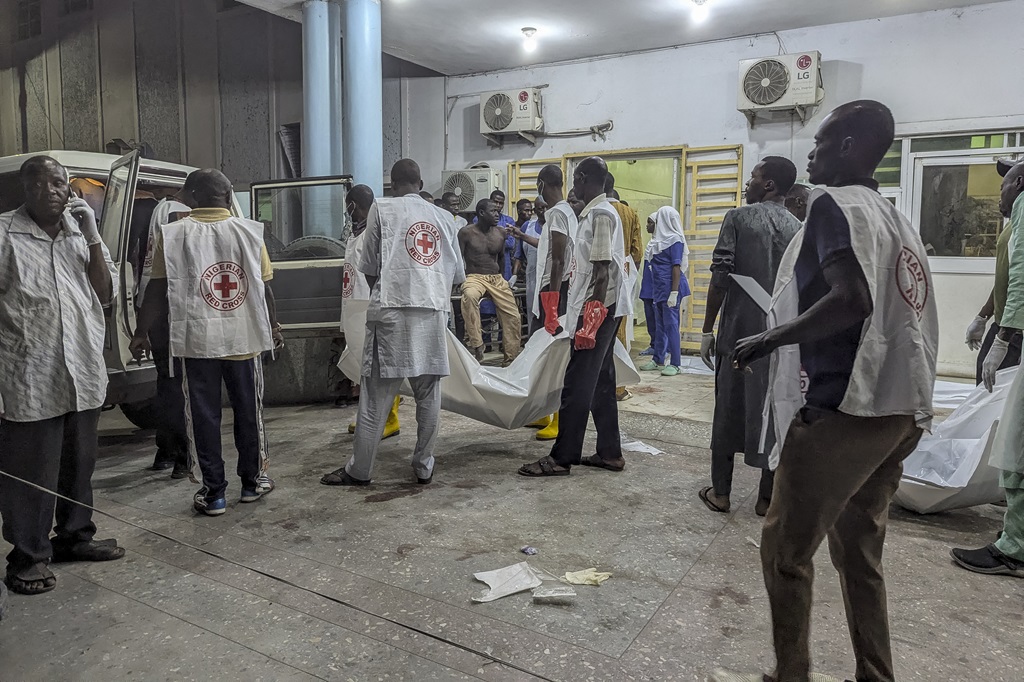
MAIDUGURI, Nigeria — A series of coordinated explosions ripped through the northeastern Nigerian city of Maiduguri on Monday evening, killing at least 23 people and injuring over 100 others in one of the most severe attacks to hit the Borno state capital in recent years. The bombings targeted strategic locations including a bustling market, the entrance to the city’s largest teaching hospital, and a post office axis just as residents broke their daily Ramadan fast.
Military authorities attributed the devastating assault to suspected Boko Haram militants, issuing warnings of heightened suicide attack threats during the final days of the holy month. The violence follows an earlier jihadist attack on a military post from Sunday into Monday and coincides with President Bola Tinubu’s preparation for a UK state visit where security cooperation is expected to feature prominently on the agenda.
Eyewitness accounts describe scenes of chaos as panicked crowds fled the initial market explosion toward the post office area, where a second detonation subsequently struck those attempting to escape. “Many people ran toward the post office area because the market entrance and the post office are not far apart,” recounted survivor Mala Mohammed, 31. “Unfortunately, as they were running towards post office, the person who had the explosive device ran into the crowd while people were still trying to escape.”
The attacks represent a devastating rupture to Maiduguri’s recent period of relative calm, which had seen the insurgency largely pushed to rural hinterlands. As the birthplace of Boko Haram’s initial 2009 uprising that evolved into a bloody campaign for territorial control, the city had transformed into a comparative oasis of stability despite ongoing violence in surrounding regions.
Conflict analyst Confidence McHarry of Lagos-based SBM Intelligence noted that while security within Maiduguri had improved, “the city has always been vulnerable” with countryside attacks frequently occurring mere kilometers from urban centers. The military’s recent focus on Islamic State West Africa Province (ISWAP) may have created operational opportunities for Boko Haram, demonstrating that the group “still has cells around Maiduguri and the attacks show they’re still a force to be reckoned with.”
Police confirmed 23 fatalities and 108 injuries, though anti-jihadist militia sources suggested the death toll might reach 31. An AFP correspondent at a city hospital documented dozens of wounded receiving emergency treatment alongside bodies covered with sheets on pavement areas outside the facility.
Borno state Governor Babagana Zulum condemned the “barbaric” attacks, suggesting the surge in violence connects to “intense military operations in the Sambisa forest,” a known jihadist stronghold. Security forces have now increased their presence and surveillance throughout Maiduguri, with authorities reporting that “normalcy has been fully restored in the affected areas.”
The bombings mark the most significant attack since 2021 mortar fire killed 10 people, following a December mosque bombing that claimed at least seven lives. These urban assaults occur against a backdrop of persistent rural violence, prompting the United States to recently deploy 200 troops to provide technical and training support to Nigerian forces combating jihadist groups.