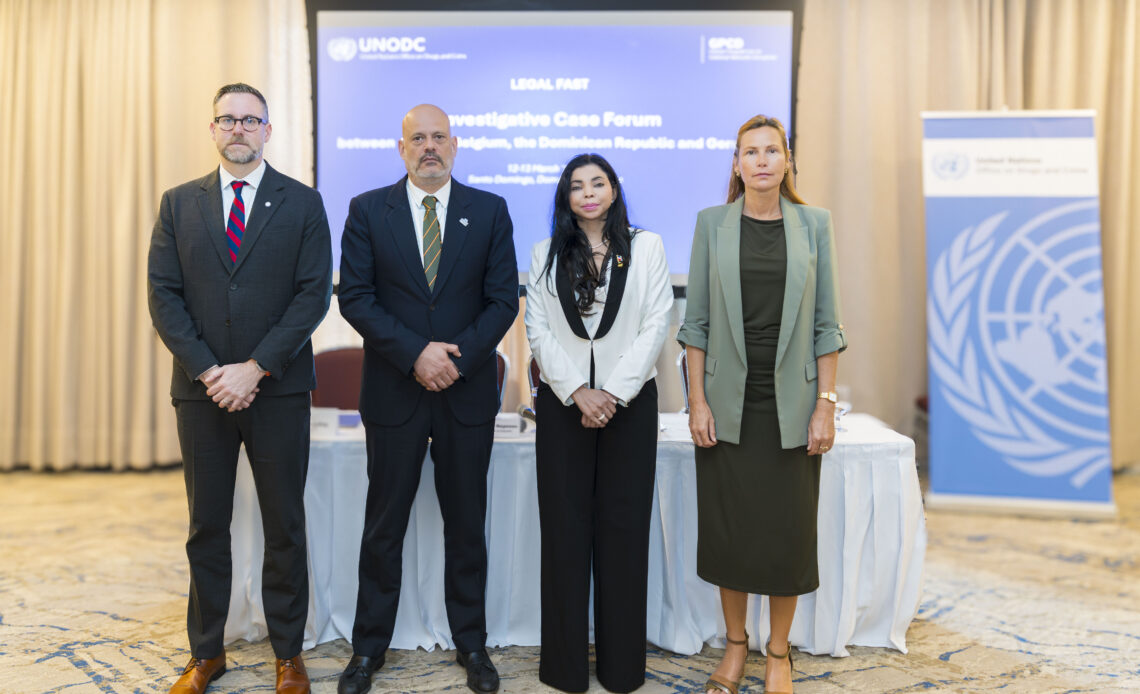
SANTO DOMINGO – Dominican Attorney General Yeni Berenice Reynoso has issued a powerful call for enhanced international judicial collaboration to dismantle sophisticated drug trafficking operations. Her address was delivered at a high-level forum orchestrated by the United Nations Office on Drugs and Crime (UNODC), which convened legal authorities from the Dominican Republic and multiple European nations.
Held in the National District on March 12-13, the event served as a platform to address the escalating challenge of transnational crime. Reynoso articulated that no nation can single-handedly defeat criminal syndicates that exploit international borders. She detailed the pervasive ripple effects of the drug trade, identifying it as a primary catalyst for widespread violence, systemic corruption, illicit arms trafficking, and heinous ancillary crimes including human trafficking and domestic abuse. The Attorney General underscored a critical vulnerability: these large-scale operations are entirely dependent on corrupt institutional networks and consistent access to weaponry.
The forum, part of the UNODC’s Legal Fast initiative, specifically aimed to fortify prosecutorial alliances between Europe and the Caribbean. Central to the discussions were practical measures to accelerate cross-border justice. Key proposals included the formation of multinational Joint Investigation Teams (JITs), the streamlining of mutual legal assistance treaties (MLATs) to reduce bureaucratic delays, and the establishment of secure, real-time intelligence-sharing protocols.
Reynoso concluded with a stark warning about the asymmetry between criminals and governments. She emphasized that global criminal networks leverage technology and modern communication to coordinate with terrifying efficiency, while many states remain hampered by antiquated and slow-moving legal cooperation frameworks. Her closing argument was a compelling appeal for nations to urgently modernize their collaborative legal tools to keep pace with and ultimately overcome the adaptive strategies of organized crime.