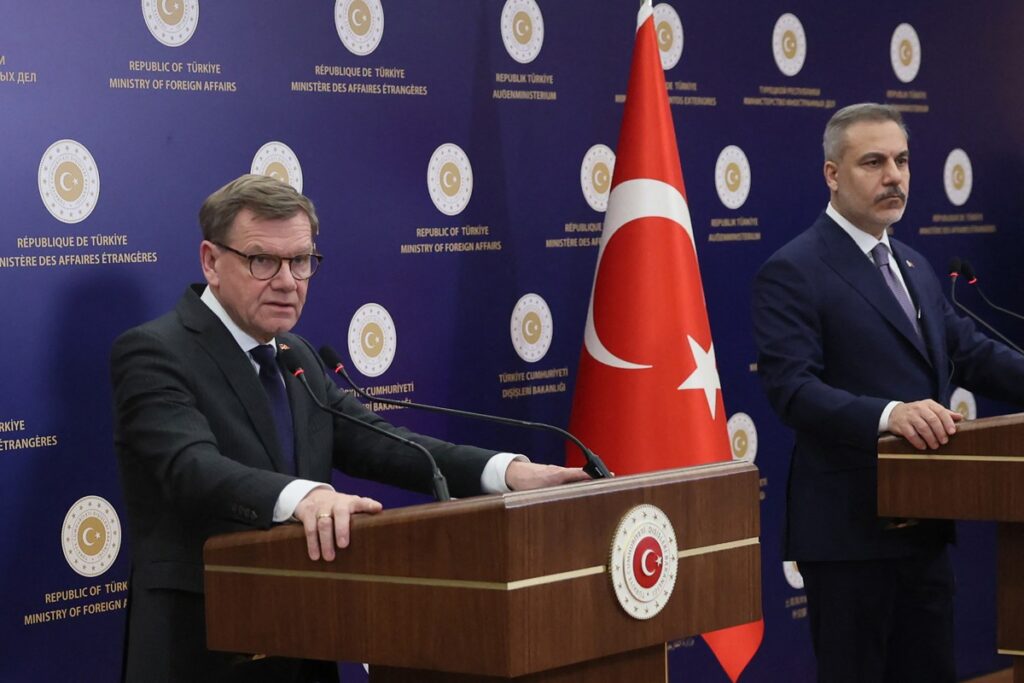
ANKARA — Turkish Foreign Minister Hakan Fidan announced on Thursday that Ankara is engaged in high-stakes diplomatic communications with both Washington and Tehran in a concerted effort to de-escalate the intensifying Middle Eastern conflict, now entering its thirteenth day of hostilities.
Speaking at a joint press conference with German counterpart Johann Wadephul, Fidan characterized the current phase as representing “the most intense moments of the war” while emphasizing Turkey’s commitment to facilitating negotiations. “The fundamental question remains: what possibilities exist for meaningful negotiation, and to what extent can diplomacy prevail?” Fidan posed during the briefing.
The Foreign Minister explicitly condemned the initial strike against Iran as “both unjust and unlawful,” while simultaneously criticizing Iran’s subsequent retaliatory actions against Gulf nations. The conflict originated on February 28 following coordinated U.S.-Israeli operations against Iranian targets, which triggered widespread Iranian retaliation across the region.
Fidan reported that Turkey has maintained “intensive” diplomatic engagement since the conflict’s inception aimed at conflict resolution. Echoing this urgency, Minister Wadephul emphasized the immediate priority must be “preventing further escalation” before addressing long-term regional security architecture.
Additionally, Fidan issued strong condemnation of Israel’s military campaign in Lebanon, noting the displacement of approximately one million civilians and warning of potential state collapse. “Israel’s offensive operations must cease before the complete disintegration of Lebanese governance structures,” Fidan stated, highlighting the catastrophic regional implications of such collapse.
The Lebanon theater emerged following Hezbollah’s retaliation against Israel for the killing of Iranian Supreme Leader Ayatollah Ali Khamenei in initial strikes. Lebanese authorities report Israeli counteroperations have resulted in over 687 fatalities and the registration of more than 800,000 displaced persons.
Addressing humanitarian concerns, Minister Wadephul acknowledged Turkey’s prudent preparation for potential refugee flows from Iran while noting no significant movements have yet materialized. “We share a common interest in preventing such population displacements,” Wadephul affirmed, referencing Turkey’s previous experience during the Syrian civil war.